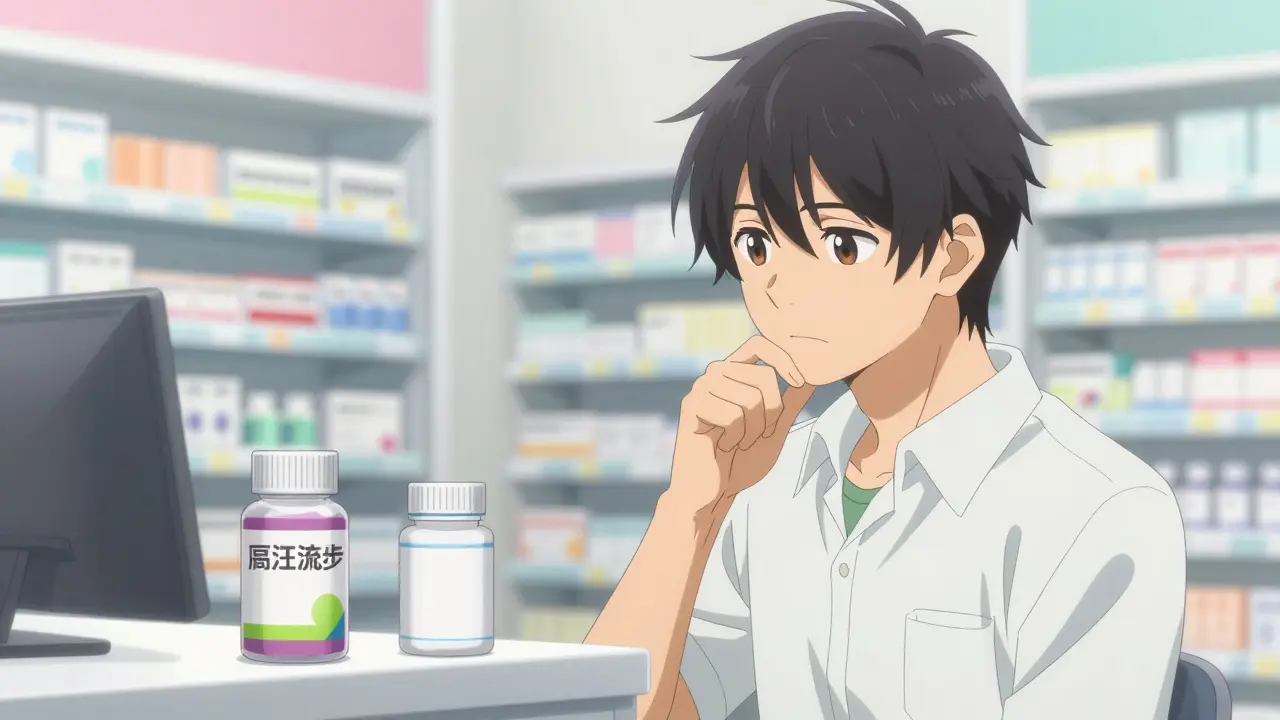
Most of us have been there: you go to the pharmacy, and instead of the familiar brand-name pill, the pharmacist hands you a generic version. It looks different, the box is plain, but the price is a fraction of what you used to pay. For millions, this is a win for the wallet. But does that cost saving come with a hidden price tag for your health over five, ten, or twenty years?
The short answer is that for most people, generics are a fantastic tool. However, the long-term reality is more complex than a simple "yes" or "no." While regulators focus on whether a drug works the same way for a few weeks, your body deals with that chemistry for decades. If you're managing a chronic condition, understanding how to navigate this transition is the key to switching to generics without compromising your stability.
| Feature | Brand-Name Drugs | Generic Substitutions |
|---|---|---|
| Cost | High (Patent Protected) | Low (Competitive Market) |
| Consistency | Single Manufacturer | Can vary by manufacturer |
| Regulatory Focus | Full Clinical Trials | Bioequivalence (Cmax/AUC) |
| Long-term Data | Extensive | Often limited to short-term |
The Bioequivalence Gap: What the FDA Doesn't Tell You
When a generic drug gets the green light, it has to prove Bioequivalence is the requirement that a generic drug delivers the same amount of active ingredient to the bloodstream at a similar rate as the brand-name version. Specifically, the FDA requires that the peak concentration (Cmax) and the total exposure (AUC) fall within a 80% to 125% range of the original drug.
On paper, this seems fine. But here is the catch: these tests usually last only a few weeks. If you are treating a lifelong condition like diabetes or hypertension, a 20% difference in absorption might not matter today, but could it lead to a gradual decline in control after five years? Some experts, including professors at Harvard Medical School, argue that this range allows for clinical differences that only manifest after years of continuous use, especially in vulnerable patients.
When the Switch is Risky: Narrow Therapeutic Index Drugs
Not all drugs are created equal. For a statin used to lower cholesterol, a slight variation in a generic version rarely causes a crisis. But for Narrow Therapeutic Index (NTI) drugs, which are medications where small differences in dose or blood concentration can lead to serious therapeutic failure or toxicity, the stakes are much higher.
Think of antiepileptics or warfarin. In these cases, even a tiny shift in how the drug is absorbed can be the difference between a stable patient and a breakthrough seizure. Research has shown that simply changing the color or shape of a pill during a generic switch can reduce patient persistence-meaning people stop taking their meds-by as much as 35% over a year. Why? Because if the pill looks different, patients get confused or lose trust in the medication's efficacy.
The Manufacturer Lottery and Quality Control
One of the biggest hurdles to long-term health sustainability is the "manufacturer lottery." Your pharmacy might switch you from Generic Brand A to Generic Brand B because of a contract change with their provider. While both are FDA-approved, they are made in different factories with different inactive ingredients (excipients).
This isn't just about psychology. A study from Ohio State University found that generics manufactured in certain regions, such as India, were associated with higher rates of severe adverse events compared to those made in the U.S. Furthermore, some researchers at the University of British Columbia have flagged the presence of DNA-damaging contaminants in certain generics. These aren't things that make you sick overnight; they are risks that could potentially impair mitochondrial function over a decade of use.

The Paradox of Cost Savings
We are told generics save money. And they do-trillions of dollars globally. But for the individual patient, the math is sometimes different. If a switch to a generic leads to a slight increase in adverse events or a drop in adherence, the total cost of healthcare can actually go up. Hospitalizations for arrhythmia or diabetic ketoacidosis are far more expensive than the difference between a brand and generic copay.
On the flip side, the economic benefit is real for many. For those on statin therapy, generic versions often lead to *better* long-term adherence because the medication is affordable. When a $400-a-month bill drops to $4, patients are far less likely to skip doses, which actually improves their long-term cardiovascular outcomes.
Strategies for a Safe Long-Term Transition
If you are planning to switch or have already switched, don't leave your health to chance. There are concrete steps you can take to ensure your health remains stable over the long haul.
- Demand Manufacturer Consistency: Ask your pharmacist to ensure you stay with the same generic manufacturer. Avoid "pharmacy hopping" or allowing your PBM (Pharmacy Benefit Manager) to switch your source every six months.
- The Three-Month Watch: If you switch, monitor your symptoms closely for at least 90 days. Many adverse events appear in the first month, but some stability issues take longer to surface.
- Document Everything: Keep a record of the specific manufacturer and the NDC (National Drug Code) of the generic you are taking. If you experience a health dip, you'll know exactly which version triggered it.
- Discuss NTI Concerns: If you are taking a drug for epilepsy, organ transplant (anti-rejection), or blood clotting, ask your doctor if the risk of switching outweighs the cost savings.

The Future of Generic Monitoring
The medical community is starting to realize that the "one-size-fits-all" approach to substitution is flawed. The FDA has recently begun requiring longer stability testing-up to 36 months for some chronic medications-to close the gap in our knowledge. There is also a growing movement to redefine "therapeutic equivalence" to include actual clinical outcome data over two years, rather than just a blood test over two weeks.
Are all generic drugs identical to brand-name drugs?
No, they are not identical. While they must contain the same active ingredient and be bioequivalent, they often use different fillers, binders, and dyes. For most people, these differences are irrelevant, but for some, they can cause allergic reactions or affect how the drug is absorbed over several years.
What should I do if I feel my health is declining after a generic switch?
First, document your symptoms and the specific generic manufacturer you are using. Contact your doctor immediately to discuss whether a switch back to the brand-name version or a different generic manufacturer is necessary. Do not stop taking your medication without medical supervision.
Why does the shape or color of the pill matter?
It's primarily about medication adherence. When a pill changes appearance, patients may subconsciously feel it is "different" or "less effective," leading them to miss doses or stop the therapy altogether, which is dangerous for chronic conditions.
Can my insurance force me to use a specific generic?
Yes, Pharmacy Benefit Managers (PBMs) often dictate which generics are "preferred." However, if you can prove medical instability after a switch, your doctor can file a "medical necessity" or "prior authorization" request to get the brand-name version covered.
How do I know if my drug is a Narrow Therapeutic Index (NTI) drug?
The best way is to ask your pharmacist or doctor directly. Common NTI drugs include certain anti-seizure medications (like phenytoin), warfarin, and digoxin. These require much tighter monitoring than a standard blood pressure pill.
Next Steps for Patients
If you are currently stable on a brand-name drug and your insurance is pushing you toward a generic, don't panic, but do be proactive. Start by asking your doctor for a baseline health assessment. If you decide to switch, do it one drug at a time-not three at once-so that if something goes wrong, you know exactly which medication is the culprit.
For those already on generics, a quick check-in with your pharmacist about the manufacturer's origin and consistency can provide peace of mind. The goal isn't to avoid generics entirely, but to use them as a tool for affordability without sacrificing the long-term stability of your health.


