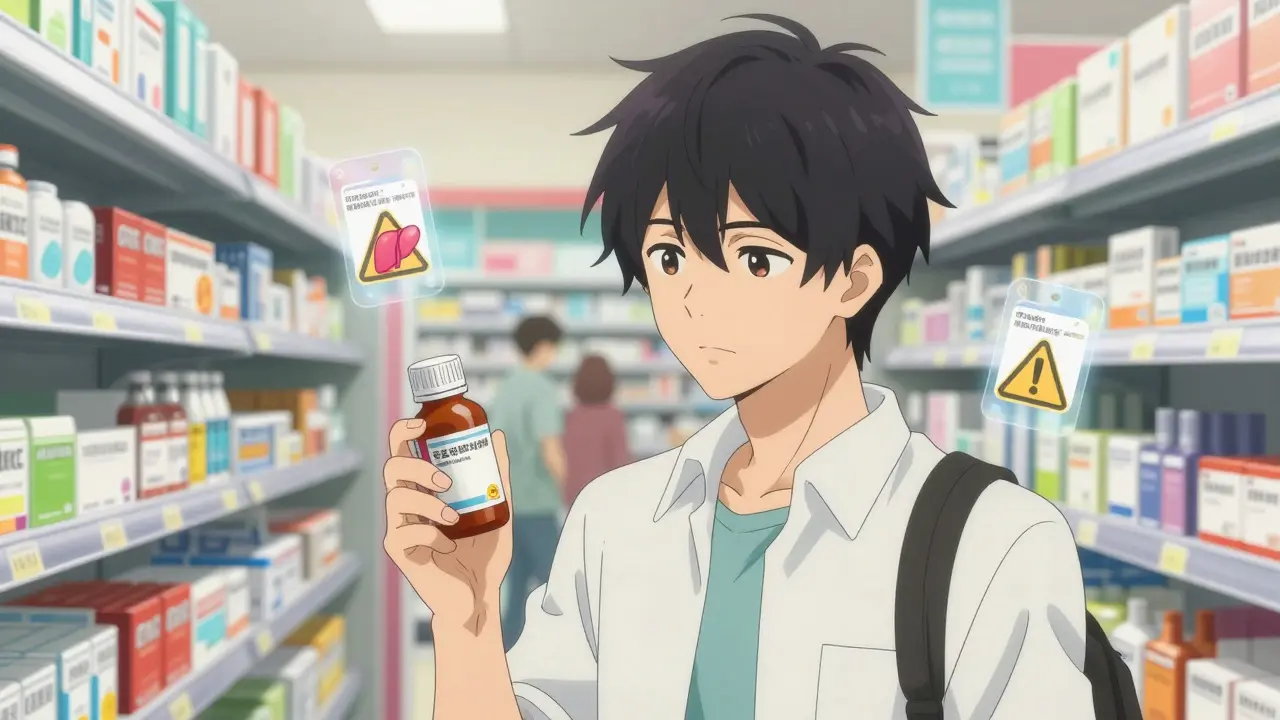
OTC Medication Safety Checker
Medication Safety Checker
Check potential interactions between your prescription medications and common over-the-counter products. This tool helps prevent accidental overdose and dangerous drug combinations.
When a medication moves from prescription-only to over-the-counter (OTC), it’s not just a change in where you buy it-it’s a shift in who’s responsible for your safety. What used to require a doctor’s approval now sits on a shelf next to cough drops and pain relievers. This transition, called an Rx-to-OTC switch, happens when the FDA determines a drug is safe enough for people to use without a prescription. But just because it’s easier to get doesn’t mean it’s risk-free. In fact, the biggest danger isn’t the drug itself-it’s what people don’t know they’re doing when they take it.
Why Do Drugs Switch from Prescription to OTC?
The goal of an Rx-to-OTC switch is simple: give people faster access to safe, effective treatments without making them wait for a doctor’s appointment. Think about ibuprofen. In the 1980s, you needed a prescription to buy it. Now, you can grab a bottle at the gas station. The FDA approved the switch after years of data showed that most people could use it safely for headaches, muscle pain, or fever-without needing a diagnosis. The same happened with omeprazole (Prilosec OTC) for heartburn and loratadine (Claritin) for allergies. These aren’t minor changes. They’re major shifts in how healthcare works.
But behind every switch is a careful review. The FDA doesn’t just say, “Sure, let people buy this.” Manufacturers must prove four things: (1) the condition can be self-diagnosed, (2) consumers can follow the label correctly, (3) the drug has a wide safety margin, and (4) the benefits outweigh the risks even without a doctor. For example, pseudoephedrine (a nasal decongestant) was moved behind the counter instead of fully OTC because it can be used to make methamphetamine. So even when a drug switches, regulators still put guardrails in place.
What You Might Not Realize About OTC Drugs
Most people think OTC means “harmless.” That’s the biggest mistake. A 2023 study found that 77% of patients didn’t know the contraindications for common OTC meds. That means they didn’t realize taking something like ibuprofen could be dangerous if they had kidney disease-or that taking cold medicine with high blood pressure pills could spike their blood pressure to dangerous levels.
One of the most common dangers? Double-dosing. Acetaminophen (Tylenol) is in more than 600 OTC products-cold medicines, sleep aids, pain relievers. People take one for a headache, another for a stuffy nose, and another for trouble sleeping. They don’t realize they’re hitting 4,000 mg of acetaminophen in a single day-the maximum safe limit. Liver damage can happen quietly, without symptoms, until it’s too late.
NSAIDs like naproxen and aspirin carry their own risks. Long-term use can lead to stomach ulcers, kidney failure, or even heart attacks. These aren’t rare side effects. They’re well-documented. But when you’re not seeing a doctor regularly, you don’t get monitored for them.
Who’s Most at Risk?
Not everyone handles OTC drugs the same way. Certain groups face higher risks:
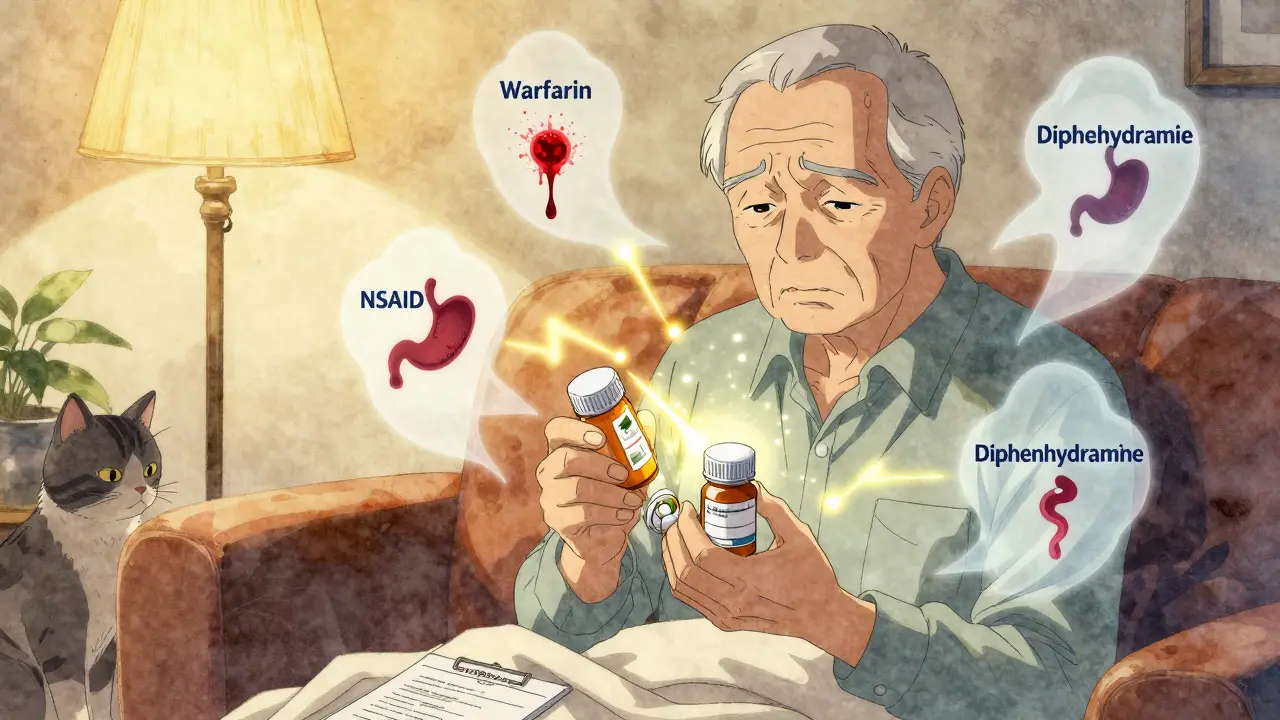
- Older adults-Their bodies process drugs slower. The American Geriatrics Society lists 30 OTC medications that are risky for people over 65. Diphenhydramine (Benadryl) can cause confusion and falls. NSAIDs increase bleeding risk by 2-4 times. Many seniors take five or more medications daily. Adding an OTC painkiller without checking for interactions is a recipe for trouble.
- People on multiple prescriptions-If you’re on blood thinners, antidepressants, or diabetes meds, OTC drugs can interfere. For example, taking NSAIDs with warfarin raises bleeding risk. Combining dextromethorphan (a cough suppressant) with SSRIs can trigger serotonin syndrome-a rare but life-threatening reaction.
- People with chronic conditions-Asthma, liver disease, heart failure, or kidney problems make OTC meds more dangerous. A decongestant might seem harmless, but if you have high blood pressure, it can send your systolic pressure soaring.
- Children-Dosing errors are common. Giving a child adult-strength cough syrup or using multiple products with the same active ingredient can lead to overdose.
The FDA and experts like Dr. Michael Ruffin stress: “Anytime you take medicine, be aware of changes in your body.” If you start feeling dizzy, nauseated, or unusually tired after taking an OTC drug, it’s not just “bad luck.” It could be a reaction.
How to Use OTC Drugs Safely
Just because you don’t need a prescription doesn’t mean you shouldn’t be smart. Follow these three steps every time you pick up an OTC product:
- Read the Drug Facts label-It’s not optional. The label tells you the active ingredient, what it’s for, warnings, and how much to take. Many people skip this. A 2022 survey found only 32% of users consistently read the full label. That’s dangerous. The label isn’t there to be ignored-it’s your safety manual.
- Check for duplicate ingredients-Look at every medicine you’re taking. If two products contain acetaminophen, ibuprofen, or diphenhydramine, you’re doubling your dose. Write down the active ingredients on a notepad. Compare them. This simple step prevents most accidental overdoses.
- Ask your pharmacist-Pharmacists are trained to spot interactions. A 2022 survey showed 68% of people consult a pharmacist before buying OTC meds. But only half ask about their existing conditions or other meds. Don’t just say, “I need something for my cold.” Say, “I take lisinopril and metformin. Is this okay?”
Also, avoid mixing OTC drugs with alcohol. Antihistamines, pain relievers, and sleep aids can amplify drowsiness or liver damage. And never use a sleep aid if you’re already on a prescription sedative. The combination can slow your breathing to a dangerous level.
The Hidden Cost of Convenience
Switching drugs to OTC saves the healthcare system billions. The Consumer Healthcare Products Association estimates $102 billion in avoided costs each year. That’s money saved on doctor visits, lab tests, and ER trips. But convenience comes with trade-offs.
When people self-treat, they delay real diagnoses. A persistent cough might be a cold-or it might be heart failure. A headache could be stress-or a brain tumor. Without a doctor, you don’t get the full picture. A 2023 study in Bangalore found that 85% of patients trusted their pharmacist’s advice, but nearly all were never asked about allergies or existing conditions. That’s not care-that’s guesswork.
And while prices drop after a switch (ibuprofen went from $40/month to under $10), the real cost isn’t always financial. It’s health. A single missed diagnosis can lead to permanent damage.
What’s Changing Now?
The FDA is trying to make OTC labels easier to understand. Their 2022 label modernization initiative requires bigger fonts, clearer warnings, and better organization. This matters because 80 million American adults have low health literacy. If you can’t read the label, you can’t use the drug safely.
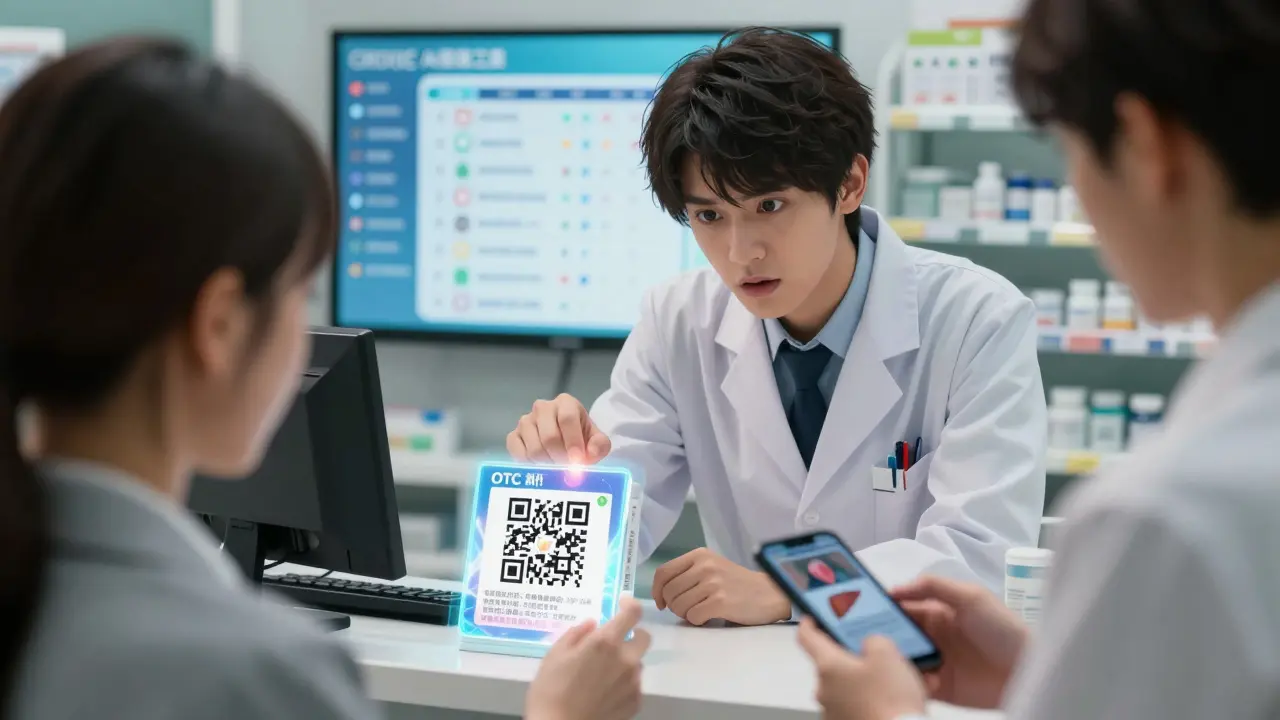
Some pharmacies are testing QR codes on packaging. Scan it, and you get a video explaining the drug, interactions, and when to call a doctor. Walmart rolled this out on 15% of its private-label OTC products in 2023. It’s a small step-but it’s a step toward better safety.
Future tools might use AI to suggest OTC options based on your health profile. But experts warn: without better education, even smart tech won’t help. If you don’t know what’s in your medicine, or how it interacts with what you’re already taking, technology won’t fix that.
Bottom Line: OTC Doesn’t Mean Risk-Free
OTC switches are a win for access. They’re a win for convenience. But they’re not a win for ignorance. The same drugs that help millions can hurt just as many-if used without awareness. You don’t need a prescription to take responsibility. You just need to pay attention.
Don’t assume it’s safe because it’s on the shelf. Don’t trust the label if you don’t read it. Don’t think your pharmacist knows your full medical history unless you tell them. And if you’re taking more than three medications-including OTCs-talk to your doctor before adding anything new.
Medicine doesn’t become harmless just because you can buy it without a script. It becomes your responsibility. And that’s the real switch.


