
Medication Side Effect Checker
Check for Delayed Medication Side Effects
This tool helps identify potential delayed side effects based on medications you've been taking. Note: This is not medical advice. Always consult your doctor.
Most people assume if a medication has been working fine for months-or even years-it’s safe. But that’s not always true. Some of the most dangerous side effects don’t show up until weeks, months, or even years after you start taking a drug. These are called delayed medication side effects, and they catch both patients and doctors off guard. You might feel fine for 18 months on a blood pressure pill, then suddenly wake up with a swollen tongue. Or you could be on a common antibiotic for a sinus infection, and six months later, your Achilles tendon snaps while walking. These aren’t rare accidents. They’re predictable, documented, and often preventable-if you know what to look for.
What Exactly Are Delayed Medication Side Effects?
Delayed medication side effects, or late-onset adverse drug reactions (ADRs), are harmful responses that appear long after you’ve started a drug. Unlike immediate allergic reactions-like hives or anaphylaxis that happen within minutes-these show up slowly. They can emerge 48 hours after taking a pill, or 7 years later. The World Health Organization estimates that 5% of all hospital admissions are due to adverse drug reactions, and nearly a third of those are delayed. That means thousands of people each year are admitted not because their condition got worse, but because a medication they thought was safe suddenly turned dangerous. These reactions aren’t random. They follow patterns. Some are immune-mediated, meaning your body’s defense system turns against itself after being exposed to a drug. Others are toxic, building up over time until they damage organs. The key problem? Doctors rarely connect new symptoms to a drug you’ve been on for years. You go to the ER with a rash and swollen glands, and they treat it as an infection. You’re sent home with antibiotics. The real cause? That blood pressure pill you started five years ago.Common Medications That Cause Delayed Reactions
Certain drugs are notorious for late-onset problems. Here are the top five classes you need to be aware of:- ACE inhibitors (lisinopril, enalapril, ramipril): These are common blood pressure meds. Most people tolerate them for years. But in 1 out of every 200 users, they can cause angioedema-a sudden, life-threatening swelling of the face, lips, tongue, or throat. It can happen after 1 year, 5 years, or even 10 years of use. One patient in Illinois described waking up with his tongue swollen shut at 3 a.m. after seven years on lisinopril. The ER almost intubated him before he remembered reading about this side effect.
- Fluoroquinolone antibiotics (ciprofloxacin, levofloxacin): These are often prescribed for sinus infections or UTIs. In 2018, the FDA strengthened its warning after over 1,000 reports of tendon rupture. The damage doesn’t happen during treatment-it shows up months later. People report tearing their Achilles tendon while walking, gardening, or even standing up from a chair. The risk stays elevated for up to six months after finishing the course.
- Proton pump inhibitors (PPIs) (omeprazole, esomeprazole): These acid-reducing pills are among the most overused drugs in the world. Many take them for heartburn for years. But after two or more years, they can cause serious nutrient deficiencies. Vitamin B12 levels drop by 65% after two years and 112% after four years, according to a 2019 JAMA study of over 250,000 people. Low magnesium can lead to muscle cramps, irregular heartbeat, and even slurred speech. Kidney damage and bone fractures are also linked to long-term PPI use.
- Corticosteroids (prednisone, dexamethasone): Used for asthma, arthritis, and autoimmune diseases, these drugs are powerful but dangerous over time. After months or years, they can cause osteoporosis, cataracts, glaucoma, and diabetes. These aren’t side effects you feel right away. They’re silent damage that shows up as a broken hip or blurred vision.
- Metformin: This is the go-to drug for type 2 diabetes. But after four or more years, it can cause vitamin B12 deficiency in up to 30% of users. Symptoms include fatigue, numbness in hands and feet, memory problems, and depression. Many doctors never test for it unless the patient is anemic.
Types of Delayed Reactions and When They Show Up
Not all delayed reactions are the same. They’re grouped by how the body responds-and when. Here’s what to expect based on timing:- 2-8 weeks after starting: This is the window for DRESS syndrome (Drug Reaction with Eosinophilia and Systemic Symptoms). It starts with a rash, fever, and swollen lymph nodes, then can damage your liver, kidneys, or lungs. It’s rare but deadly-10% of cases are fatal. Drugs linked to DRESS include anticonvulsants like phenytoin, allopurinol (for gout), and some antibiotics.
- 5-8 days after starting: Type II hypersensitivity reactions can cause low platelets or red blood cell destruction. These are often mistaken for infections or autoimmune disorders.
- 48-72 hours to 6 weeks: This is the range for Type IV reactions, like contact dermatitis or AGEP (Acute Generalized Exanthematous Pustulosis). AGEP looks like hundreds of tiny, sterile pustules on red, swollen skin. It’s not contagious, but it can be mistaken for a bacterial infection.
- 6-12 months: Drug-induced lupus from medications like procainamide or hydralazine. Symptoms mimic real lupus-joint pain, fatigue, rash-but go away when you stop the drug.
- Years later: Osteoporosis from steroids, kidney damage from PPIs, B12 deficiency from metformin. These are slow burns. You don’t feel them until something breaks.

Who’s at Highest Risk?
Not everyone gets these reactions. Some people are far more vulnerable:- People over 65: They make up only 16% of the population but account for 25% of all emergency visits for drug side effects. Their bodies process drugs slower, and they often take five or more medications at once.
- Women: They experience delayed hypersensitivity reactions 1.5 to 2 times more often than men. Hormones may play a role in how the immune system reacts.
- People with certain genes: If you carry the HLA-B*15:02 gene, taking carbamazepine (an epilepsy drug) gives you a 50-80% chance of developing a deadly skin reaction called SJS/TEN. In the general population, that risk is 0.01%. Screening for this gene is now standard in parts of Asia and recommended by the FDA before prescribing.
- Those with autoimmune conditions: If you have Crohn’s disease or ulcerative colitis and take thiopurines (like azathioprine), your risk of DRESS syndrome is 12 times higher than normal.
How Doctors Miss These Reactions
The biggest problem isn’t the reaction-it’s the delay in diagnosis. Patients often don’t think to mention a drug they’ve been on for years. Doctors don’t ask. A 2023 Reddit thread with over 1,200 reports found that 68% of people with delayed reactions were initially misdiagnosed. One woman was treated for psoriasis for six months before realizing her rash was from lamotrigine, an epilepsy drug she’d been on for three years. The FDA’s own data shows that 58% of patients with delayed reactions kept taking the drug for 14 days or longer after symptoms started because their doctor didn’t connect the dots. That’s dangerous. Every day you keep taking the drug, the damage gets worse.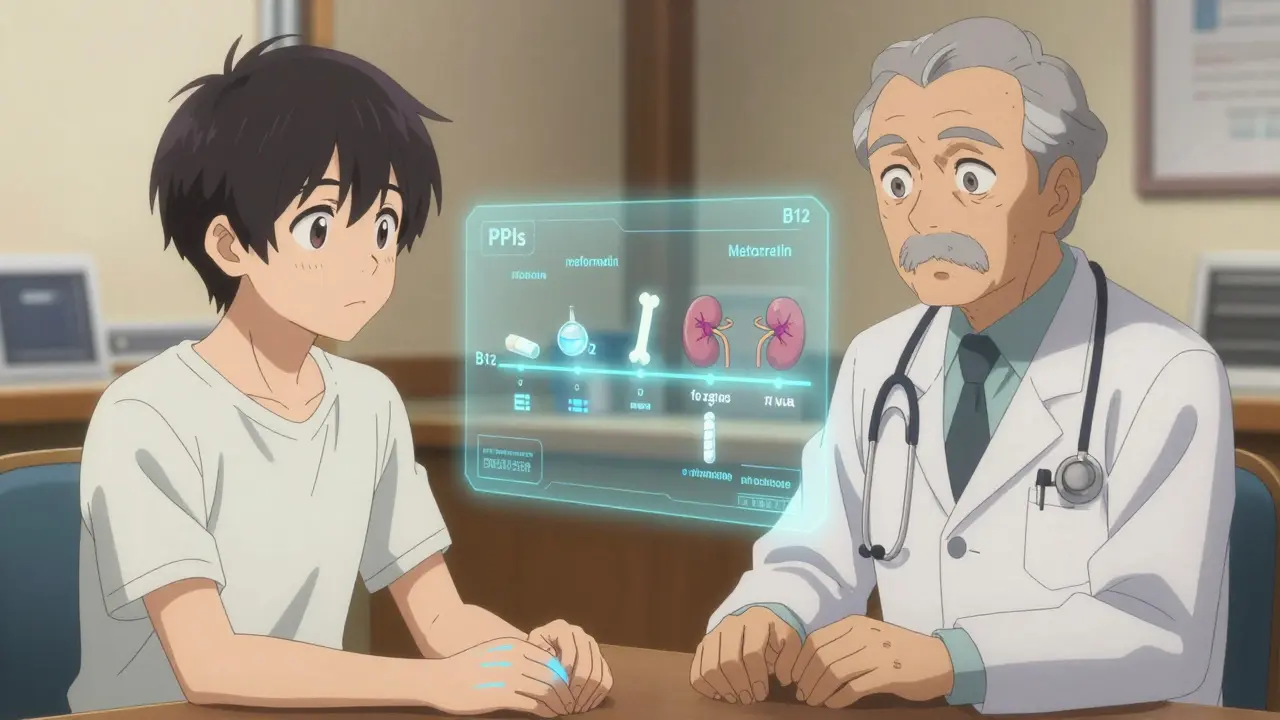
What to Do If You Suspect a Delayed Reaction
If you’ve started a new symptom-rash, swelling, joint pain, numbness, fatigue, confusion-and you’ve been on the same medication for months or years, consider this:- Write down every drug you’ve taken in the last 12 months, even supplements and over-the-counter pills.
- Check the timing. Did the symptom start 2-8 weeks after starting a new drug? Or did it appear after years of no issues?
- Don’t stop the drug on your own. Some medications need to be tapered. Call your doctor and say: “I think this side effect might be linked to [drug name]. I’ve been on it for [X] months/years.”
- Ask for testing. Skin patch tests can confirm delayed reactions with 70-80% accuracy if done 4-6 weeks after the reaction. Blood tests can check for eosinophilia, liver enzymes, or vitamin levels.
- Report it. Use the FDA’s MedWatch system or your country’s equivalent. Your report helps others.
What’s Changing in Medicine
The tide is turning. The FDA’s Sentinel Initiative now tracks over 200 million patient records to predict who’s at risk for delayed reactions. Algorithms can flag high-risk patients before a drug is even prescribed. By 2025, routine genetic screening for drugs like carbamazepine and abacavir will likely become standard in the U.S. and Europe. The European Medicines Agency has already updated labeling for 12 drug classes-including all fluoroquinolones-to include stronger warnings about delayed tendon, nerve, and muscle damage. Pharmacists are now trained to ask: “Have you noticed any new symptoms since you started this medication?”Final Advice: Stay Vigilant, Not Afraid
Medications save lives. But they’re not harmless. The idea that “if it’s been working, it’s safe” is outdated. Delayed side effects are real, documented, and often preventable. The key is awareness. Keep a list of your medications. Note when you started each one. Pay attention to new symptoms-even if they seem unrelated. If something feels off after months or years on a drug, speak up. You know your body better than any algorithm. Don’t wait for a hospital visit to realize the problem started with a pill you thought was harmless.Can delayed medication side effects happen after years of safe use?
Yes. Many delayed reactions appear after months or even years of uneventful use. For example, ACE inhibitors like lisinopril can cause life-threatening angioedema after 7-10 years. Fluoroquinolone antibiotics can lead to tendon rupture up to six months after finishing the course. PPIs can cause vitamin B12 deficiency after four years. The longer you take a drug, the higher the risk of late-onset damage.
What are the most common drugs linked to delayed side effects?
The top offenders include ACE inhibitors (lisinopril, enalapril), fluoroquinolone antibiotics (ciprofloxacin, levofloxacin), proton pump inhibitors (omeprazole, esomeprazole), corticosteroids (prednisone), metformin, anticonvulsants (phenytoin, lamotrigine), and allopurinol. These drugs have well-documented patterns of delayed reactions ranging from skin rashes to organ damage.
How can I tell if a new symptom is caused by a medication?
Ask yourself: When did the symptom start? Did it begin 2-8 weeks after starting a new drug? Or did it appear after years of stable use? If you’ve added a new medication recently-or even restarted an old one-consider it a possible cause. Symptoms like rash, swelling, joint pain, fatigue, numbness, or unexplained fever should prompt you to review your drug list with your doctor.
Are delayed side effects more common in older adults?
Yes. People over 65 account for 25% of all emergency visits due to adverse drug reactions, even though they make up only 16% of the population. Older adults metabolize drugs slower, take more medications, and have reduced organ function-all of which increase risk. They’re also more likely to develop complications like kidney damage from PPIs or fractures from steroid-induced osteoporosis.
Should I get genetic testing before taking certain drugs?
For some drugs, yes. If you’re prescribed carbamazepine (for epilepsy or nerve pain), the FDA recommends testing for the HLA-B*15:02 gene, especially if you’re of Asian descent. Carrying this gene increases your risk of a deadly skin reaction by 50-80%. Testing for HLA-B*57:01 is also standard before starting abacavir (an HIV drug). While not routine for all patients yet, genetic screening for delayed reactions is expanding rapidly and may become standard in the next few years.


