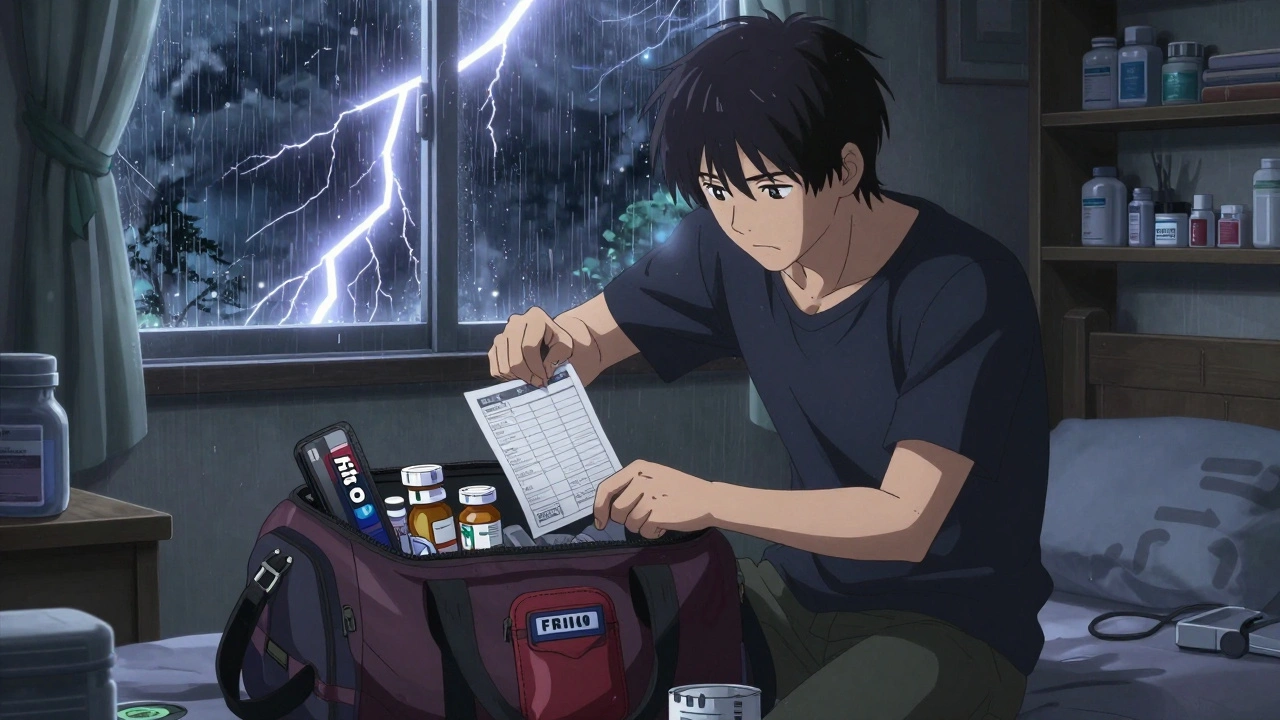
When a storm hits, a fire spreads, or an earthquake shakes your neighborhood, you won’t have time to search through drawers for your pills. Your heart medication, insulin, or asthma inhaler could be sitting in a flooded basement or buried under debris. That’s why a medication go-bag isn’t just a good idea-it’s a life-saving necessity.
Why Your Medications Can’t Wait
In the first 72 hours after a disaster, pharmacies close, power lines go down, and roads become impassable. If you rely on daily medications, skipping even one dose can trigger serious health problems. The CDC reports that 38% of emergency room visits during disaster recovery are tied to people running out of essential drugs. Cardiovascular meds top that list-27% of those cases involve blood pressure or heart failure medications. For someone with diabetes, missing insulin can mean a trip to the hospital-or worse. You might think, “I’ll just grab my pill bottle if I have to leave.” But in a real emergency, you won’t be thinking clearly. You’ll be packing clothes, grabbing kids, maybe carrying a pet. Your meds won’t be the first thing on your mind. And if you’re not prepared, you’re putting your health at risk.What Goes in a Medication Go-Bag
A medication go-bag isn’t just a box of pills. It’s a carefully organized system designed for speed, safety, and clarity. Here’s what you need:- A 14-day supply of all prescription medications-not 7 days. While some sources say 7 days is enough, real-world disasters like wildfires and hurricanes often trap people for longer. Alert San Diego and the CDC both recommend two weeks. If your doctor won’t give you a 14-day refill, ask for a 90-day supply and rotate it every three months.
- Over-the-counter essentials-pain relievers like acetaminophen or ibuprofen, antihistamines, antacids, laxatives, and electrolyte packets. These aren’t optional. Dehydration, stress, and disrupted routines can cause problems you didn’t expect.
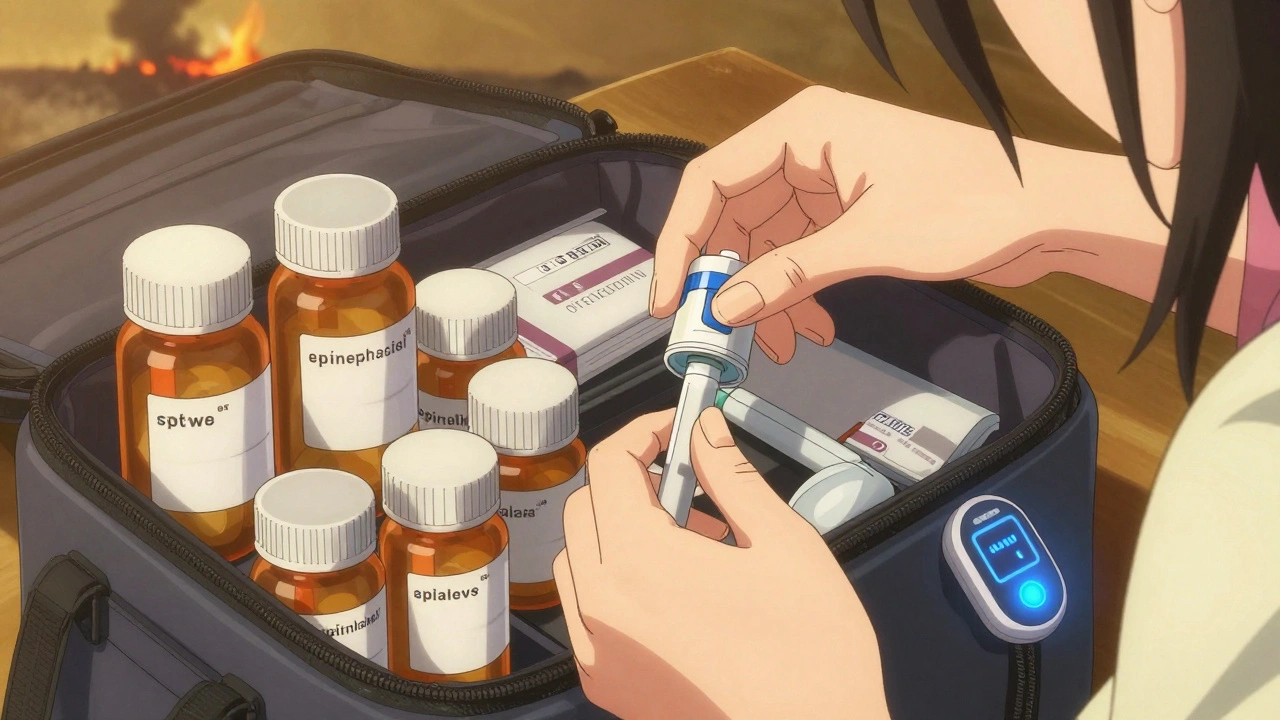
- Specialty items-insulin pens, epinephrine auto-injectors, inhalers, nebulizers, glucose monitors, and test strips. These are high-risk items. If your insulin gets too hot or too cold, it stops working. If your EpiPen expires, it won’t save your life.
- Original packaging-keep pills in their labeled bottles. Emergency responders need to know exactly what you’re taking. Don’t dump everything into a Ziploc. If you use a pill organizer, keep the original bottles in the bag too.
- A written medication list-include the name of each drug, dosage, frequency, and why you take it. For example: “Lisinopril 10mg, once daily, for high blood pressure.” Add allergies and any past reactions. Include your doctor’s name and phone number.
- Medical documents-insurance cards, a copy of your most recent prescription list, and any advance directives or living wills. Keep these in a waterproof, zip-top bag.
- A small flashlight and batteries-in case you need to check labels at night.
Storing Medications Safely
Your meds need protection-not just from water, but from heat, cold, and light. Most pills are fine at room temperature, but some aren’t. Insulin, certain antibiotics, and biologics can break down fast if they get too hot. Here’s how to handle it:- Use a cooling case like the Frio Wallet for insulin or other temperature-sensitive drugs. It works without electricity and keeps meds below 86°F for up to 48 hours.
- A new option is the MedAngel ONE, a small sensor that connects to your phone and alerts you if your meds are overheating. It’s FDA-cleared and designed for go-bags.
- Store your go-bag in a dry, cool spot-like a high shelf in your bedroom closet. Avoid the bathroom (too humid) or the garage (too hot or cold).
- Keep it away from kids and pets. A curious child opening an EpiPen could be deadly.
How to Keep Your Go-Bag Fresh
A go-bag that’s full of expired pills is worse than no bag at all. Expired epinephrine doesn’t work. Old antibiotics might not kill an infection. Here’s how to stay on top of it:- Set a reminder every three months to check expiration dates. Mark your calendar or use a phone alert.
- When you refill a prescription, swap out the old pills in your go-bag with the new ones. Don’t wait until the bottle’s empty.
- Use a rotation system. Put the newest meds in the back of the bag, the oldest in front. That way, you use the oldest first.
- If you’re not sure whether a pill is still good, don’t guess. Call your pharmacist. They can tell you if it’s safe to use past the label date.
Special Cases: Kids, Seniors, and Complex Regimens
If you’re caring for someone with complex needs, your go-bag needs to be even more detailed.- For children-include a list of all medications, allergies, and your pediatrician’s info. Add a small syringe or dosing cup if they take liquid meds.
- For seniors-89% of Americans over 65 take at least one prescription. Their go-bag should include hearing aids, glasses, dentures, and mobility aids if needed. Don’t forget a list of all their doctors and pharmacies.
- For complex regimens-if you take 10+ pills a day, use a pill organizer with days of the week and times (morning, noon, night). Label each compartment clearly. Include a printed schedule so someone else can help if you’re unconscious.
What to Avoid
People make the same mistakes over and over:- Keeping meds in the original pharmacy bag without labels-no one can tell what’s inside.
- Putting everything in a backpack that’s too heavy. Your go-bag should be easy to grab and carry. A small duffel or wheeled suitcase works better than a giant backpack.
- Assuming your pharmacy will help you in a crisis. Pharmacists in 42 states can give emergency refills, but only if they know your meds and have access to your records. Don’t rely on that.
- Waiting until a storm is coming to build your bag. By then, shelves are empty and pharmacies are overwhelmed.
Real Stories, Real Lessons
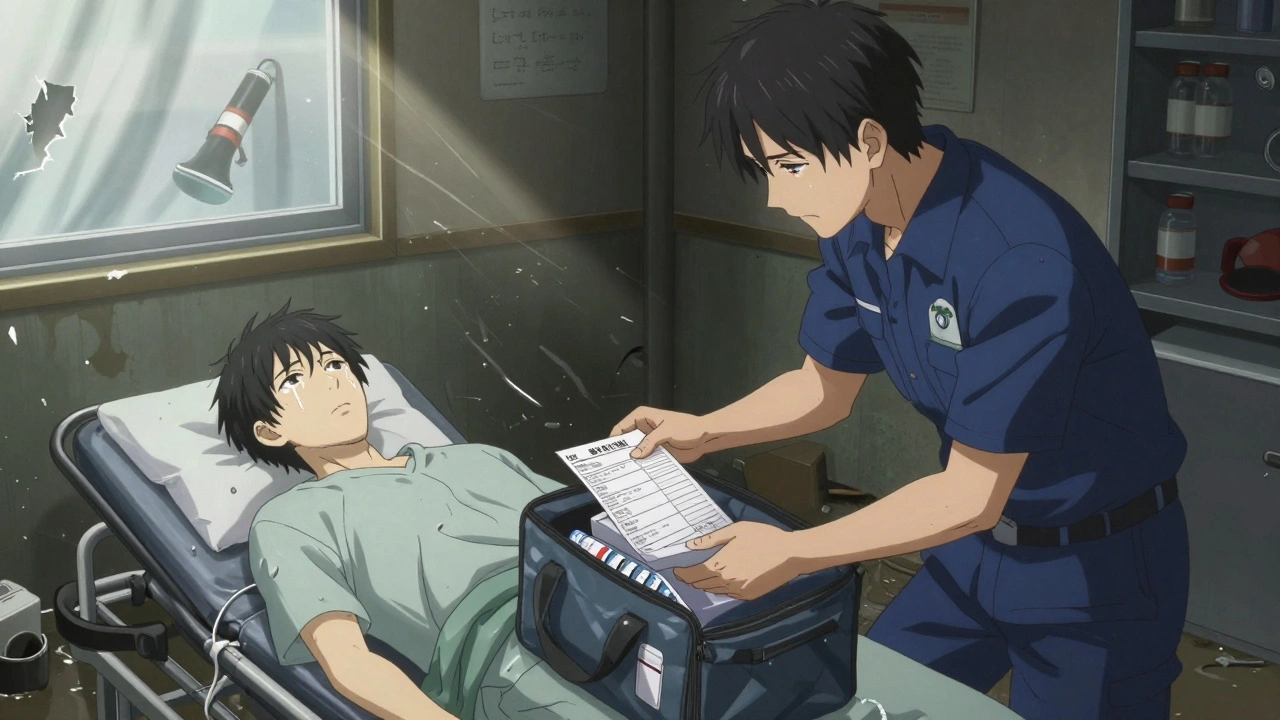
One woman in Florida lost her insulin during Hurricane Ian. She had a 7-day supply, but she was stuck for 11 days. She ended up in the ER with dangerously high blood sugar. She now keeps a 14-day supply and a Frio Wallet. Another man in California had his EpiPen in his go-bag during a wildfire. The bag got wet, but the pills stayed dry because he used a waterproof case. He didn’t need it-but he was glad it was there. And in New York, a woman with asthma was evacuated during a flash flood. The paramedics didn’t know what meds she was on. But her go-bag had a printed list. They gave her the right inhaler, fast. These aren’t rare cases. FEMA’s report after Hurricane Ida found that 23% of evacuees didn’t have enough meds. Most of them didn’t even have a list.How to Start Today
You don’t need to do it all at once. Here’s a simple plan:- Grab a small, water-resistant bag-a duffel, a hard-shell case, or even a sturdy plastic bin with a lid.
- Collect your top 3 most critical meds. Put them in with their original bottles and a printed list.
- Set a reminder for next week to add two more meds.
- By the end of the month, you’ll have a full 14-day supply.
- Check expiration dates every three months. Rotate as you refill.
Final Thought
A go-bag isn’t about fear. It’s about control. When the world goes chaotic, you’ll still have your health in your hands. You won’t be begging for a refill. You won’t be guessing what’s in that unlabeled bottle. You’ll be ready.And in an emergency, that’s worth more than anything.
How long should my medication supply be in a go-bag?
Aim for a 14-day supply of all essential medications. While some guidelines suggest 7 days, real emergencies like wildfires, hurricanes, or earthquakes often last longer. The CDC and Alert San Diego both recommend two weeks, especially for chronic conditions like diabetes, heart disease, or asthma. If your doctor won’t give you a 14-day refill, ask for a 90-day supply and rotate your stock every three months.
Can I use a pill organizer instead of original bottles?
Use a pill organizer for daily convenience, but always keep the original labeled bottles in your go-bag. Emergency responders need to see the prescription label, dosage, and pharmacy info. A pill organizer doesn’t show that. If you’re in a car accident or unconscious, the bottle is what saves you.
What if I need refrigerated meds like insulin?
Use a cooling case like the Frio Wallet, which works without electricity and keeps insulin below 86°F for up to 48 hours. For longer trips, consider the MedAngel ONE, a small sensor that alerts your phone if your meds get too hot or cold. Never leave insulin in a hot car or a non-climate-controlled bag.
Do I need to carry my medical records?
Yes. Include a printed list of your medications, allergies, chronic conditions, and your doctor’s contact info. Also bring copies of your insurance card and any advance directives. Keep these in a waterproof pouch. In an emergency, this information helps responders avoid dangerous drug interactions and make faster decisions.
How often should I check my go-bag?
Check it every three months. Look for expired pills, broken seals, or damp packaging. Replace anything that’s out of date. Rotate your stock when you refill prescriptions-put the newest meds in the back, the oldest in front. This ensures you’re always using the oldest first.
Can pharmacists give me emergency meds if I run out?
In 42 U.S. states, pharmacists can dispense emergency refills without a new prescription during a declared disaster. But they need to know your meds and have access to your records. Don’t rely on this. Always have your own supply ready. It’s not guaranteed, and delays can be deadly.
Is a go-bag really necessary if I’m young and healthy?
Yes. Even if you don’t think you need meds, you might have an undiagnosed condition or be taking OTC drugs like blood thinners, asthma inhalers, or insulin for prediabetes. Also, emergencies can affect anyone-you might be helping a relative, friend, or neighbor who needs their meds. Having a go-bag helps you help others too.


