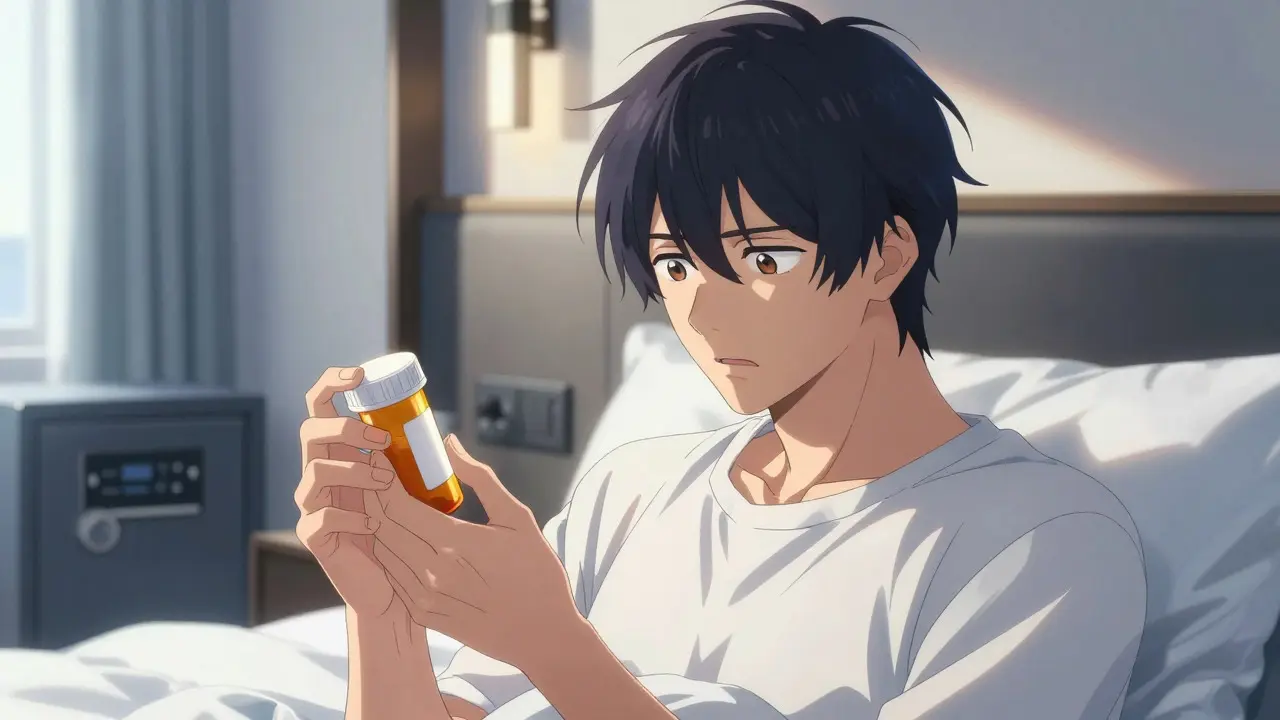
Imagine waking up in a strange city, reaching for your daily heart medication, and finding the bottle empty. It is not just an inconvenience; it can be a medical emergency. According to the U.S. Department of Justice, over 17% of prescription drug diversion cases involve medications stolen directly from travelers' accommodations. Whether you are staying in a luxury suite or a budget hostel bunk, keeping your meds safe is as critical as guarding your passport.
This guide breaks down exactly how to protect your prescription drugs, controlled substances, and essential over-the-counter remedies while traveling. We will cover everything from testing hotel safes to navigating the unique risks of shared dormitories, ensuring you stay healthy and legal throughout your trip.
Why Medication Security Matters More Than You Think
We often treat our luggage as a catch-all for clothes and toiletries, but your medicine cabinet requires a higher level of vigilance. The stakes are incredibly high. The CDC reports that unintentional poisoning causes over 100,000 deaths annually in the United States alone, with prescription drugs involved in 93% of those fatalities. While this data focuses on home accidents, the principle applies to travel: unsecured medications are vulnerable to theft, accidental ingestion by children, or tampering.
Travel adds layers of complexity. You are in unfamiliar environments, potentially dealing with language barriers, different time zones, and varying local laws. Dr. Sarah Thompson, Director of the National Poison Control Center, advises that travelers should treat medications with the same security protocols as passports and credit cards. Never leave them unsecured in your room. If you lose your wallet, you can replace it. If you lose your insulin or ADHD medication, the consequences can be life-threatening.
The Gold Standard: Using Hotel Room Safes Correctly
For most travelers staying in hotels, the in-room electronic safe is your best friend. According to the American Hotel & Lodging Association, 92% of U.S. hotels now feature these devices. However, having a safe is not enough; you must use it correctly.
Electronic Hotel Safes are secure locking compartments installed in hotel rooms designed to protect valuables like jewelry, electronics, and medications. They typically require a user-defined PIN code for access.
Here is how to maximize their security:
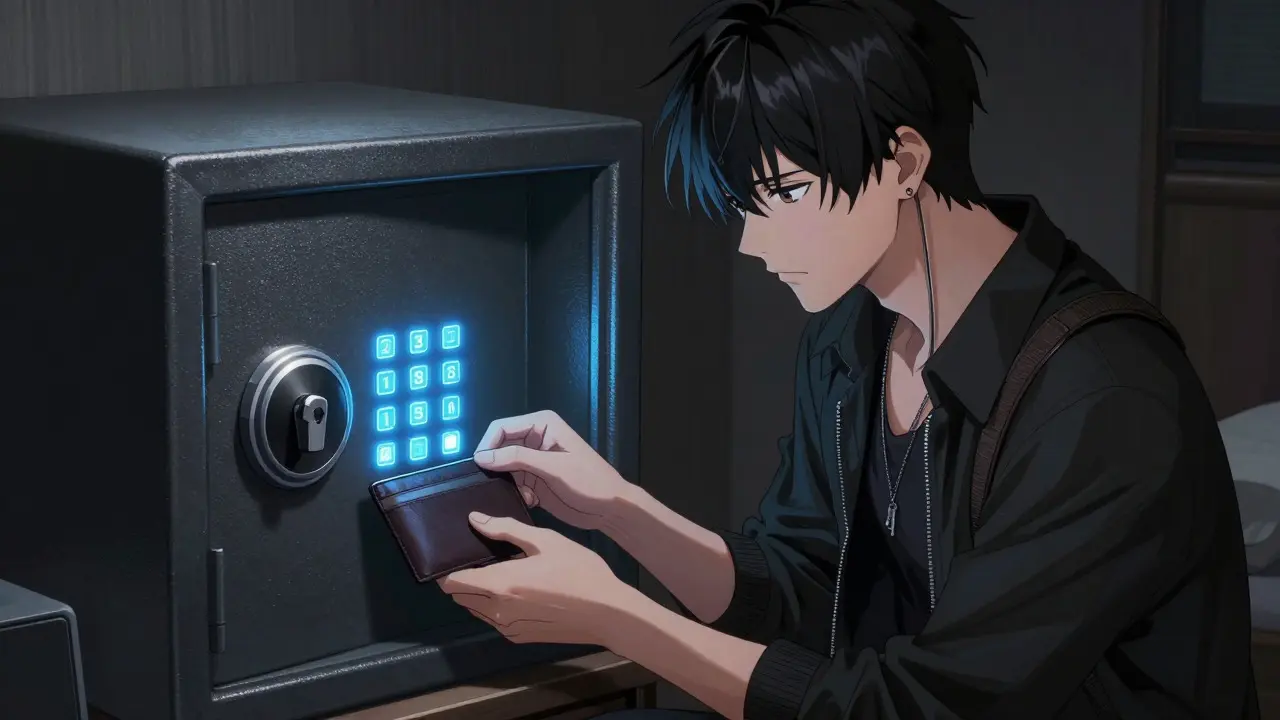
- Test Immediately: Upon entering your room, verify the safe works within the first 15 minutes. OmniLert’s 2023 report found that nearly 19% of hotel safes malfunction due to battery issues or electronic glitches. Put your wallet inside, lock it, and try to open it with the wrong code to ensure the lockout mechanism (usually 30-60 seconds after three failed attempts) functions properly.
- Store High Up: If you are traveling with children, store the safe contents at least 5 feet off the floor. Research from the University of Florida shows this simple step reduces accidental child access by 82%.
- Keep Original Containers: Always keep medications in their original pharmacy-labeled bottles. This protects you legally and ensures you have dosage instructions handy if you need help in an emergency.
If the safe feels flimsy or the door doesn't latch securely, do not ignore it. Go to the front desk immediately and request a room change or ask if they offer a larger, more secure vault-style safe at the concierge desk.
Navigating Hostel Risks: Dorms vs. Private Rooms
Hostels present a completely different security landscape. While they offer incredible social opportunities and lower costs, they lack the individualized security of hotels. Only 38% of private hostel rooms feature individual safes, and dormitory settings are particularly risky.
A study in the Journal of Travel Medicine documented 14.3 incidents of medication theft or tampering per 1,000 hostel stays. In a shared dorm, your belongings are exposed to dozens of strangers overnight. Here is how to handle medication security in hostels:
- Request Private Rooms: If you have essential medications, pay the extra cost for a private room. Theft rates in dorms are 3.7 times higher than in private rooms.
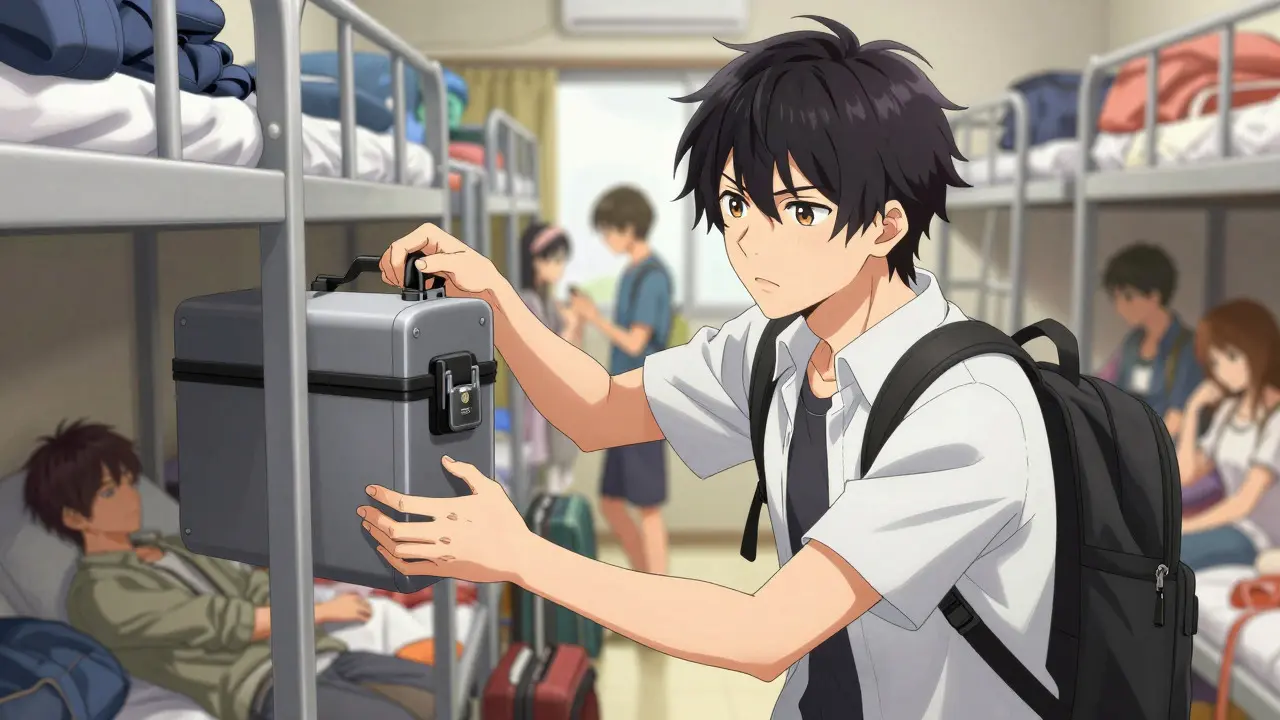
- Use Portable Lock Boxes: Since built-in safes are rare, invest in a TSA-approved portable lock box. Models like the Med-ico Secure Rx offer significant resistance to prying and crushing. These can be bolted to a bed frame or heavy furniture if the hostel allows it.
- Leverage Digital Key Systems: Premium hostels using systems like Cloudbeds Security Suite have reduced unauthorized access by 72%. Check if your hostel uses digital locks before booking, as traditional master keys used by staff pose a higher risk.
If you must stay in a dorm, consider carrying small, non-controlled essentials on your person during the day and storing them in a locked bag under your pillow at night. However, this is less secure than a dedicated lockbox.
Legal Compliance: Keeping Controlled Substances Safe
Security isn't just about theft; it's also about legality. If you take controlled substances like opioids, stimulants (e.g., Adderall), or benzodiazepines, you face strict regulations both domestically and internationally.
The DEA requires that all controlled substances remain in their original pharmacy containers with clear labels showing your name, the doctor's name, and the prescription details. Deviating from this can result in fines up to $15,000 per incident. When traveling abroad, the U.S. Department of State warns that many countries have zero-tolerance policies for certain medications common in the U.S.
To stay compliant and secure:
- Maintain a Log: For controlled substances, keep a written log of your inventory. Note the beginning balance, any doses taken, and the ending balance. This aligns with DEA Form 106 requirements and helps prove legitimacy if questioned.
- Carry Documentation: Bring a letter from your prescribing physician explaining your condition and the necessity of the medication. Keep this in your carry-on, separate from the meds themselves.
- Check Local Laws: Before booking, research the destination country's drug laws. Some nations ban specific ingredients entirely. Improper storage or declaration can lead to confiscation or legal trouble.
Essential Gear for Medication Security
Investing in the right tools can make a huge difference in your peace of mind. Here is a comparison of common storage options:
| Storage Method | Security Level | Accessibility | Best For |
|---|---|---|---|
| Hotel Electronic Safe | High | Medium (47 sec avg access) | Most travelers in hotels |
| TSA-Approved Lock Box | Medium-High | Low (requires combination/key) | Hostel guests, no-safe rooms |
| On-Person Pouch | Variable | High (Immediate) | Emergency meds (EpiPens, Nitro) |
| Pill Organizer | Low | High | Non-controlled, short trips only |
Note that pill organizers and plastic bags lack child-safety features. The Institute for Training and Care Alternatives warns against using them for travel because they increase the risk of accidental pediatric ingestion. Stick to original bottles whenever possible.
Pro Tips for Emergency Access
There is a trade-off between security and accessibility. UL testing shows that breaking into a certified safe takes an average of 27.5 minutes, while consumer lock boxes take only 8.2 minutes. However, accessing a safe yourself takes about 47 seconds, compared to 8 seconds for bedside storage.
This delay matters in emergencies. The International Society of Travel Medicine notes that 63% of medication-related travel emergencies require immediate access. Therefore:
- Never Store Life-Saving Meds in Safes: Epinephrine auto-injectors (EpiPens), nitroglycerin, and rescue inhalers should always be on your person or in an easily accessible pocket. Do not lock these away.
- Daily Inventory Checks: For extended stays, perform a daily count of your medications. Travel health experts report that this habit reduces medication discrepancies by 94%.
- Biometric Options: Look for hotels offering biometric safes. Pilot programs show a 98.7% reduction in unauthorized access attempts compared to traditional PIN safes.
What to Do If Your Medication Is Stolen
If you discover your medication is missing, act quickly:
- Contact Hotel Management: Report the theft immediately. Ask for a copy of the incident report. Many states now require hotels to maintain logs of safe access attempts.
- File a Police Report: Especially important for controlled substances. You will need this document for insurance claims and potentially for obtaining emergency refills.
- Seek Local Medical Help: Visit a local clinic or hospital. Carry your physician's letter and prescription details to facilitate a temporary refill if necessary.
- Contact Your Insurance: Notify your travel insurance provider. Document all costs associated with replacing the medication.
Can I put my medication in checked luggage?
It is generally recommended to keep all medications in your carry-on luggage. Checked bags can be lost, delayed, or exposed to extreme temperatures that may degrade the medication. Additionally, carry-on bags allow you to keep your meds under your direct supervision at all times.
Is it safe to use a hotel mini-fridge for insulin?
Only if you can verify its temperature stability and security. Mini-fridges are often not locked and may fluctuate in temperature. Use a portable insulated cooler with a biometric lock or ice packs instead. Dr. Emily Rodriguez documented a case where a traveler avoided spoilage during a power outage by using such a device.
What if the hotel safe is broken?
Do not store your medications in a broken safe. Request a room change immediately. If that is not possible, ask if the front desk has a secure vault where you can deposit valuables. Alternatively, use a portable TSA-approved lock box secured to heavy furniture.
Do I need a doctor's note for international travel?
Yes, especially for controlled substances or injectable medications. A letter from your prescribing physician should include your diagnosis, the medication name, dosage, and confirmation that it is prescribed to you. This helps avoid legal issues in countries with strict drug laws.
How do I prevent children from accessing my meds in a hotel?
Store medications in the highest part of the room, ideally in a locked safe placed on a high shelf. Ensure all meds are in child-resistant containers. Never leave medications unattended on nightstands or bathroom counters, even for a moment.