
The first company to challenge a brand-name drug’s patent and win can get 180 days of exclusive rights to sell the generic version - no other generic can enter the market during that time. This isn’t a gift. It’s a legal tool built into U.S. drug law to shake up pricing and get cheaper medicines to patients faster. But in practice, it’s become a high-stakes game of timing, strategy, and sometimes, delay.
Why the 180-Day Rule Exists
Back in 1984, Congress passed the Hatch-Waxman Act to fix a broken system. Brand-name drugmakers had long patents and high prices. Generic companies couldn’t even start testing their versions until the patent expired - even if they knew the patent was weak or invalid. The law changed that. It let generic manufacturers file an Abbreviated New Drug Application (ANDA) and say, in writing, that the brand’s patent was either invalid, unenforceable, or wouldn’t be infringed. That’s called a Paragraph IV certification.That’s the trigger. The first company to file that certification gets 180 days of exclusivity. During that time, the FDA can’t approve any other generic versions of the same drug. The idea? Reward the risk-taker. Challenging a patent is expensive. It can cost millions. And if you lose, you’re stuck with nothing. So the 180-day window is meant to make it worth the gamble.
Since 1984, this rule has helped bring over 14,000 generic drugs to market. Today, 90% of prescriptions in the U.S. are filled with generics - but they cost only 23% of what brand drugs do. That’s the win.
How the Clock Starts - And When It Doesn’t
You might think the 180 days start when the FDA approves the generic. But that’s not how it works. The clock starts on the earliest of two dates: either the day the first generic company actually starts selling the drug, or the day a court rules the patent is invalid or not infringed.This detail matters - a lot. If a company gets approval but doesn’t launch right away, the clock still ticks. And if the case is tied up in appeals? The clock keeps running. That’s how some companies have stretched 180 days into years.
In 2020, six companies qualified as first applicants for a generic version of apixaban, a blood thinner. Only three ended up launching. The others either couldn’t get their manufacturing right, didn’t want to risk a lawsuit, or waited to see who else would move. The three who launched shared the 180-day window. The others got nothing. That’s the reality: it’s not just about being first to file. You have to be first to sell.
The Big Problem: Deliberate Delays
Here’s where things get messy. The system was meant to speed up generic entry. But some companies use the exclusivity to block competition - not encourage it.Brand-name companies sometimes strike deals with the first generic applicant. They pay them not to launch. Or the generic company itself waits. Why? Because if they delay launching, they can keep the exclusivity alive while the brand drug stays on the market without competition. That means the brand keeps charging high prices - and the generic company waits to cash in later.
The Federal Trade Commission found 147 cases between 2015 and 2020 where this exact thing happened. In one case, a generic company received approval in 2016 but didn’t launch until 2020 - four years later. The brand drug stayed at full price the whole time. Patients paid $13 billion extra in those years, according to Harvard Medical School’s Dr. Aaron Kesselheim.
It’s called “evergreening by delay.” And it’s legal - for now.
Forfeiture Rules - And How Companies Lose the Prize
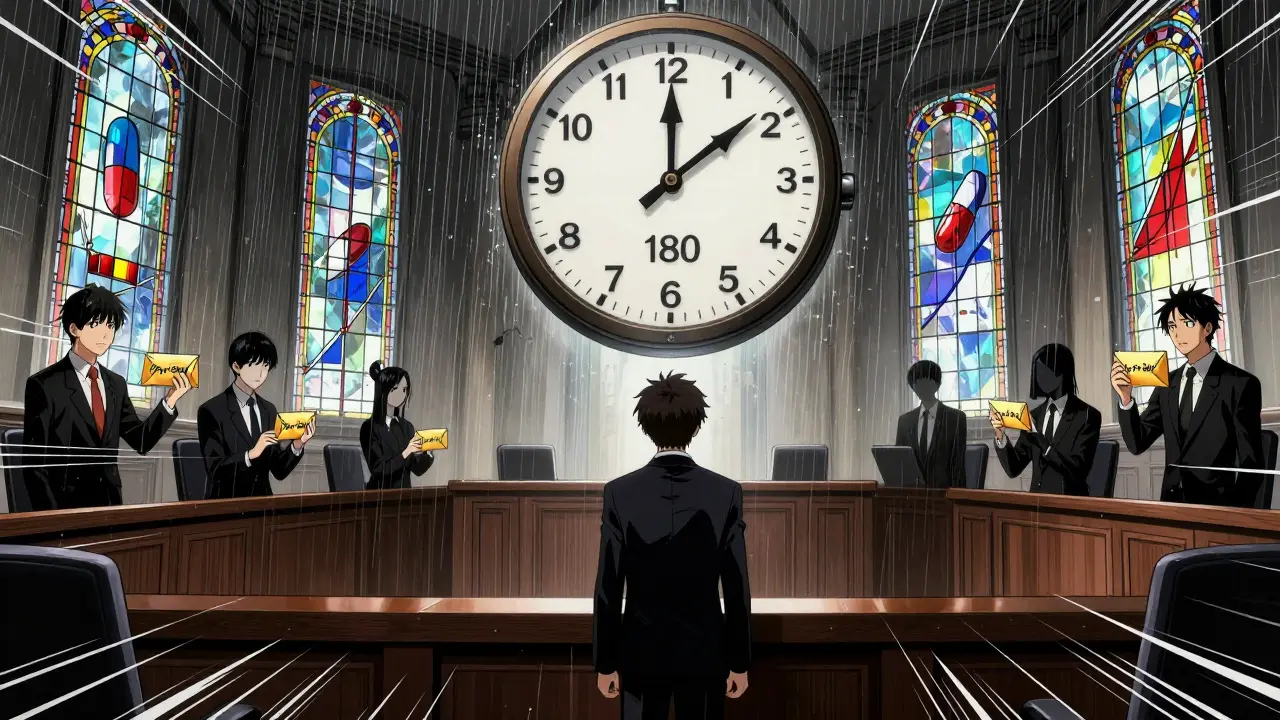
The law has safety nets. If a company doesn’t launch within 75 days of getting a Notice of Commercial Marketing (NOCM) from the FDA, they forfeit their exclusivity. Same if they don’t get tentative approval within 30 months of filing the Paragraph IV challenge.But here’s the twist: many companies don’t even try. About 35% of first applicants lose their exclusivity because they never launch. Why? Sometimes it’s manufacturing problems. Other times, it’s legal uncertainty. Or they’re waiting for a better moment.
On average, it takes 42 months from the time a generic company files its challenge to when it actually sells the drug. Nearly 70% of those cases involve patent lawsuits. That’s not fast. That’s a marathon.
Who Benefits the Most?
It’s not small startups. It’s big players.Between 2018 and 2023, the top five generic manufacturers - Teva, Viatris, Sandoz, Amneal, and Hikma - got 58% of all 180-day exclusivity periods. These companies have the legal teams, the cash, and the manufacturing capacity to play the long game. Small generic firms? They’re often priced out. But here’s the irony: 63% of small manufacturers say the 180-day exclusivity is the only reason they bother challenging patents at all.
Without it, they wouldn’t risk the cost. With it, they have a shot. But the system favors those who can wait.
The Push for Change
The FDA noticed the problem. In 2022, they proposed a fix: change how the clock works.Right now, the 180 days can stretch out because the clock starts with a court decision - even if an appeal is still going. The new idea? Make the clock start only when the first generic actually hits the market. That’s how the Competitive Generic Therapy (CGT) system already works for certain drugs. The FDA wants to apply that model to all Paragraph IV cases.
Under the new system, the exclusivity lasts exactly 180 days from launch. No more delays. No more waiting for appeals. If you launch on January 1, 2026, the clock ends on June 30, 2026. Period.
The Congressional Budget Office estimates this change would save $5.3 billion a year. It would also speed up generic entry by over 8 months per drug. That means more competition, lower prices, and fewer patients stuck paying brand-name costs.
But not everyone agrees. Generic manufacturers argue that without the current system, they won’t take on risky patent challenges. Why spend millions if you can’t lock in a long window to recoup it?
What’s Next?
The Senate introduced the Preserve Access to Affordable Generics and Biosimilars Act in early 2023. It aims to crack down on pay-for-delay deals and sham patent challenges. The FTC is also stepping up enforcement - they cited 37 cases in 2023 where companies got exclusivity but waited over 18 months to launch.So the rules are changing. Slowly. But they are changing.
The 180-day exclusivity was designed to help patients. But over time, it became a tool for delay. The question now isn’t whether the rule should exist - it’s whether it should be fixed to work the way it was meant to.
For the next few years, it’ll be a tug-of-war: big companies trying to protect profits, regulators trying to cut costs, and patients just trying to afford their medicine.
What This Means for You
If you’re a patient, this rule affects your out-of-pocket costs. A drug that could’ve been $10 a month might stay at $150 because no other generic got to market. If you’re a pharmacist, you might see one generic version on the shelf for months - then suddenly, three more show up all at once. That’s the 180-day window ending.For healthcare systems, it’s about budgeting. If a drug’s exclusivity ends early, savings hit faster. If it’s delayed, costs pile up.
The system isn’t broken. It’s just been bent. And now, it’s being straightened.


