Traveling with Medications? Here’s How to Stay Safe and Avoid Disaster
Half of all American adults take prescription meds every day. Now imagine flying to Tokyo, Berlin, or Bangkok with your heart pills, insulin, or anxiety meds-and suddenly, customs says they’re illegal. Or your cooler fails and your insulin spoils. Or you miss a dose because you forgot to adjust for the time zone. This isn’t hypothetical. In 2019, a Toyota executive spent 23 days in a Japanese jail after bringing a painkiller that’s legal in the U.S. but banned in Japan. She didn’t know it was illegal. She wasn’t warned. She just packed her meds like normal.
That’s the reality. Traveling with medications isn’t just about packing a pill organizer. It’s about understanding laws, storage needs, security rules, and how your body reacts when everything changes-time zones, humidity, food, stress. And if you don’t plan ahead, you could end up hospitalized, detained, or without your medicine entirely.
Always Keep Meds in Original Containers
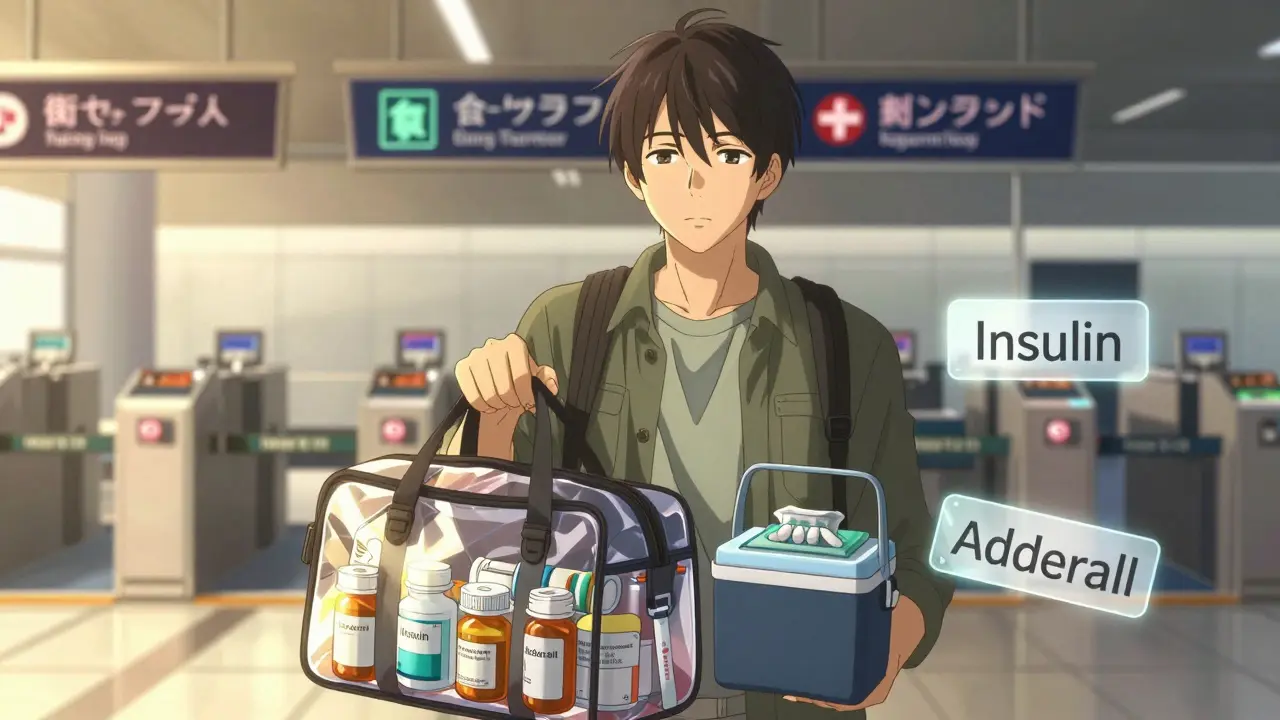
Don’t dump your pills into a little plastic box just because it’s easier. The TSA, U.S. Customs, and foreign border agents all require medications to be in their original pharmacy bottles with clear labels. That means the name of the drug, your name, the prescribing doctor, and the pharmacy’s info must be visible.
Why? Because fake pills are a huge problem. Authorities can’t tell if that little white pill is Adderall, aspirin, or something dangerous unless it’s labeled. Even if you have a doctor’s note, they’ll still ask for the original bottle. And if you don’t have it? You risk having your meds confiscated-or worse, being accused of drug trafficking.
Pro tip: If you’re taking multiple pills, ask your pharmacy for a multi-dose blister pack. Many U.S. pharmacies offer this for free. It keeps everything organized, labeled, and compliant.
Bring Extra-Way More Than You Think You Need
Plan for delays. Flight cancellations. Lost luggage. Border checks that take hours. Medical emergencies that keep you in a foreign hospital. That’s why experts say: bring at least 7 to 14 extra days’ worth of medication.
Northwestern University’s travel safety team insists on a two-week buffer. Harvard Global Support Services echoes it. So does the CDC. Why? Because overseas pharmacies can’t refill your U.S. prescription. Not even close. And shipping meds to yourself from home? That’s illegal in most countries. You can’t just order more from Amazon or CVS and have it delivered to your hotel in Bali.
Check your insurance too. Most U.S. plans let you refill prescriptions up to 5 days early. Call your pharmacy at least two weeks before you leave. Ask them to fill your entire trip supply. If they say no, ask your doctor to write a new prescription with a higher quantity. It’s legal. It’s common. And it’s the difference between a smooth trip and a crisis.
Know the Rules in Your Destination Country
Here’s the brutal truth: 67% of countries restrict at least one common U.S. medication. That includes stuff you can buy over the counter.
Take Sudafed. It’s fine in the U.S. But in Japan, Australia, and 27 other countries, pseudoephedrine is a controlled substance. Same with Adderall. It’s legal in the U.S. But in Japan, South Korea, and the UAE, it’s banned entirely-even with a prescription. Ambien? Forbidden in 42 countries. Even some allergy meds and painkillers with codeine are illegal in places like Singapore and Thailand.
Don’t guess. Don’t rely on a Google search. Use the U.S. State Department’s Medication Check Tool. It’s free. It’s updated monthly. Just type in your medication name and your destination. It’ll tell you if it’s allowed, restricted, or banned. If it’s restricted, you’ll need a doctor’s letter explaining why you need it-and sometimes, you’ll need to apply for a special permit before you even leave.
And if you’re flying into the EU? Most countries accept U.S. prescriptions if you have a doctor’s note. But in Asia and the Middle East? Prepare for stricter rules. Always check.
Temperature Matters More Than You Think
Insulin, epinephrine auto-injectors, some antibiotics, and even certain migraine meds can go bad if they get too hot or too cold.
Insulin needs to stay between 36°F and 46°F (2°C-8°C). If it’s left in a hot car or a luggage compartment that hits 90°F, it loses potency. You won’t feel sick right away. But over time, your blood sugar will spike. And that’s dangerous.
Use a small insulated cooler with a gel pack. You don’t need a fancy medical device. Just a lunch-sized cooler from Walmart or Target. Freeze the gel pack overnight. Put it in the cooler with your insulin. Put the whole thing in your carry-on. Don’t check it. Airlines don’t control baggage compartment temps. And don’t put it in the overhead bin-it gets hot.
For other meds? Most pills and capsules are fine below 86°F (30°C). But if you’re heading to Dubai in July or Bangkok in April? Keep them out of direct sunlight. Use a dark pouch or wrap them in a towel. And never leave them in a rental car.
Bring Documentation-Not Just a Prescription
A prescription slip isn’t enough. You need a doctor’s letter. On letterhead. Signed. Dated. And it should say:
- Your full name and date of birth
- Your diagnosis (e.g., Type 1 diabetes, ADHD, epilepsy)
- The name and dosage of each medication
- Why you need it
- That it’s for personal use only
For controlled substances (like opioids, stimulants, or sedatives), this letter is non-negotiable. TSA, customs, and airlines all ask for it. And if you’re flying with Emirates or Qatar Airways? They require it for any medication containing codeine or oxycodone-even if it’s legal in your destination.
Print two copies. Keep one in your carry-on. Put the other in your wallet. And if you’re going to a non-English speaking country? Get it translated. Not with Google Translate. Use a professional translator or ask your doctor’s office if they can provide one. A badly translated note can look suspicious.
Time Zones Will Mess With Your Schedule
Most meds are fine if you take them 1-2 hours early or late. But not all.
Insulin? Don’t skip or double up. Adjust gradually. If you’re flying from New York to Tokyo (13-hour time difference), take your morning dose on the plane. Then wait until the next morning in Tokyo to take your next dose. Don’t try to match your home schedule exactly. Your body will thank you.
Antibiotics? Stick to the same time interval. If you take one every 8 hours, set alarms on your phone for 8-hour windows-even if the clock says 3 a.m. in your new time zone.
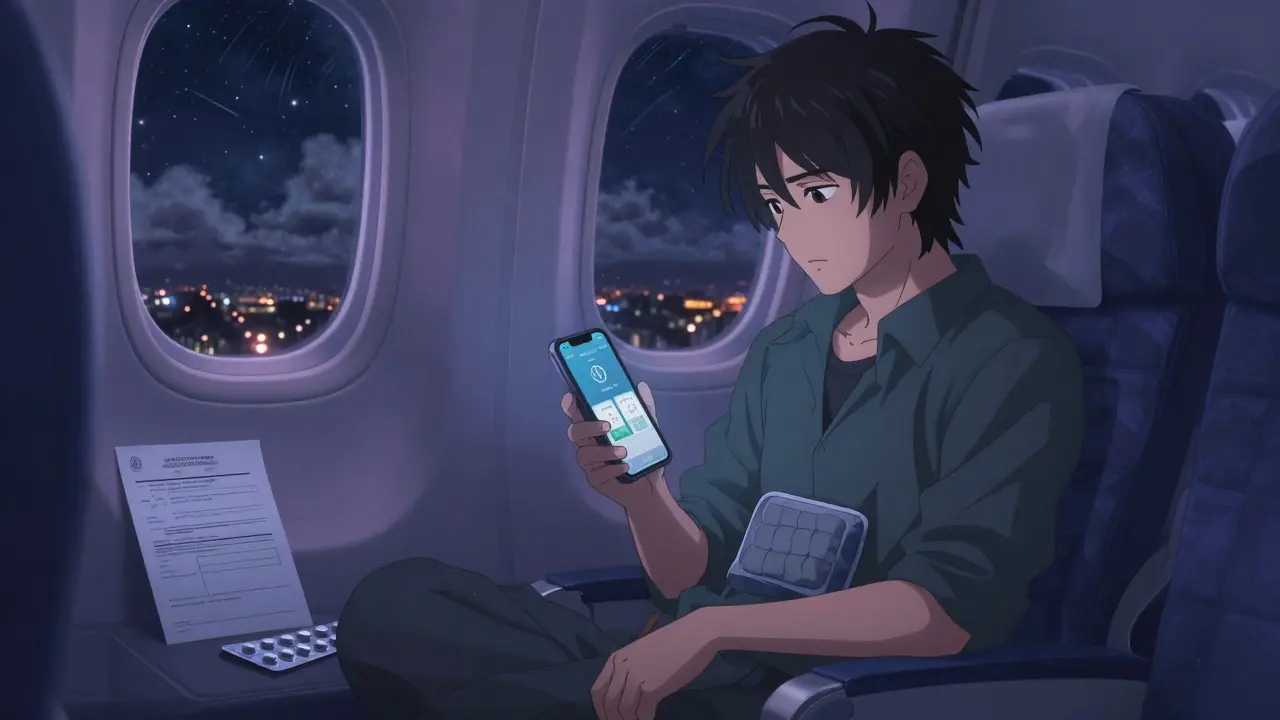
Use two alarms: one set to your home time, one to local time. That way, you know when you’re supposed to take it based on your body’s rhythm, not just the clock. Apps like Medisafe or MyTherapy let you set multiple time zones and send reminders. 81% of travelers who use them report fewer missed doses.
Carry-On Only. No Exceptions.
Never check your meds. Ever.
Luggage gets lost. Delays happen. Temperatures swing. And if your meds are in a suitcase that gets rerouted to Frankfurt while you’re in Seoul? You’re screwed.
TSA and every major airline require all medications to be in your carry-on. That includes liquids, pills, injectables, and inhalers. Even if you have a 10-day supply of insulin, it goes in your backpack. Not your suitcase.
And if you’re carrying liquids over 3.4 ounces? That’s fine. TSA allows it-but you must declare them at security. Put them in a separate clear plastic bag, like your toiletries. Tell the agent: “I have liquid medication.” They’ve seen it before. They’ll screen it. No problem.
What to Do If Something Goes Wrong
Even with perfect planning, things can still go sideways.
If you lose your meds? Contact the nearest U.S. embassy or consulate. They can help you find a local pharmacy or connect you with a doctor who can prescribe a replacement. Don’t wait. Call immediately.
If you have a side effect? Don’t try to treat it with local OTC meds unless you’re sure they’re safe. Call your doctor back home. Many telehealth services offer international consultations. Or use the embassy’s medical referral list.
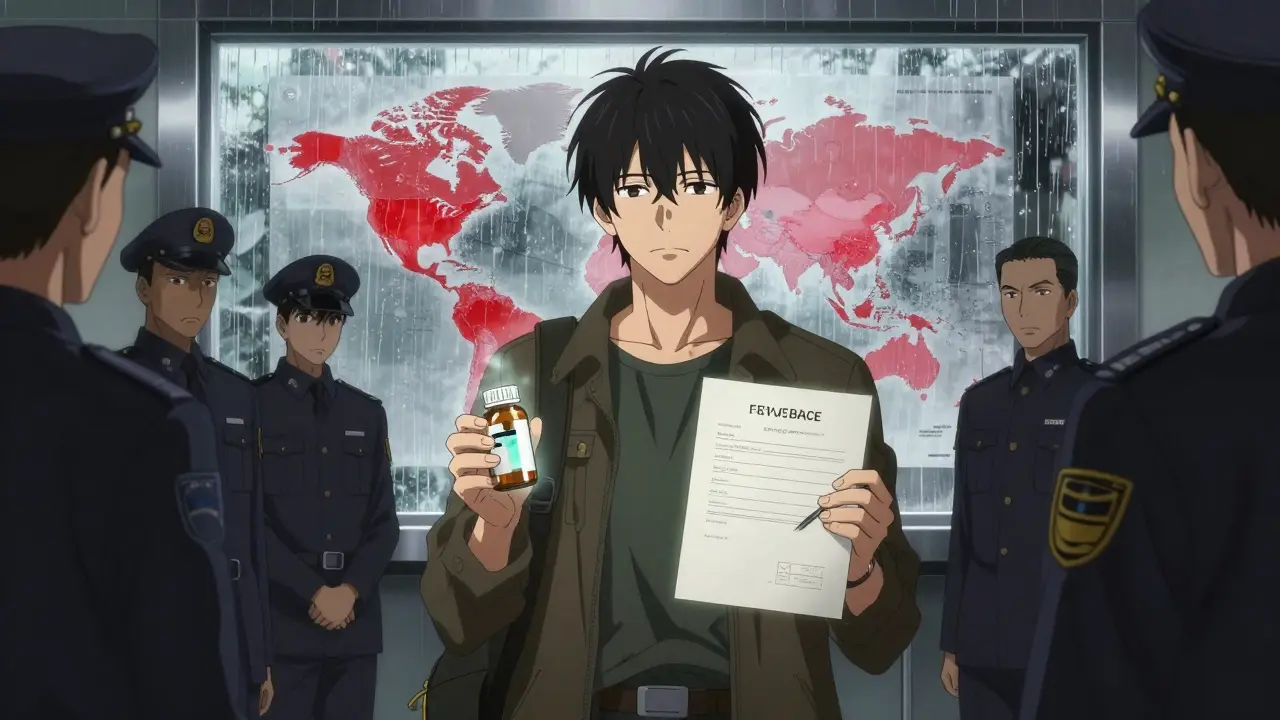
If you’re detained? Stay calm. Don’t argue. Show your doctor’s letter. Show your original bottles. Ask for a lawyer. And contact the U.S. embassy right away. They can’t get you out of jail, but they can make sure you’re treated fairly.
Real Travelers’ Best Tips
Here’s what people who’ve been there actually do:
- Laminate your doctor’s letter. It survives spills, rain, and crumpling.
- Carry a small notebook with your meds, doses, and times. Write in both English and the local language.
- Use a pill organizer only for backup-not as your main supply.
- Take a photo of your prescriptions and meds before you leave. Save it on your phone and email it to yourself.
- Know the emergency number in your destination country. Write it on your phone and on a paper card.
One traveler in Thailand lost her insulin. She went to a local hospital. They didn’t have her brand. But they had a similar one. She showed her letter. The doctor reviewed it. He adjusted her dose. She got back on track. No disaster. Just preparation.
Final Checklist Before You Leave
- ☑️ Get enough medication for the whole trip + 14 extra days
- ☑️ Keep all meds in original pharmacy bottles
- ☑️ Get a signed doctor’s letter on official letterhead
- ☑️ Check each medication’s status in your destination country using the U.S. State Department tool
- ☑️ Pack all meds in your carry-on
- ☑️ Bring a cooling pack if you need refrigerated meds
- ☑️ Set phone alarms for doses in local time
- ☑️ Carry translated copies of your letter if needed
- ☑️ Save digital copies of prescriptions and letters
Traveling with meds isn’t about being paranoid. It’s about being smart. The system is designed to protect you-if you know how to use it. Don’t wait until you’re at the airport to figure it out. Start two weeks before you leave. Talk to your doctor. Call your pharmacy. Check the rules. Do the prep. Then go enjoy your trip-without the fear.
Can I bring my insulin on a plane?
Yes. Insulin is allowed in carry-on luggage, even in quantities over 3.4 ounces. You must declare it at security and keep it in its original packaging with the prescription label. Use a cooler with a gel pack to keep it between 36°F and 46°F. Never check insulin in luggage.
Are over-the-counter meds like Advil or Sudafed allowed abroad?
It depends. Advil (ibuprofen) is legal almost everywhere. But Sudafed (pseudoephedrine) is banned or restricted in Japan, South Korea, Australia, and 27 other countries. Always check the U.S. State Department’s Medication Check Tool before you travel-even for OTC meds.
What if my meds get confiscated at customs?
Stay calm. Show your doctor’s letter and original prescription. Ask to speak with a supervisor. Contact the nearest U.S. embassy immediately. They can help you find a local doctor who can prescribe a replacement. Never try to buy meds on the black market-risk of counterfeit drugs is high.
Can I mail my meds to myself overseas?
No. Mailing prescription medications internationally is illegal in nearly every country. Even if you’re sending them to yourself. U.S. pharmacies can’t ship controlled substances abroad. And overseas customs will seize them. Always bring your meds with you in your carry-on.
Do I need a letter for regular pills like blood pressure or birth control?
Not always, but it’s strongly recommended. Even for common meds, having a doctor’s letter prevents delays, questions, or misunderstandings-especially in countries with strict drug laws. It takes 10 minutes to get one. The peace of mind is worth it.
What should I do if I miss a dose while traveling?
Don’t double up. Check the instructions for your specific medication. For most, it’s safe to take the missed dose if it’s within 1-2 hours of the scheduled time. For insulin or heart meds, contact your doctor. If you’re abroad, call your U.S. provider via telehealth or ask the local embassy for a medical referral.


