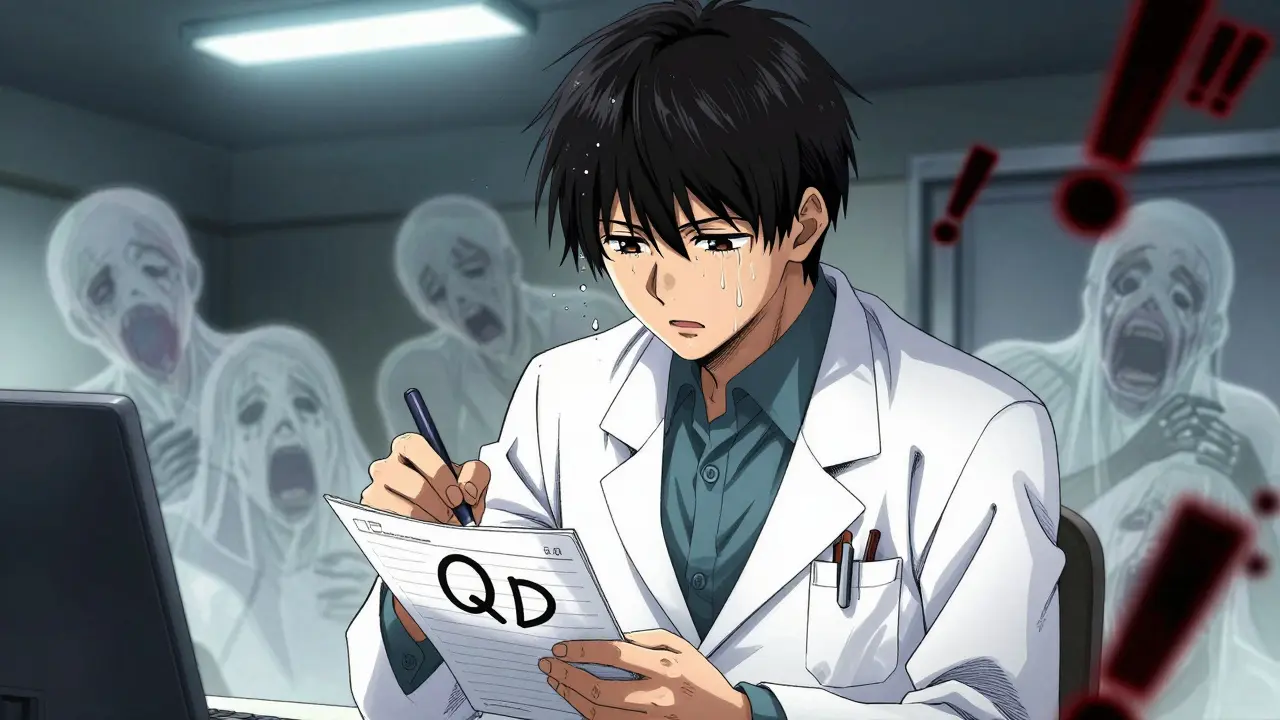
One wrong letter on a prescription can kill. It’s not a scare tactic-it’s fact. In hospitals, clinics, and pharmacies across the UK and beyond, simple abbreviations like QD, MS, or U have led to overdoses, wrong drugs, and even deaths. These aren’t typos. They’re systemic failures in communication that have been known for over 20 years-and yet, they still happen.
Why These Abbreviations Are Deadly
The problem isn’t that doctors are careless. It’s that some shortcuts look harmless but carry hidden dangers. Take QD, meant to mean “once daily.” Sounds fine, right? But when handwritten, it can look like QID (four times daily) or even QOD (every other day). A 2018 analysis of nearly 5,000 medication errors found that QD was involved in over 43% of all abbreviation-related mistakes. That means nearly half the time someone misreads a daily dose, it’s because of this one abbreviation. Then there’s MS. To some, it means morphine sulfate. To others, it’s magnesium sulfate. These are completely different drugs. Morphine is a powerful painkiller. Magnesium sulfate is used for seizures and pre-eclampsia. Give the wrong one, and you could stop someone’s breathing or trigger a cardiac arrest. The National Center for Biotechnology Information (NCBI) has documented dozens of cases where MS was misread-and many ended in serious harm. Even the letter U for “unit” is dangerous. It looks like a zero, a four, or even the letter “V.” A pharmacist once filled a prescription for 10 units of insulin, but the handwritten U looked like a 10. The patient got 100 units instead. That’s a lethal dose. In 2019, the ISMP reported over 100 near-fatal incidents tied to this single abbreviation.The Official List: What You Must Avoid
In 2001, The Joint Commission-along with the Institute for Safe Medication Practices (ISMP)-released a formal “Do Not Use” list. It’s not a suggestion. It’s a requirement for hospitals to keep their accreditation. If you’re prescribing in the UK, US, Canada, or Australia, you’re expected to follow it. Here are the most dangerous ones you need to stop using today:- QD → Write “once daily”
- QOD → Write “every other day”
- BIW → Write “twice weekly”
- U → Write “unit”
- IU → Write “international unit”
- MS or MSO4 → Write “morphine sulfate”
- MgSO4 → Never abbreviate-write it out fully
- SC or SQ → Write “subcutaneous”
- cc → Write “mL” (millilitre)
- TAC → Write “triamcinolone” (not to be confused with Tazorac)
- DTO → Write “diluted tincture of opium”
Why EHRs Haven’t Fixed Everything
You’d think electronic health records (EHRs) would solve this. After all, they don’t have messy handwriting. But they don’t. A 2021 study found that while EHRs cut abbreviation errors by 68%, 12.7% of errors still happened-because doctors typed free-text notes. Someone typed “MS 10 mg” into a notes field, and the system didn’t flag it. The pharmacist didn’t catch it either. The patient nearly died. The real fix isn’t just software. It’s hard stops. Systems that won’t let you submit a prescription unless you write “morphine sulfate” instead of “MS.” Systems that force you to spell out “once daily.” The Mayo Clinic did this in 2020. Within a year, abbreviation-related errors dropped by 92%. But not every system does this. Many still rely on alerts that can be ignored. And in community pharmacies or small clinics, staff often don’t have the same tech. That’s where most errors still happen.
Who’s Still Using These Abbreviations?
You might assume younger doctors have moved on. But the data says otherwise. A 2022 survey by the American Medical Association found that 43.7% of physicians over 50 still used banned abbreviations-even when their hospital had clear policies. Among doctors under 40? Just 18.2%. Why? Because they learned it that way. “We’ve always written QD,” one 58-year-old GP told a researcher. “It’s faster.” But speed isn’t worth a patient’s life. Even nurses aren’t immune. A 2021 survey found that 47.8% of nurses felt confused when hospitals switched from “cc” to “mL.” They’d used “cc” for decades. Changing habits takes time, training, and accountability.What Works: Real Solutions That Save Lives
The good news? We know exactly what works. 1. Ban the abbreviations in your EHR. Don’t just warn-block. Make it impossible to submit “U” or “MS.” 2. Train everyone, twice. One 90-minute session isn’t enough. Do it at hiring, then again six months later. Use real cases. Show the patient who almost died because of “QD.” 3. Reward vigilance. Pharmacists who catch these errors should be praised, not ignored. At one Bristol hospital, a pharmacist who stopped a “MS” error got a letter of recognition from the chief executive. That kind of culture change matters. 4. Use checklists. Before handing a script to a patient, ask: “Did I write out the drug name? The dose? The frequency?” Make it a habit.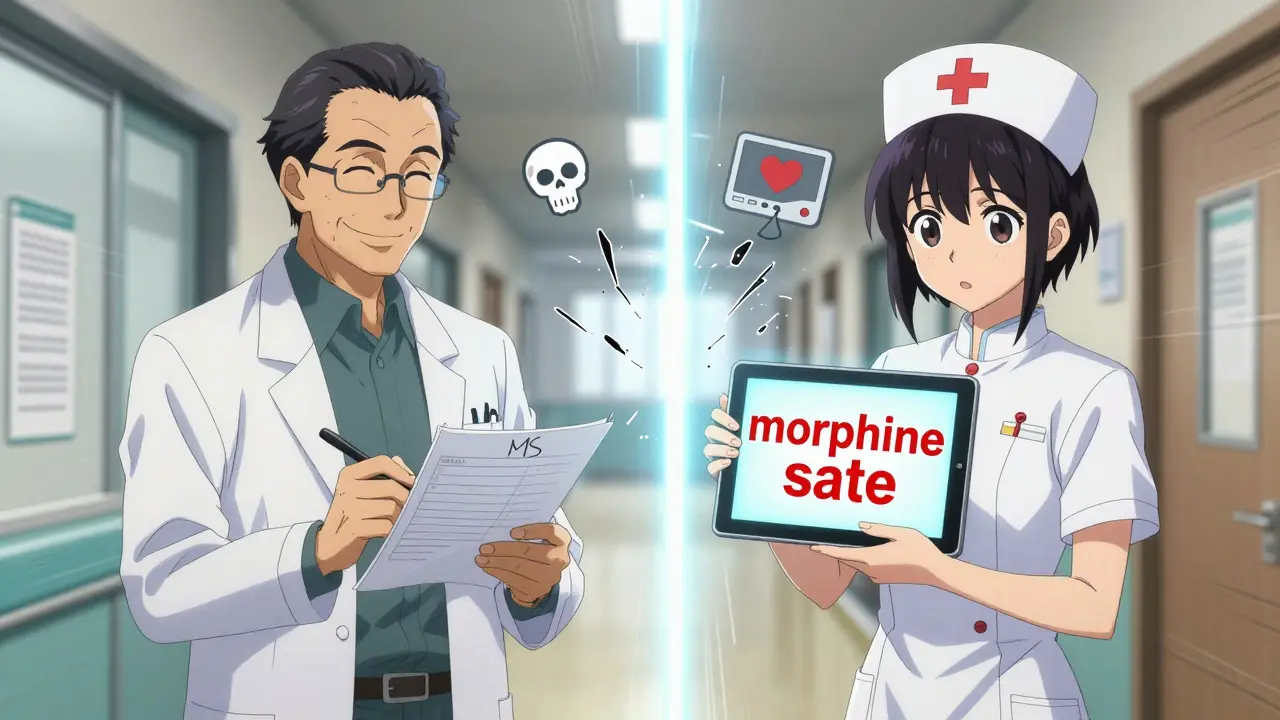
What Happens If You Don’t Change?
In the UK, NHS England’s Safer Practice Notice from 2021 makes it clear: using dangerous abbreviations is a breach of patient safety standards. In the US, hospitals can lose Medicare funding if they have too many abbreviation-related errors. In Canada, pharmacists are legally required to question unclear prescriptions. But beyond regulations, there’s the human cost. In 2022, the Agency for Healthcare Research and Quality estimated that full compliance with the “Do Not Use” list prevents $1.27 billion in annual costs from medication errors. That’s not just money-it’s hospital stays, rehab, lost wages, and grief. And then there’s the 150,000 preventable adverse drug events each year in the US alone, according to ISMP President Dr. Michael Cohen. That’s 150,000 times someone was hurt because someone used a shortcut.What You Can Do Right Now
You don’t need to wait for a policy change. Start today:- If you write prescriptions, spell everything out. No shortcuts.
- If you’re a pharmacist, don’t assume. If you see “U,” call the prescriber. Don’t guess.
- If you’re a nurse, double-check every order. If it looks odd, ask.
- If you’re a patient, ask: “Can you write that out for me?” If you see “MS,” ask if it’s morphine or magnesium.
Frequently Asked Questions
What’s the most dangerous medical abbreviation?
The most dangerous abbreviation is QD (once daily). It’s the most commonly misread, often mistaken for QID (four times daily) or QOD (every other day). According to ISMP data, it’s involved in over 43% of all abbreviation-related medication errors. Even worse, it’s often handwritten, making it hard to distinguish from similar-looking abbreviations.
Is it okay to use ‘U’ for units if I write it clearly?
No. Even if you think your handwriting is clear, others may misread it. ‘U’ looks like a zero, a four, or even the letter ‘V.’ The Joint Commission and ISMP have banned it because the risk is too high. Always write out ‘unit’ in full. This applies to insulin, heparin, and any other drug measured in units.
Why is ‘MS’ so risky?
‘MS’ can mean morphine sulfate (a strong opioid) or magnesium sulfate (used for seizures and pre-eclampsia). These drugs have opposite effects. Giving morphine instead of magnesium can cause respiratory failure. Giving magnesium instead of morphine can leave a patient in severe pain. The risk is so high that you must always write out the full drug name: ‘morphine sulfate’ or ‘magnesium sulfate.’ Never abbreviate.
Do electronic health records automatically fix these errors?
Not always. While EHRs reduce errors by about 68%, they still allow free-text entries where doctors can type ‘MS’ or ‘QD’ without warning. Only systems with hard stops-those that block submission unless you write out the full term-effectively prevent mistakes. Many clinics still use older systems without these safeguards.
What should I do if I see a dangerous abbreviation on a prescription?
Never guess. Call the prescriber. Ask them to clarify the drug, dose, and frequency in full. Pharmacists are trained to do this-it’s part of their professional duty. If you’re a patient, ask: ‘Can you please write that out so I understand?’ Your question could save your life.
Are these rules the same in the UK?
Yes. NHS England adopted the same ‘Do Not Use’ list in its 2021 Safer Practice Notice. The guidelines match those from The Joint Commission and ISMP. Whether you’re prescribing in Bristol, London, or Glasgow, you’re expected to avoid dangerous abbreviations. Failure to comply can lead to professional review or regulatory action.
Has anyone been punished for using these abbreviations?
Yes. In the US, hospitals have lost accreditation for repeated violations. In the UK, the General Medical Council (GMC) has issued warnings to doctors whose prescribing practices led to patient harm due to unclear abbreviations. While punishment isn’t always public, the risk to your license and reputation is real. It’s not worth the gamble.


