
Vitamin E & Warfarin Risk Calculator
This calculator helps you understand the risk of bleeding when taking vitamin E supplements with warfarin. The evidence shows that doses above 400 IU daily significantly increase bleeding risk, especially after 3-6 weeks of continuous use.
If you're taking warfarin to prevent blood clots, you might think popping a vitamin E supplement is harmless-maybe even helpful. But here’s the truth: vitamin E can dangerously boost warfarin’s effects, and the risk isn’t always obvious until it’s too late. This isn’t just a theory. It’s a real, documented danger that’s sent people to the ER with internal bleeding, brain hemorrhages, and life-threatening drops in blood clotting. Most people don’t realize vitamin E isn’t just a vitamin. At high doses, it acts like a blood thinner. When you mix it with warfarin, you’re essentially doubling down on anticoagulation. And unlike some drug interactions that show up right away, this one can sneak up on you. It might take weeks before your INR climbs, and by then, you could already be bleeding internally. Let’s cut through the noise. Some old studies said it’s safe. Others say it’s a ticking time bomb. The truth? It depends on how much you take, how long you’ve been taking it, and your body’s unique chemistry. But here’s what every warfarin user needs to hear: if you’re on warfarin, avoid vitamin E supplements above 400 IU per day. And if you’re already taking it, talk to your doctor before you keep going.
How Vitamin E Makes Warfarin More Dangerous
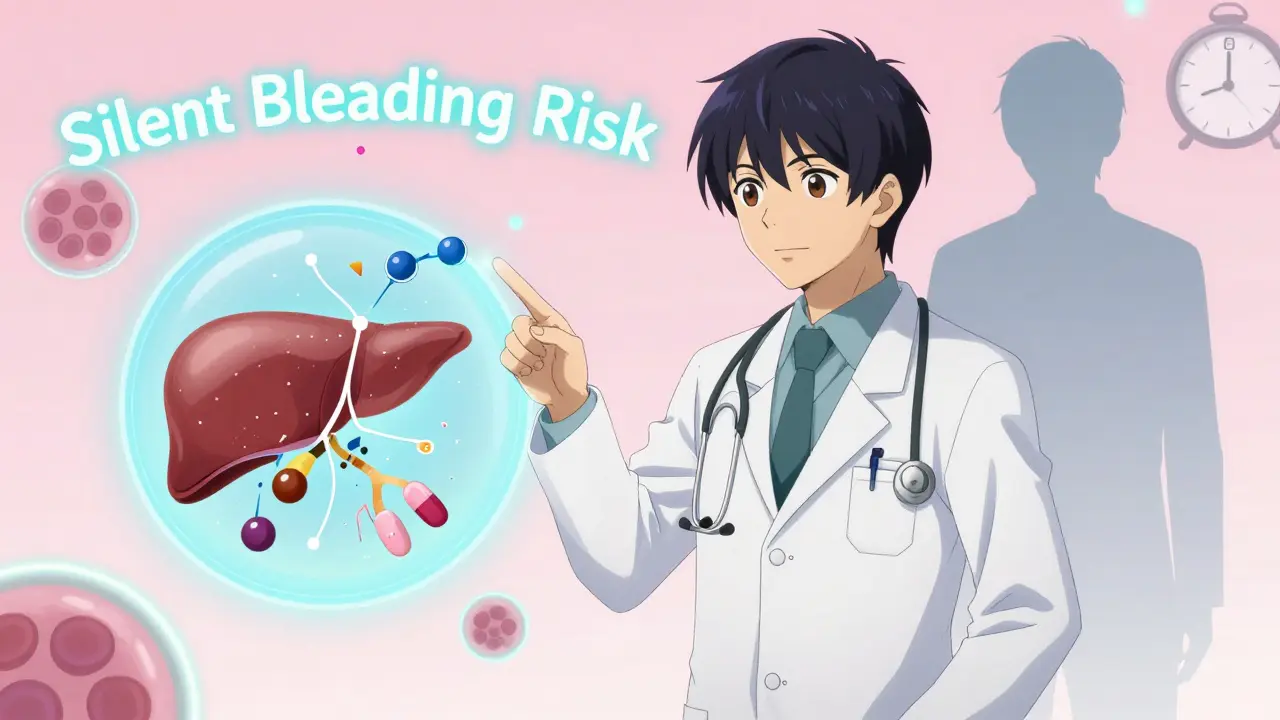
Warfarin works by blocking vitamin K, which your body needs to make clotting factors. Think of it like turning off a switch that tells your blood to thicken. Vitamin E doesn’t work the same way-but it doesn’t have to. It interferes in two other ways:- Antiplatelet effect: Vitamin E makes platelets stickier and less able to clump together to form clots. This is the same way aspirin works, but without the dose control.
- Delayed interference with vitamin K: Some evidence suggests high doses of vitamin E might disrupt how vitamin K is recycled in the liver, making warfarin’s job even easier.
The Conflicting Studies and Why They Don’t Agree
You’ve probably heard conflicting things. One study from 1996 said vitamin E was safe. Another from 2013 said it’s dangerous. Which one do you believe? The 1996 study looked at 21 people over just a few weeks. They measured INR-what doctors use to track warfarin’s effect-and found no change. Sounds reassuring, right? But here’s what they missed: they didn’t look at bleeding events. They didn’t check for bruising, gum bleeding, or internal bleeding. They only checked a lab number. The 2013 study looked at real-world outcomes. They tracked people for months, recorded actual bleeding episodes, and measured vitamin E levels in the blood. They found 9.2 major bleeding events per 100 people per year among those with high vitamin E levels. That’s more than double the rate seen in patients not taking extra vitamin E. Why the difference? Short-term lab studies miss long-term, cumulative effects. Your body doesn’t react the same way in 14 days as it does in 60. And INR doesn’t capture everything. Platelet function, vessel wall integrity, and genetic differences all play a role.What Dose Is Safe? The 400 IU Rule
There’s no universal safe dose. But if you’re on warfarin, here’s the clearest line in the sand: don’t take more than 400 IU of vitamin E daily. That’s the threshold most clinics use to warn patients. Why 400 IU? Because:- Studies show bleeding risk spikes above this level.
- Most clinical guidelines (including UC San Diego and the ACC) recommend avoiding doses above 400 IU.
- 78% of anticoagulation clinics in the U.S. actively warn patients about doses above this amount.

What Happens If You Keep Taking It?
Let’s say you’re taking 800 IU of vitamin E daily while on warfarin. Here’s what could unfold:- Week 1-2: No change in INR. You feel fine. You think, “It’s safe.”
- Week 3-4: Your platelets start to slow down. Your liver’s vitamin K recycling gets a little more blocked. Your INR begins creeping up-maybe from 2.5 to 3.8.
- Week 5: You bump your knee. You notice a bruise that won’t fade. Then you wake up with a nosebleed that won’t stop.
- Week 6: You go to the hospital. Your INR is 8.0. You’ve had a small brain bleed. You need plasma, vitamin K, and a week in the ICU.
What Should You Do?
If you’re on warfarin:- Stop taking vitamin E supplements unless your doctor says otherwise.
- If you’ve been taking vitamin E for more than a few weeks, get your INR checked immediately.
- Don’t assume “natural” means safe. Natural doesn’t mean low-dose.
- Check your diet. Almonds, sunflower oil, spinach, and fortified cereals add up. You don’t need to eliminate them-but be aware.
- If your doctor insists you need vitamin E (rare), they’ll monitor your INR weekly for the first month and adjust your warfarin dose accordingly.
What About Other Supplements?
Vitamin E isn’t alone. It’s part of a group of supplements that thin the blood:- Fish oil (omega-3s)
- Garlic
- Ginger
- Ginkgo biloba
- Turmeric (curcumin)
- Green tea extract
What About New Blood Thinners (DOACs)?
If you’re on apixaban, rivaroxaban, dabigatran, or edoxaban (the newer direct oral anticoagulants), the risk with vitamin E is lower-but not zero. There’s no strong evidence linking vitamin E to bleeding with DOACs, but the data is thin. No one’s done large studies. So if you’re on a DOAC, it’s still safest to avoid high-dose vitamin E. Especially if you’re older, have kidney issues, or have a history of falls.Final Advice: Don’t Guess. Get Tested.
The bottom line? Vitamin E and warfarin don’t mix well. The science isn’t perfect, but the pattern is clear: higher doses = higher bleeding risk. And the consequences? They’re not minor. If you’re on warfarin, your safety doesn’t depend on what you read online. It depends on your INR, your diet, your supplements, and your doctor’s guidance. Ask your provider:- “Is my current vitamin E supplement safe with my warfarin?”
- “Can we check my vitamin E blood level?”
- “What supplements should I stop, and why?”
FAQ
Can I take vitamin E if I’m on warfarin?
Generally, no. High-dose vitamin E (above 400 IU daily) increases the risk of bleeding when taken with warfarin. Even if your INR looks normal, vitamin E can silently reduce your blood’s ability to clot. Most clinics advise avoiding it entirely. If you must take it, your doctor should monitor your INR weekly for the first month and adjust your warfarin dose as needed.
How long does it take for vitamin E to affect warfarin?
It can take 3 to 6 weeks for the effect to show up. That’s why it’s so dangerous-people feel fine for weeks, then suddenly have a bleed. Studies show bleeding events often appear after four weeks of daily high-dose vitamin E, even when INR levels were stable at first.
Is 200 IU of vitamin E safe with warfarin?
It’s lower risk, but still not risk-free. While 200 IU is below the 400 IU danger threshold, there’s no guarantee it won’t affect your INR. Individual responses vary. Some people with genetic differences in vitamin K metabolism may react to even low doses. If you’re on warfarin, it’s safest to avoid all vitamin E supplements unless approved by your anticoagulation provider.
Does vitamin E raise INR?
Yes, in some people. Vitamin E doesn’t directly raise INR like warfarin does. But it can make your blood less able to clot by affecting platelets and possibly interfering with vitamin K recycling. This can cause your INR to rise unexpectedly, especially if you’ve been taking high doses for more than a few weeks.
What should I do if I’ve been taking vitamin E and warfarin together?
Stop the vitamin E supplement immediately and contact your doctor or anticoagulation clinic. Get your INR checked within 24 to 48 hours. If your INR is above 4.0, you may need vitamin K or plasma to reverse the effect. Do not wait for symptoms like bruising or nosebleeds to appear-by then, it might be too late.


