
When you’re nursing, every pill you take feels like a gamble. You want to feel better - whether it’s from allergies, a headache, or a sore throat - but you also don’t want to risk your baby’s health. The truth is, not all medications are created equal when it comes to breastfeeding. Some are perfectly safe. Others? Not so much. And the difference isn’t just about dosage - it’s about the type of drug you’re taking.
Not All Antihistamines Are the Same
If you’ve ever taken Benadryl for allergies, you know how sleepy it makes you. That’s because diphenhydramine, the active ingredient, crosses into your brain and shuts down alertness. It’s also the reason why older nursing guides warned against antihistamines entirely. But those guidelines are outdated.Today, we know that second-generation antihistamines - like loratadine (Claritin), cetirizine (Zyrtec), and fexofenadine (Allegra) - behave very differently. They’re designed to stay out of your brain. Their molecules are larger, they bind tightly to proteins in your blood, and only tiny amounts slip into breast milk. Studies show that loratadine transfers at just 0.04% of the maternal dose. Fexofenadine? Even less - 0.02%. That’s why experts at the American Academy of Family Physicians and the Mayo Clinic both list these as the preferred choices for nursing mothers.
First-generation antihistamines - diphenhydramine, chlorpheniramine, promethazine - are a different story. They’re small, fat-soluble, and easily cross into breast milk. In babies, even small amounts can cause drowsiness, poor feeding, or worse - failure to thrive. One case report in LactMed described an infant who stopped gaining weight after his mom took diphenhydramine daily for weeks. The baby only bounced back after the medication was stopped.
So if you need an antihistamine, stick to the non-drowsy ones. Avoid anything labeled "24-hour allergy relief" unless you check the ingredients. Many OTC cold and flu mixes hide antihistamines under names like "PM" or "nighttime formula." You might think you’re just taking a pain reliever - but you could be getting diphenhydramine too.
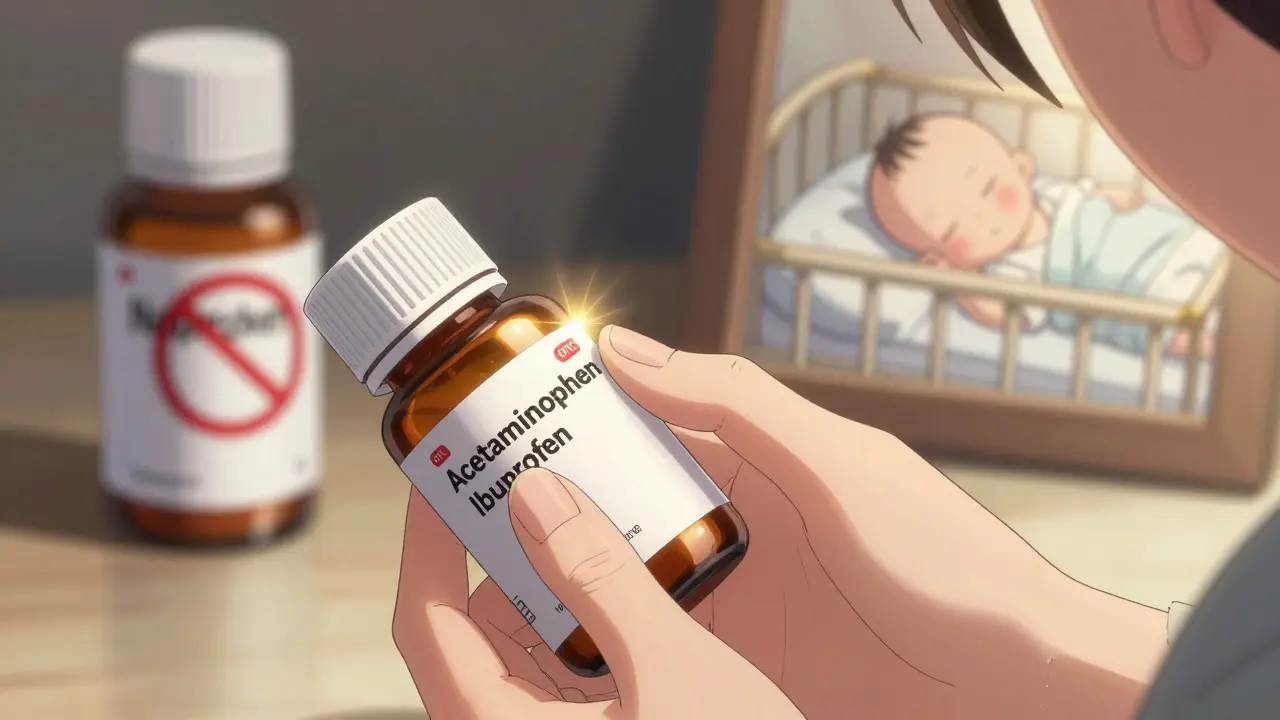
Pain Relievers: Acetaminophen and Ibuprofen Are Your Best Friends
For headaches, muscle aches, or postpartum pain, acetaminophen (Tylenol) and ibuprofen (Advil, Motrin) are the gold standard. Both transfer minimally into breast milk. Acetaminophen reaches about 1-2% of your dose in milk. Ibuprofen? Even lower - around 0.6-0.8%. And because ibuprofen breaks down quickly (half-life of just two hours), it doesn’t build up in your baby’s system.Both are considered safe for newborns and preemies. The AAP and WHO both list them as compatible with breastfeeding. There’s no evidence of harm, even with long-term use. In fact, many nursing moms use ibuprofen to manage inflammation after delivery - and it’s often recommended over stronger options.
Now, here’s what you should avoid: naproxen. It sticks around longer - 12 to 17 hours - and transfers at 7% of your dose. The AAFP specifically warns that prolonged use has been linked to bleeding, anemia, and vomiting in infants. One study tracked three babies whose mothers took naproxen daily for over a week. All developed low hemoglobin levels. Stop it after a day or two, and you’re fine. Keep taking it, and you’re risking your baby’s health.
And never, ever use codeine, tramadol, or hydrocodone without talking to your doctor. These opioids can turn into morphine in your body - and babies, especially newborns, can’t metabolize morphine well. There have been tragic cases of infant deaths linked to codeine use during breastfeeding. Even "safe" opioids like oxycodone require extreme caution. Stick to acetaminophen and ibuprofen unless your doctor says otherwise.
What About Topical or Nasal Sprays?
You don’t always need to swallow something to get relief. Many moms don’t realize that nasal sprays and creams can be safer than pills. Fluticasone nasal spray (Flonase) and azelastine nasal spray (Astelin) are both approved for breastfeeding. The amount that enters your bloodstream is tiny, so even less reaches your milk.Same goes for topical antihistamine creams or lidocaine patches. Unless you’re applying them over large areas of skin daily, they’re not a concern. Even hydrocortisone cream on a rash won’t hurt your baby. The key is avoiding ingestion - so wash your hands after applying anything, and don’t let your baby touch the area if you’ve applied something on your chest or arms.
How Much Is Too Much?
Even safe medications can become risky if you overdo it. Taking two loratadine tablets a day instead of one? That doubles your baby’s exposure - even if it’s still low. The same goes for ibuprofen. The standard dose is 200-400 mg every 6-8 hours. Going beyond that doesn’t give you more pain relief - it just increases the chance of side effects in your baby, like stomach upset or irritability.Also, don’t combine medications blindly. Many cold remedies contain acetaminophen and an antihistamine. You might think you’re helping yourself, but you could be giving your baby two drugs at once without realizing it. Always read the label. Look for "active ingredients." If you see "diphenhydramine," "chlorpheniramine," or "doxylamine," put it back.
When to Watch for Baby’s Reaction
Most babies won’t react at all. But if you start a new medication, keep an eye out for:- Unusual sleepiness or difficulty waking for feeds
- Refusing to nurse or eating less than usual
- Increased fussiness or crying
- Rash or hives (rare, but possible with allergic reactions)
If you notice any of these, stop the medication and call your pediatrician. It’s not always the drug - but better safe than sorry. Many moms report that switching from diphenhydramine to cetirizine made all the difference. Their baby went from barely nursing to sleeping through the night.

What About Herbal Remedies or Supplements?
Just because something is "natural" doesn’t mean it’s safe. Many herbal teas, cold remedies, and supplements contain antihistamines or pain-relieving compounds without listing them clearly. Butterbur, for example, is sometimes used for allergies - but it’s not studied in breastfeeding and may be toxic to the liver. Echinacea? No solid data. Licorice root? Can raise blood pressure.Stick to pharmaceuticals with proven safety records. If you want to try something herbal, talk to a lactation consultant or pharmacist who specializes in breastfeeding. Don’t assume it’s safe just because it’s sold in a health food store.
Final Checklist: What to Take - and What to Skip
- Safe: Loratadine, cetirizine, fexofenadine (antihistamines); acetaminophen, ibuprofen (pain relievers)
- Use with caution: Naproxen (limit to 1-2 doses), nasal sprays (check ingredients), topical creams
- Avoid: Diphenhydramine, chlorpheniramine, promethazine, codeine, tramadol, hydrocodone, oxycodone, doxylamine
- Always check labels: OTC cold, flu, and allergy meds often hide unsafe ingredients
- Monitor your baby: Watch for drowsiness, poor feeding, or irritability after starting any new medication
You don’t have to suffer through allergies or pain while nursing. There are safe, effective options - you just need to know which ones. Stick to the ones backed by decades of research, avoid the ones with known risks, and always read the label. Your body is doing something incredible - feeding your baby. The least you can do is make sure what you’re taking isn’t working against that.
Can I take Benadryl while breastfeeding?
Benadryl contains diphenhydramine, a first-generation antihistamine. It can cause drowsiness in both you and your baby, reduce milk supply, and lead to poor feeding or failure to thrive with regular use. Avoid it unless absolutely necessary for a severe allergic reaction, and even then, use the lowest dose for the shortest time possible. Choose loratadine or cetirizine instead.
Is Tylenol safe while nursing?
Yes. Acetaminophen (Tylenol) transfers into breast milk at very low levels - about 1-2% of your dose - and has no known side effects in nursing infants. It’s one of the most recommended pain relievers for breastfeeding mothers, even for newborns.
Can I take Advil while breastfeeding?
Yes. Ibuprofen (Advil, Motrin) is safe and preferred for breastfeeding mothers. It transfers in tiny amounts (less than 1% of your dose), breaks down quickly, and has no documented harm to infants. It’s often used to reduce inflammation after delivery and is compatible with long-term use at standard doses.
What’s the safest antihistamine for breastfeeding?
Fexofenadine (Allegra) has the lowest transfer rate into breast milk - just 0.02% of the maternal dose - with no reported side effects in infants. Cetirizine (Zyrtec) and loratadine (Claritin) are also excellent choices, with decades of safety data. All three are non-sedating and approved by major medical organizations for use while nursing.
Can I take allergy shots while breastfeeding?
Yes. Allergy immunotherapy (allergy shots) is considered safe during breastfeeding. The allergens are injected, not ingested, and don’t enter breast milk in any meaningful amount. Continuing your allergy shots while nursing is not only safe - it’s often recommended to avoid worsening symptoms that might lead you to take less safe medications.
What if my baby reacts to a medication?
If your baby becomes unusually sleepy, refuses to nurse, seems irritable, or develops a rash after you start a new medication, stop taking it and contact your pediatrician. Most reactions are mild and go away once the drug is cleared from your system. Keep a log of what you took and when symptoms started - this helps your doctor identify the cause faster.
Are there any pain relievers I should never take while nursing?
Yes. Avoid codeine, tramadol, hydrocodone, oxycodone, and naproxen (with long-term use). Codeine and tramadol can turn into morphine in your body, which can cause life-threatening breathing problems in babies. Naproxen can lead to anemia and bleeding in infants if used daily. Stick to acetaminophen and ibuprofen unless your doctor prescribes something else.


