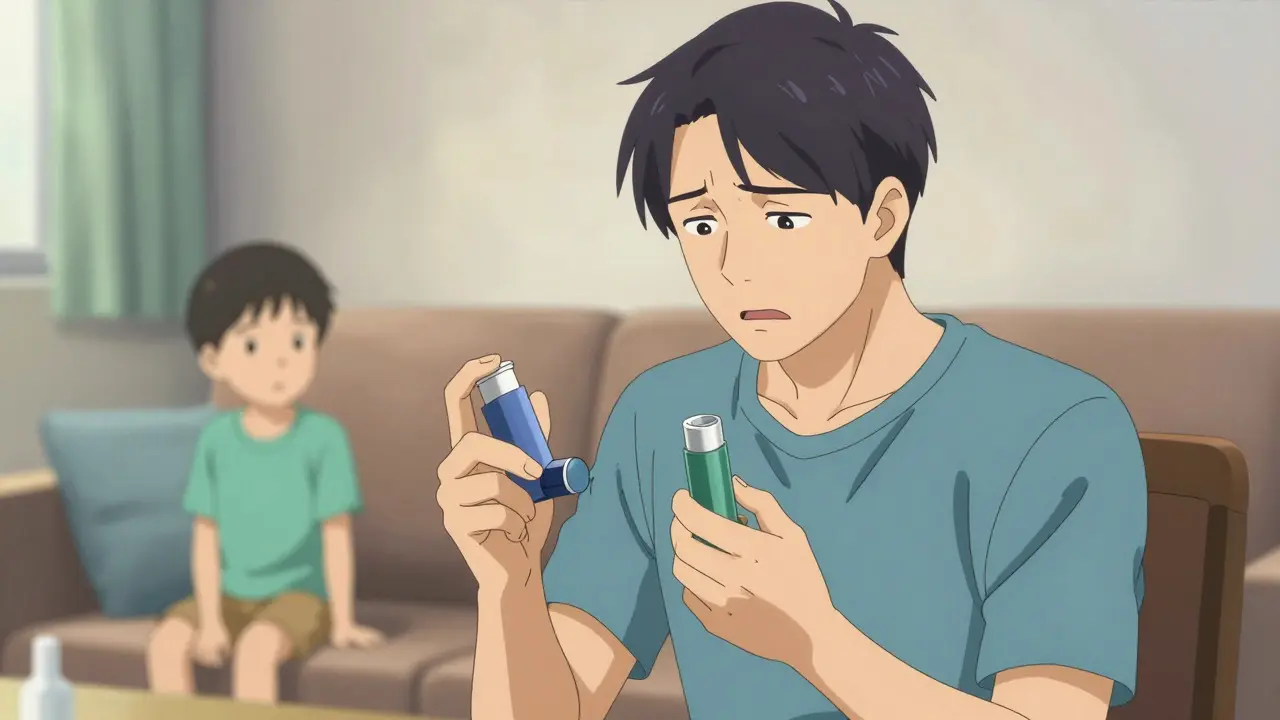
Imagine your child’s asthma is perfectly under control. They breathe easy, sleep well, and play without wheezing. Then, the pharmacy hands over a new box of inhalers. The color is different. The shape feels slightly off in your hand. You assume it’s the same medicine because the label says so. But for many children, this simple switch triggers a cascade of issues that can destabilize their health. This isn't just about saving money; it's about understanding why pediatric considerations make generic switches more complex than they appear for adults.
Generic drugs are supposed to be identical to brand-name versions. In theory, they contain the same active ingredient. In practice, especially for kids, "identical" is a slippery slope. Children are not small adults. Their bodies process medications differently, their immune systems react uniquely, and their ability to take certain pill shapes or sizes varies by age. When insurers or pharmacies swap a brand-name drug for a generic, they often rely on adult data to make that decision. This gap creates real risks that families and doctors need to watch out for.
Why Kids Are Different from Adults in Drug Metabolism
The core issue lies in pharmacokinetics, which is how the body handles a drug. For adults, regulatory agencies like the FDA use standards established decades ago. These standards require generic drugs to show 80% to 125% bioequivalence compared to the original brand. Bioequivalence means the drug reaches the bloodstream at a similar rate and amount. For most adult patients, this range works fine. However, for children, especially infants and toddlers, this margin can be too wide.
Consider the liver enzymes that break down medicines. In a three-month-old baby, certain enzymes like CYP2C19 are not fully mature. If you switch a proton pump inhibitor (PPI) used for acid reflux, such as omeprazole, the way the baby’s body clears it might differ significantly from an adult’s. A study highlighted by the FDA noted that substituting one PPI for another in infants could lead to different therapeutic outcomes, even if the drugs are considered equivalent in adults. This isn't hypothetical. It affects how much medicine actually stays in the child's system to do its job.
Furthermore, children have narrower therapeutic windows for certain critical drugs. A therapeutic window is the range between a dose that is effective and a dose that causes side effects. For medications like tacrolimus (used after organ transplants) or phenytoin (an anti-seizure drug), a small drop in blood concentration can be dangerous. Research published in Pediatric Transplantation found that pediatric heart transplant recipients experienced a 14% lower blood trough concentration after switching to a generic version of tacrolimus. For a stable patient, that 14% drop might mean nothing. For a transplant recipient, it could increase the risk of rejection. This is why the FDA specifically flags drugs for seizures, cardiac conditions, and transplants as areas of "specific concern" for pediatric switching.
The Problem with Non-Medical Formulary Switching
Most switches don't happen because a doctor decided the generic was better. They happen because of insurance policies. This practice is known as non-medical formulary switching (NMFS). Insurers limit coverage to cheaper options to keep costs down. While this saves money for the healthcare system, it places the burden on the family and the child.
Children with chronic conditions, like asthma, are particularly vulnerable. Asthma affects millions of children, and managing it requires consistent use of specific devices and medications. When an insurer forces a switch, it often comes with a change in the device itself. Inhalers come in various shapes and colors. If a child has grown accustomed to a specific blue inhaler, receiving a green one can cause confusion. Caregiver confusion is a major factor here. Studies suggest that adherence rates can drop by 15% to 20% after a formulary switch simply because the medication looks different. If a parent thinks the new pill is wrong, they might hesitate to give it. If a child refuses the new inhaler because it tastes different or feels awkward, the medicine doesn't work.
The financial incentives driving these switches are massive. Generic drugs saved the U.S. healthcare system approximately $2.2 trillion between 2009 and 2019. This success story, however, masks the individual cost to pediatric patients. Insurance companies often negotiate temporary deals with manufacturers. One year, a specific brand might be covered. The next year, the deal ends, and the insurer switches everyone to a different brand or generic. This churn creates instability. A child who is finally stable on a regimen gets reset every time the insurance landscape shifts.

Bioequivalence Standards and Their Gaps
To understand the regulatory side, we need to look at how generics are approved. The Hatch-Waxman Act of 1984 established the framework for generic drug approval in the United States. It allowed companies to skip expensive clinical trials if they could prove their drug was bioequivalent to the brand name. This worked well for adults. But the Biopharmaceutics Classification System (BCS), a tool used to simplify testing, was specifically designed for adult physiology.
The BCS classifies drugs based on solubility and permeability. If a drug is highly soluble and permeable, it might get a waiver from full testing. For children, this shortcut can be problematic. Pediatric populations differ in both physiologic and pharmacokinetic characteristics. A drug that dissolves quickly in an adult's stomach might not dissolve correctly in a toddler's due to differences in stomach acidity and volume. Despite this, only 12% of generic drug approvals between 2010 and 2020 included pediatric-specific bioequivalence studies. This means the vast majority of generic switches for children are based on extrapolated adult data.
| Factor | Adult Context | Pediatric Context |
|---|---|---|
| Bioequivalence Range | 80-125% generally accepted | Narrower margins preferred due to developmental variability |
| Metabolic Enzymes | Fully mature CYP450 system | Immature enzymes (e.g., CYP2C19 in infants) |
| Therapeutic Window | Often wider for common drugs | Narrower for critical drugs (transplant, epilepsy) |
| Formulation Acceptance | High tolerance for pill size/shape changes | Sensitive to taste, color, and device mechanics |
| Regulatory Testing | Standard adult bioequivalence studies | Lack of mandatory pediatric-specific studies |
Practical Challenges for Families and Providers
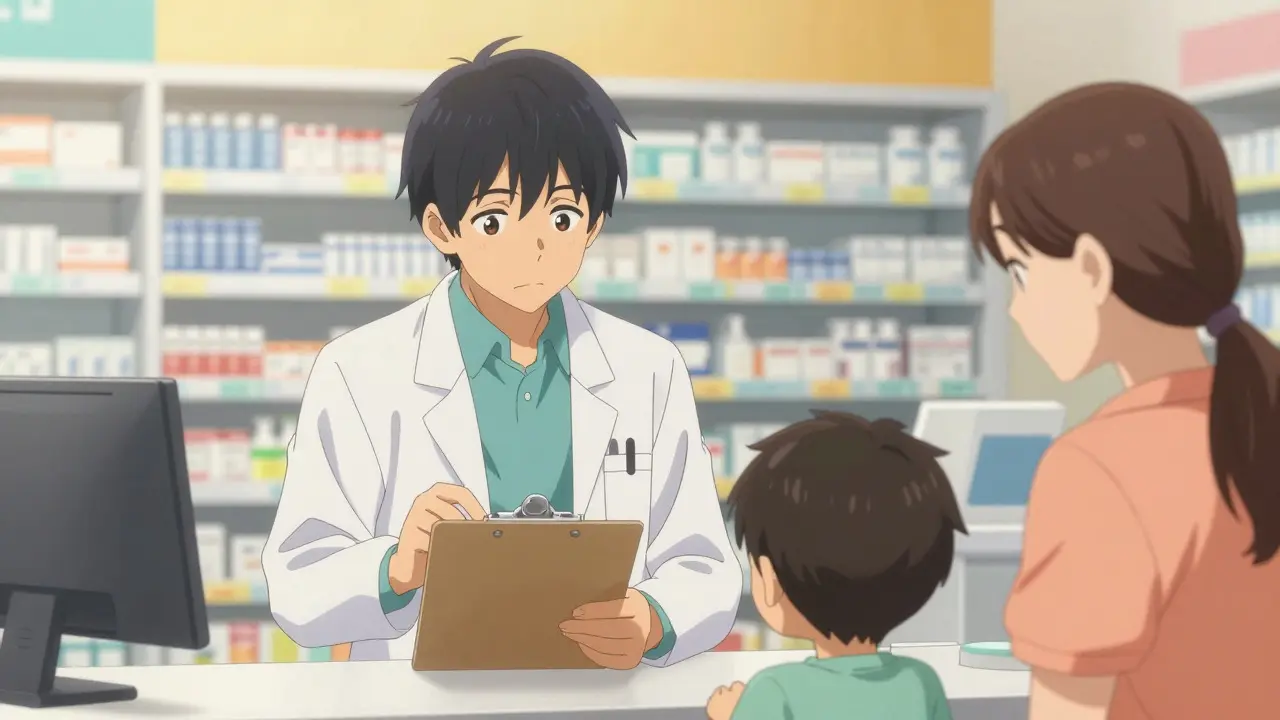
When a switch happens, the communication breakdown is immediate. Pharmacists are often under time pressure and may not have the bandwidth to explain the nuances of a pediatric switch. A survey by the American Society of Health-System Pharmacists found that only 37% of pharmacists routinely discussed potential switching issues with caregivers of pediatric patients on chronic medications. This leaves parents to figure it out on their own.
If your child is prescribed a new generic, ask these questions:
- Is the inactive ingredients list different? Some children have allergies to dyes or fillers. Even if rare, a change in manufacturer can mean a change in these inactive components.
- Does the device change? For inhalers, check if the actuator mechanism is different. Technique errors in inhaler use can reduce drug delivery by up to 80%. If the new device requires a different breathing pattern, retraining is essential.
- Is monitoring needed? For narrow therapeutic index drugs, ask if blood levels should be checked two weeks after the switch to ensure stability.
Doctors also face challenges. Prescribers may not be aware of recent formulary changes until the patient complains. The American Academy of Pediatrics (AAP) has noted that switching from brand to generic can be a "lost opportunity" for pediatric research. Without dedicated studies, we rely on anecdotal evidence and adult data. This gap means that when a child does poorly on a generic, it’s hard to know if it’s the drug, the device, or the lack of adherence caused by confusion.
Regulatory Landscape and Future Directions
The situation is slowly improving, but progress is uneven. State regulations vary dramatically. In 20 states, pharmacists must perform generic substitution unless the doctor objects. In 7 states and Washington, D.C., patient consent is required. This patchwork approach means a family moving across state lines might face entirely different rules regarding their child’s medication access.
Recent legislative efforts aim to tighten the screws on pediatric safety. California passed legislation in 2022 requiring Medicaid plans serving children to have pediatric-specific formulary review committees. This ensures that experts in child health have a say before a switch is made. The FDA’s 2022 Pediatric Formulation Initiative is also targeting the availability of appropriate formulations, recognizing that many children struggle with standard adult-sized pills or liquids that taste bad.
Looking ahead, the focus is shifting toward "seamless communication." PolicyLab, a research group focused on child health policy, recommends that prescribers, pharmacists, insurers, and families all be in the loop during any formulary change. The goal is to minimize disruption. For now, the onus remains heavily on the family to advocate for their child. Keep a log of symptoms. Note any changes in behavior or breathing patterns. And never hesitate to call your pharmacist or doctor if the new medicine doesn't feel right. Your intuition is often the first line of defense when the data is incomplete.
FAQ
Are generic medications always safe for children?
Generally, yes, but with caveats. For most common conditions, generics are safe and effective. However, for children taking medications with a narrow therapeutic index (like seizure meds or transplant drugs), or for infants with immature metabolic systems, there is a higher risk of variability. Always consult your pediatrician if a switch occurs for a critical medication.
Why did my child's inhaler change color and shape?
This usually happens due to a formulary switch by your insurance provider. The new generic manufacturer may use a different device design. While the active drug is the same, the mechanical delivery system might differ. It is crucial to retrain your child on the proper technique for the new device to ensure they receive the full dose.
What is bioequivalence in the context of pediatric drugs?
Bioequivalence means the generic drug reaches the bloodstream at a similar rate and amount as the brand-name drug. Regulatory standards typically allow an 80-125% range. For children, this range can sometimes result in clinically significant differences in drug exposure, particularly for those with developing bodies or sensitive conditions.
Should I pay extra to stay on the brand-name drug?
If your child is stable on a brand-name medication and a switch leads to adverse effects, paying out-of-pocket may be worth it. Discuss this with your doctor. They can write a note specifying "Dispense as Written" (DAW) to prevent automatic substitution at the pharmacy. This is particularly important for narrow therapeutic index drugs.
How can I track if a generic switch is affecting my child?
Keep a symptom diary. Record any new or worsening symptoms, changes in appetite, sleep disturbances, or behavioral shifts within two weeks of starting the new medication. Share this log with your healthcare provider. If possible, request blood level monitoring for drugs where concentration matters, such as anticonvulsants or immunosuppressants.