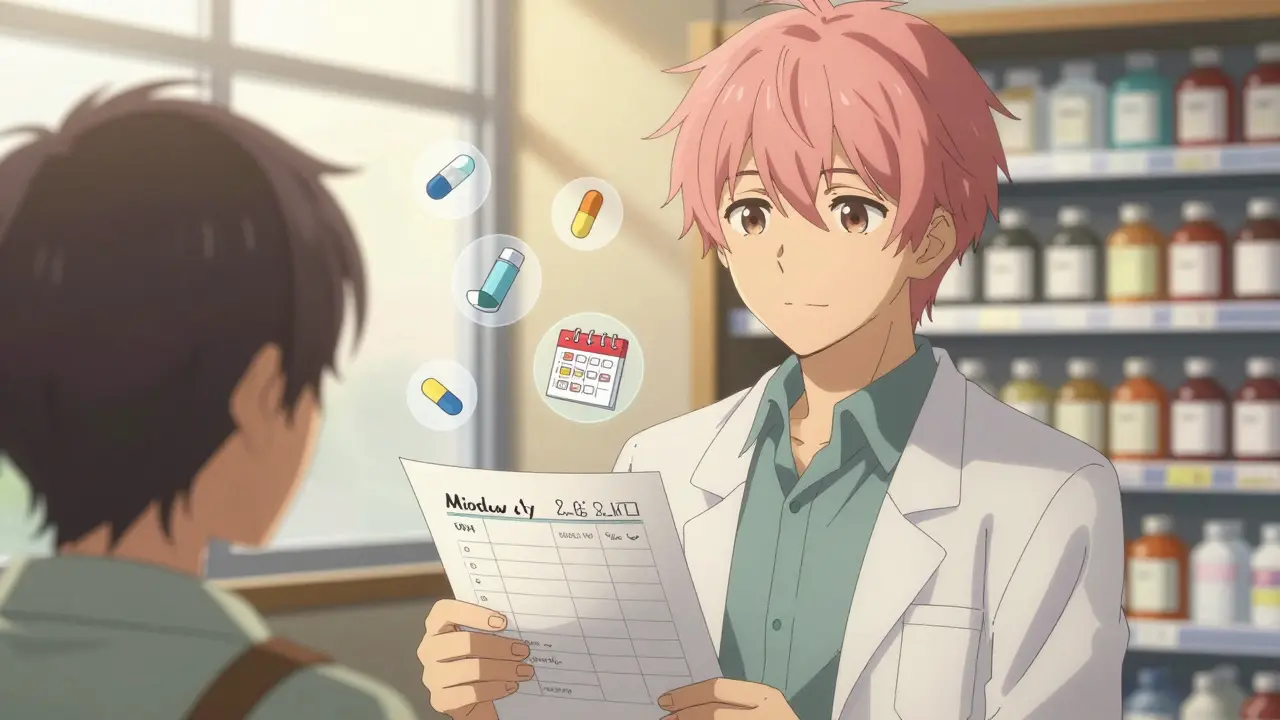
Most people think their doctor is the main source of medication info. But if you’re taking more than one pill, dealing with side effects, or struggling to remember when to take things, your pharmacist is the real expert you’re not using enough. Pharmacists don’t just hand out pills-they’re trained to explain how those pills work in your body, how to take them safely, and what to do when things go wrong. Yet too many patients leave the pharmacy with nothing but a bottle and a vague sense of "take as directed." That’s not enough. Here’s exactly what to ask for-and why it matters.
What You’re Already Getting (And Why It’s Not Enough)
When you pick up a prescription, you might get a small printed sheet with the drug name and dosage. That’s the minimum. But federal rules from OBRA ’90, updated by the Joint Commission of Pharmacy Practitioners in 2025, say pharmacists should do way more. They’re supposed to explain: what the medicine is for, how to take it, what to do if you miss a dose, side effects to watch for, how to store it, and possible interactions with other drugs or foods. In theory, yes. In practice? Often no. A 2024 University of Illinois study found that in chain pharmacies like CVS or Walgreens, the average counseling time is just 1.8 minutes. That’s less time than it takes to check your phone. Most of that time is spent scanning barcodes, not answering questions. You’re not being rushed because the pharmacist is rude-you’re being rushed because they’re overworked, understaffed, and underpaid. But that doesn’t mean you have to accept it.What to Actually Request: The 5 Must-Have Materials
Don’t wait for them to offer. Ask. Here’s what you need to ask for every time you get a new prescription or refill a chronic one.- A personalized, written handout-Not the generic one from the drug company. Ask for one that’s customized with your name, dose, schedule, and specific warnings. The Patient Education Reference Center (PERC) offers over 15,000 evidence-based handouts that pharmacists can print with your details. These aren’t marketing fluff-they’re medically reviewed, tested for clarity, and often available in Spanish or other languages.
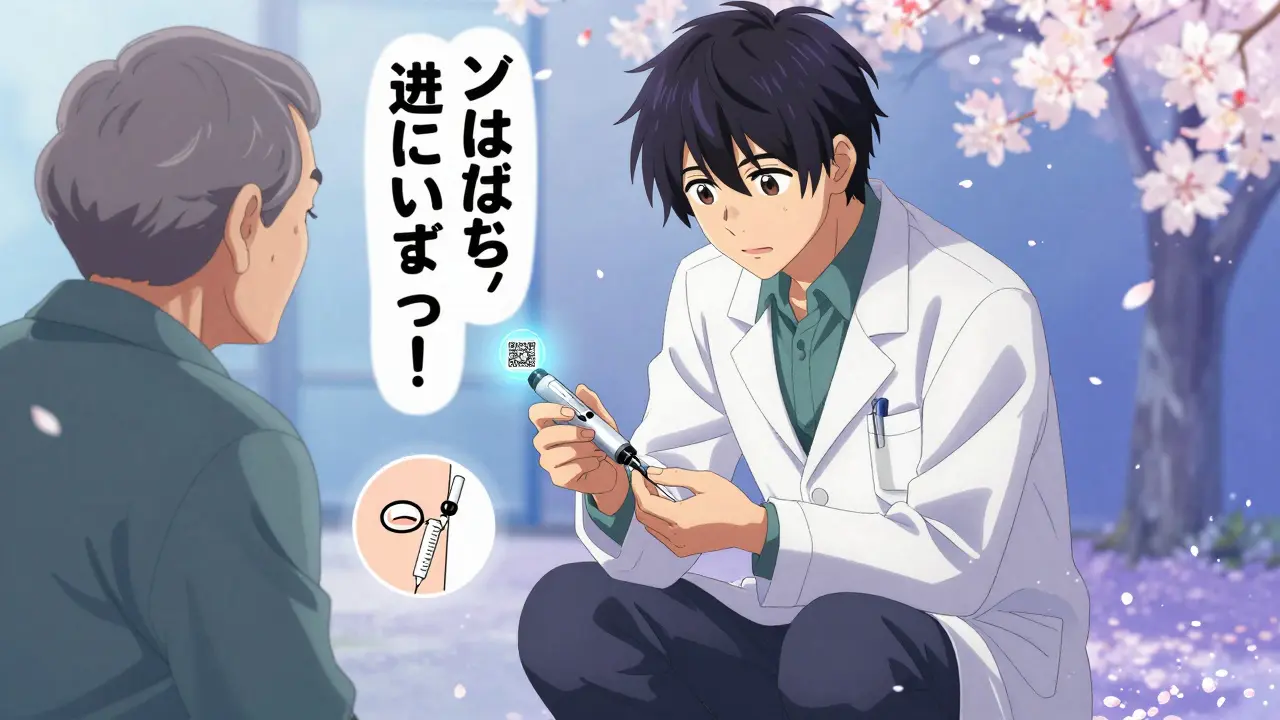
- A live demonstration with return demonstration-If you’re using an inhaler, insulin pen, epinephrine auto-injector, or nebulizer, don’t just watch. Ask the pharmacist to show you how to use it, then ask you to do it back. Studies show 76% of patients who practice this way get it right. Only 41% do if they just listen. This isn’t optional-it’s essential for safety.
- Clear instructions in your preferred language-If English isn’t your first language, say so. PERC materials are available in 92% of common medications in Spanish alone. Ask for translated versions. If they don’t have one, ask if they can email or text you a link to a reliable video or PDF. The FDA is pushing for this, and many pharmacies now have digital access to multilingual resources.
- A written summary of your medication schedule-Not a list of names. A real calendar. "Take metformin with breakfast, lisinopril at bedtime, aspirin in the morning with food." Include timing, food notes, and what to do if you forget. A 2023 study in Annals of Pharmacotherapy found that patients who got this kind of personalized schedule were 73% more likely to stick with their meds.
- Documentation in your medical record-Ask if your counseling session was documented. Federal guidelines say it should be. If you’re on Medicare Part D, starting January 2026, pharmacists are required to document your education as part of medication therapy management. But even if you’re not on Medicare, ask for it. It ensures your doctor, pharmacist, and future providers are all on the same page.
Ask These 7 Questions Every Time
You don’t need to be a medical expert to get good advice. Just use this simple list. Repeat it out loud if you need to.- What is this medication for? (Not just "for high blood pressure"-what does it actually do in your body?)
- How and when should I take it? (With food? On an empty stomach? Morning or night? Can I crush it?)
- What should I do if I miss a dose?
- What side effects should I watch for? Which ones mean I need to call you or go to the ER?
- How will I know if it’s working? How long should I wait before I feel a difference?
- How should I store it? (Refrigerate? Keep away from light? Out of reach of kids?)
- Is there anything else I need to know? (This is the most important one. It opens the door for anything they didn’t mention-like cost, alternatives, or interactions with supplements.)
Why Pharmacists Are Better Than Google (or Your Doctor) for This
You might think your doctor knows more. And they do-about your overall health. But when it comes to the actual mechanics of taking medicine, pharmacists have the edge. They spend 6.2 years on average training specifically in medications, according to the American College of Clinical Pharmacy. Doctors train in diagnosis, surgery, and systems. Pharmacists train in pills, patches, inhalers, and injections. A 2022 study in the Journal of the American Pharmacists Association found that 87% of patients understood how to use their inhalers or insulin pens better after talking to a pharmacist than after hearing the same info from their doctor. Why? Because pharmacists show you. They hold the device. They watch you. They adjust your grip. They don’t just say "shake the inhaler"-they demonstrate how hard to shake it, how far to hold it from your mouth, how long to hold your breath. Online resources like UpToDate or Epocrates have great handouts, but they’re generic. They don’t know if you’re 82 and have shaky hands. Or if you work two jobs and can’t remember to take pills at 8 a.m. A good pharmacist personalizes it. They see your life. They adjust.What They Won’t Tell You (But You Should Ask)
There are gaps. And you need to fill them. Only 18% of patients say their pharmacist ever talked about cheaper alternatives-even though 62% need them, according to Kaiser Family Foundation data. If your prescription costs $300 a month, ask: "Is there a generic? A different brand? A patient assistance program?" Pharmacists know about manufacturer coupons, state aid programs, and mail-order discounts. They just won’t bring it up unless you ask. Also, most handouts are written at a 10th-grade reading level. But 80 million U.S. adults read at or below a 6th-grade level, according to the National Assessment of Adult Literacy. If you struggle with reading, say so. Ask for a simplified version. Ask for pictures. Ask if they have a video. Many pharmacies now have QR codes on handouts that link to short videos showing how to take the medicine.
What to Do If They Say No
If a pharmacist brushes you off, says "we don’t do that," or rushes you out, you have options. First, ask to speak to the pharmacy manager. Most pharmacists want to help-they’re just stuck in a broken system. Managers have more control over time and resources. Second, go to an independent pharmacy. Chain stores are pressured to move volume. Independent pharmacies often have more time. In one 2023 survey, 68% of patients in chain pharmacies felt rushed, compared to just 32% in independent ones. Third, call your doctor’s office. Ask them to send a note to the pharmacy requesting detailed counseling for you. It gives the pharmacist cover to spend more time. And if you’re on Medicare Part D, starting in January 2026, you’ll have a legal right to comprehensive medication therapy management-including education-covered by your plan. Start asking now so you’re ready.Real Stories: What Worked
One patient in Ohio, u/HealthyWarrior88 on Reddit, said their pharmacist printed a custom handout showing exactly how to rotate insulin injection sites-something their endocrinologist never explained. Their blood sugar dropped within weeks. Another in Texas, a 74-year-old woman with diabetes, asked for a large-print schedule with photos of her pills. She started taking them correctly. Her A1C dropped from 9.2 to 7.1 in four months. These aren’t miracles. They’re just good information, delivered well.Final Takeaway: You’re the Boss of Your Meds
Pharmacists are your medication allies. But they can’t help you if you don’t speak up. You’re not being difficult. You’re being smart. The system is designed to move pills fast-not to educate people well. But you can change that. Ask for the handout. Ask for the demo. Ask for the schedule. Ask for the cheaper option. Ask for it in your language. Write it down. Keep it. Show it to your doctor. Use it. Your health isn’t a mystery. It’s a routine. And you deserve to know exactly how to make it work.Do pharmacists have to give me written materials by law?
Yes, but it depends. Federal law (OBRA ’90) requires pharmacists to offer counseling to Medicaid patients, and 47 states have laws requiring some form of patient education. Starting January 2026, Medicare Part D plans must include pharmacist-led education as a required benefit. While they don’t always have to give you a printed sheet, they must provide the information-and if you ask for it in writing, they’re legally required to provide it in many states. Always ask for a copy.
Can I ask for materials in Spanish or another language?
Absolutely. The Patient Education Reference Center (PERC) offers handouts in Spanish for 92% of commonly prescribed medications. Many pharmacies also have access to UpToDate and other platforms that provide materials in 18+ languages. If your pharmacy doesn’t have what you need, ask if they can email or text you a link. You have the right to understand your medications in your preferred language.
What if I can’t read well? Can I still get help?
Yes. Nearly 80 million adults in the U.S. have limited health literacy. Pharmacists are trained to adapt. Ask for large-print handouts, picture-based instructions, or video links. Some pharmacies use color-coded pill boxes or audio recordings. Don’t pretend you understand if you don’t. Say, "I need this in simpler terms," or "Can you show me with pictures?" They’re required to help you understand.
Why doesn’t my pharmacist explain side effects better?
Time is the biggest barrier. Most chain pharmacies average just 1.8 minutes per counseling session. But that doesn’t mean you can’t ask for more. Be specific: "Which side effects are serious enough to call you?" or "What should I do if I feel dizzy?" Pharmacists know the risks-but they need you to prompt them to share them. If they keep giving vague answers, ask to speak to the manager or try a different pharmacy.
Can I get help with the cost of my meds?
Yes, but you have to ask. Only 18% of patients say their pharmacist discussed cheaper alternatives, even though 62% need them. Ask: "Is there a generic version?" "Is there a patient assistance program?" "Can I get this through mail order for less?" Pharmacists know about coupons, state programs, and manufacturer discounts. They won’t bring it up unless you do.
How do I know if the information I’m getting is reliable?
Look for materials from trusted sources like the Patient Education Reference Center (PERC), UpToDate, or the American Society of Health-System Pharmacists (ASHP). These are evidence-based and reviewed by medical experts. Avoid random websites or drug company pamphlets that sound like ads. If the handout says "for educational purposes only" and lists a professional organization as the source, it’s likely trustworthy.
Should I bring a list of all my meds to the pharmacy?
Always. Even if you think you only take one or two. Many patients don’t realize supplements, over-the-counter pills, or herbal remedies can interact with prescriptions. Bring your pill bottles, a list, or a photo of your meds on your phone. Pharmacists can spot dangerous combinations you didn’t know about-like mixing blood thinners with ginkgo or statins with grapefruit juice. This is one of the most valuable things you can do.


