When you’re prescribed an antibiotic like piperacillin-tazobactam, you might not realize it’s not just one drug-it’s two working together. These are called antibiotic combination products: two or more active ingredients packaged together to fight infections more effectively than either drug alone. For years, these combinations were only available as expensive brand-name versions. But now, generics are hitting the market-and changing how doctors treat infections and how much patients pay.
What Exactly Are Antibiotic Combination Products?
These aren’t just pills mixed in a bottle. They’re carefully engineered formulations where two antibiotics (or an antibiotic and a device) are combined to boost effectiveness. One common example is piperacillin-tazobactam, which pairs a broad-spectrum antibiotic with a beta-lactamase inhibitor. The inhibitor blocks bacteria’s defense mechanisms, letting the antibiotic do its job. Without the combo, many infections would resist treatment.
Some combinations come as injections, others as inhalers or prefilled syringes. The device matters too. A generic drug-device combination product (g-DDCP) could be an antibiotic in a pre-filled auto-injector, an inhaler for cystic fibrosis patients, or a pump that delivers a steady dose. These aren’t simple pills-they’re systems. And getting them approved as generics is far more complex than copying a tablet.
How Do Generic Versions Get Approved?
Generic drugs don’t need new clinical trials. Instead, manufacturers submit an Abbreviated New Drug Application (ANDA) to the FDA, proving their product is the same as the brand-name version. But with combination products, that’s not enough.
The FDA looks at the Primary Mode of Action (PMOA)-is the drug doing the main work, or is the device? If it’s drug-led, the ANDA path applies. But if the device changes how the drug is delivered, the review gets messy. The manufacturer must show the generic version delivers the same amount of drug, at the same rate, in the same place, with the same safety profile. That means testing everything: the needle, the syringe, the labeling, even how the user holds it.
For example, when Hospira launched the first generic version of piperacillin-tazobactam in 2010, they didn’t just copy the formula. They had to prove every part of the injection system worked identically. That took years, millions in testing, and deep regulatory navigation.
Why Generic Availability Matters
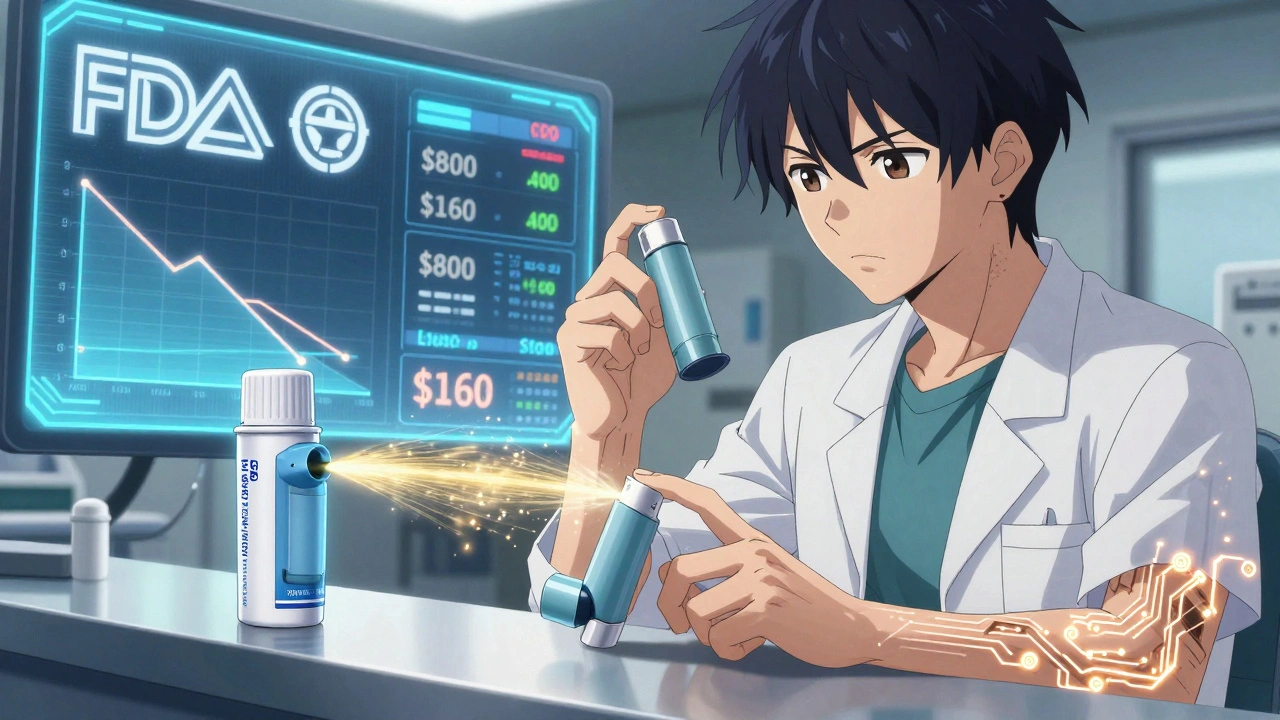
Brand-name antibiotic combinations can cost hundreds or even thousands of dollars per dose. Generics slash that. Studies show prices drop by 30% to 80% after generic entry. That’s not just savings for hospitals-it’s savings for patients.
Between 2010 and 2020, generic drugs saved the U.S. healthcare system an estimated $2.2 trillion. Antibiotic combinations contributed significantly to that. When cost drops, adherence goes up. Patients are more likely to finish their full course if they can afford it. That’s critical-unfinished antibiotics fuel drug-resistant superbugs.
And it’s not just about cost. Some generic combinations made it possible for patients who couldn’t access treatment before. A cystic fibrosis patient who couldn’t afford the branded inhaler version might now get the generic. That’s not just a financial win-it’s a health win.
Not All Generics Are Created Equal
Here’s the twist: generic entry doesn’t always mean more prescriptions. A 2021 study in Nature Communications tracked 13 antibiotic combinations after generics entered the market. Five saw prescriptions jump by 5% to over 400%. But one-cefdinir-saw prescriptions drop. Others didn’t change much.
Why? Because it’s not just about price. It’s about context. For example, when aztreonam went generic, its use spiked. But that wasn’t just because it was cheaper. Around the same time, a new inhalation therapy for cystic fibrosis hit the market. Doctors started using aztreonam more often as a prep treatment. The generic made it easier to use-but the clinical need drove the change.
This shows a key truth: generic availability doesn’t guarantee predictable behavior. Market shifts depend on clinical guidelines, patient populations, and even timing with other drug launches.
The Hidden Barriers
Even when a generic is approved, it might not reach patients. Why? State laws.
Most states allow pharmacists to substitute generics for brand-name drugs-unless the prescription says "do not substitute." But those rules were written for single-drug pills. They don’t fit combination products.
Imagine a patient gets a prescription for a prefilled syringe with two antibiotics. The pharmacist sees a generic version. Can they swap it? Maybe. But if the device is slightly different-say, a different needle length or plunger feel-it could confuse the user. That’s a safety risk. So many pharmacists play it safe and don’t substitute at all.
Legal experts call this a "structural failure." The laws weren’t built for today’s complex products. And until they’re updated, patients might not get the full benefit of lower prices.
What’s Changing Now?
The FDA’s Office of Combination Products (OCP) has been holding regular conferences since 2024 to update guidelines. The September 2024 REdI conference focused on "best practices" for manufacturers navigating approval. They’re pushing for clearer rules on what data is needed when:
- The combination has a new use
- It’s meant for a different age group
- The route of delivery changes
- Exposure levels shift because of the combo
The goal? Make the process less confusing and less expensive-without cutting corners on safety.
Manufacturers are also developing a six-phase approach to build g-DDCPs step-by-step. It’s designed to reduce wasted effort and speed up approvals. That could mean more generic combinations hitting shelves faster in the next few years.
What This Means for You
If you or someone you know is on an antibiotic combination product, ask your doctor or pharmacist: Is there a generic version? If yes, ask if it’s been approved for your exact use. Don’t assume all generics are interchangeable.
Insurance companies often push for generics. But if you’re on a device-based combo-like an inhaler or injector-make sure the generic matches the original in form and function. A different needle or dosing mechanism could affect how well the drug works.
And if you’re paying out of pocket? Generics can cut your bill by half or more. That’s real money. Don’t be afraid to ask for the generic version-it’s not just cheaper, it’s just as effective.
The Bigger Picture
Antibiotic resistance is one of the biggest global health threats. Affordable, accessible antibiotics are part of the solution. Generic combination products help ensure that life-saving drugs aren’t locked behind high prices.
But we can’t just rely on manufacturers to fix this. We need smarter laws, better training for pharmacists, and clearer guidance from regulators. The science is there. The savings are proven. Now, the system needs to catch up.
What’s coming next? More combinations. More generics. More complexity. And if we get it right, more lives saved-not just because of better science, but because better access made it possible.
Are generic antibiotic combination products as effective as brand-name ones?
Yes. The FDA requires generic versions to prove they are therapeutically equivalent to the brand-name product. That means they deliver the same amount of active ingredients, work the same way in the body, and have the same safety profile. For drug-device combinations, manufacturers must also prove the device doesn’t change how the drug is absorbed or used. No clinical trials are needed if the data shows equivalence.
Why aren’t all antibiotic combinations available as generics yet?
It’s not just about the drug-it’s about the whole system. Combination products that include devices (like injectors or inhalers) require complex testing to prove the generic version works identically. The approval process is longer, costlier, and more technically demanding than for simple pills. Some manufacturers wait for market demand to justify the investment.
Can a pharmacist substitute a generic antibiotic combination for the brand name?
It depends. State laws allow substitution for single-drug generics, but many don’t clearly cover combination products-especially those with devices. Pharmacists often avoid substituting if the device differs, even slightly, because of safety concerns. Always check with your pharmacist and ask if the generic is approved for your exact use.
Do generic antibiotic combinations save money for patients?
Yes, significantly. After generic entry, prices typically drop by 30% to 80%. For expensive combinations like injectable antibiotics, that can mean hundreds of dollars saved per dose. Lower costs improve adherence-patients are more likely to finish their full course, which helps fight antibiotic resistance.
What’s the difference between a generic drug and a generic combination product?
A generic drug copies a single active ingredient. A generic combination product copies two or more drugs-or a drug and a device-working together. The challenge isn’t just matching the chemical formula. It’s matching how the product is delivered, used, and stored. A generic inhaler must work exactly like the original, down to the spray pattern and dose counter.
Is there a list of approved generic antibiotic combinations?
The FDA maintains a public database called the Orange Book, which lists approved generic drugs, including combination products. You can search by brand name or active ingredients. Look for entries marked "AB-rated," which means they’re rated therapeutically equivalent. Not all combinations have generics yet-check regularly, as approvals are ongoing.


