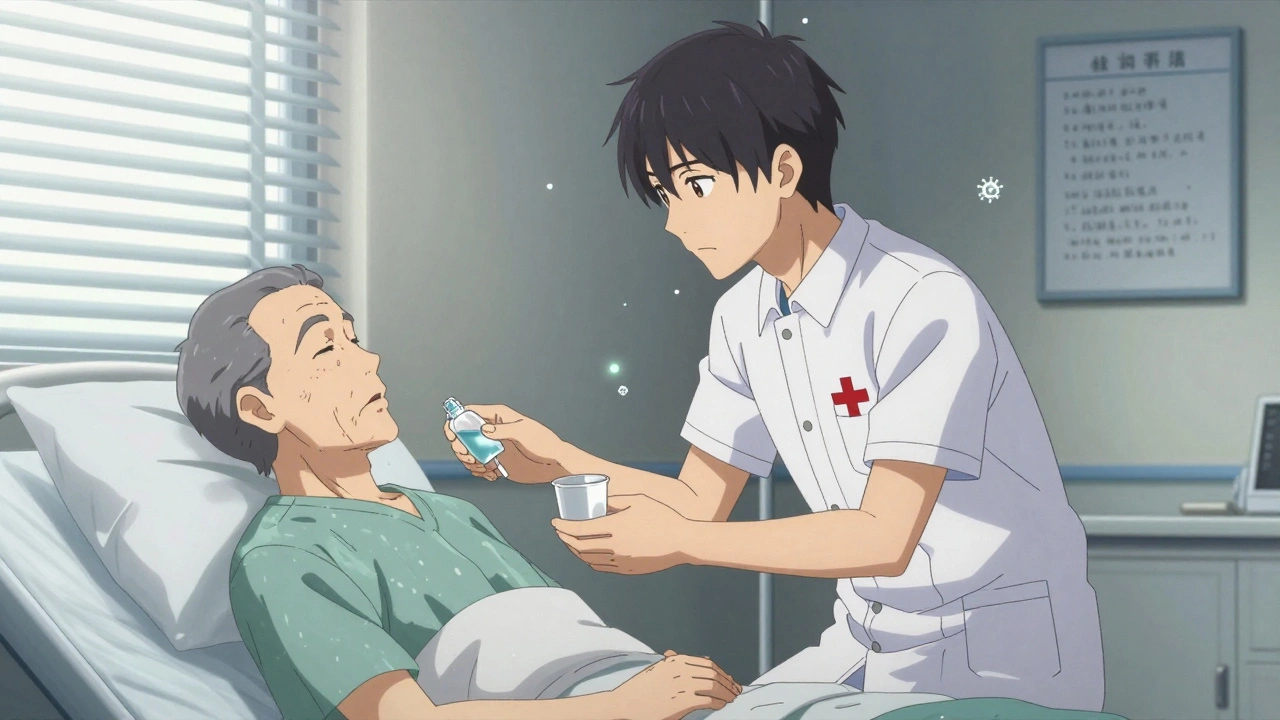
What Norovirus Actually Does to Your Body
You wake up feeling sick. Stomach cramps hit hard. Then vomiting. Diarrhea. No fever, but you feel like you’ve been hit by a truck. This isn’t food poisoning from last night’s dinner. It’s norovirus - the most common cause of acute gastroenteritis in the U.S., hitting 19 to 21 million people every year. The virus doesn’t care if you’re healthy or old, rich or poor. It only needs 18 tiny particles to start an infection. That’s less than a grain of salt.
Norovirus attacks the lining of your stomach and intestines. It doesn’t just make you sick - it makes you lose fluids fast. Vomiting and diarrhea can drain your body of water and electrolytes in hours. For kids, the elderly, or people with weak immune systems, this can turn dangerous quickly. And here’s the worst part: you can spread it before you even feel sick. You keep shedding the virus for days after you think you’re better. Some people, especially those with chronic illnesses, can shed it for weeks.
How Norovirus Spreads - and Why It’s So Hard to Stop
Norovirus doesn’t need much to spread. It clings to surfaces, survives freezing and heat up to 140°F, and stays active on doorknobs, countertops, and even toilet handles for up to 12 days. It spreads in four main ways:
- Person-to-person contact (62% of outbreaks)
- Contaminated food, especially ready-to-eat items like salads and sandwiches (23%)
- Touching infected surfaces then touching your mouth (10%)
- Drinking contaminated water (5%)
Outbreaks in nursing homes, hospitals, and schools are common because people are close together. One sick person can trigger a chain reaction. And because many infected people don’t show symptoms - about 30% - they walk around spreading the virus without knowing it.
Alcohol-based hand sanitizers? They barely touch norovirus. That’s why washing hands with soap and water for at least 20 seconds is non-negotiable. It’s the only reliable way to remove the virus from skin. Even then, you have to wash after using the bathroom, before eating, and after changing diapers or cleaning up vomit.
Controlling Outbreaks in Hospitals and Care Homes
In healthcare settings, a single norovirus outbreak can cost between $5,000 and $15,000. It delays surgeries, fills beds with sick patients, and puts staff under pressure. The CDC’s 2023 guidelines say control needs four pillars: isolation, hand hygiene, cleaning, and food safety.
Isolation: Anyone with vomiting or diarrhea needs to be placed in a private room. If that’s not possible, group sick patients together and keep them away from healthy ones. Isolation lasts at least 48 hours after symptoms stop - longer for people with weak immune systems.
Hand hygiene: Soap and water only. No exceptions. Hand sanitizer is not enough. Stations should be placed outside every infected unit. Staff must wash hands after every patient contact, even if they wore gloves.
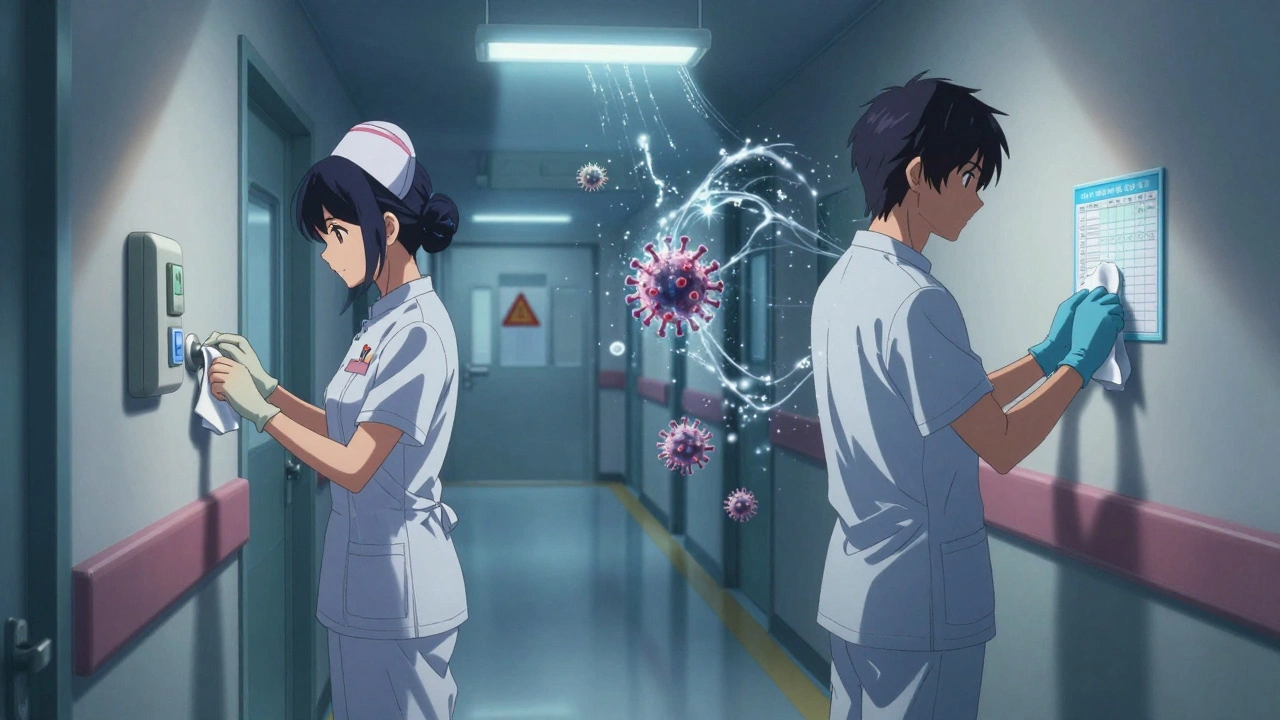
Environmental cleaning: Use bleach solutions with 1,000 to 5,000 ppm chlorine. That’s 5 to 25 tablespoons of household bleach per gallon of water. Clean high-touch surfaces every 2 hours during an outbreak: bed rails, call buttons, toilets, door handles. Regular cleaners won’t kill norovirus. Only EPA-registered disinfectants labeled for norovirus work.
Food safety: Anyone with symptoms must stay home for at least 48 hours. In hospitals and nursing homes, that rule stretches to 72 hours. No one handling food should be near sick people. All ready-to-eat foods must be handled with gloves, and leftovers from sick patients should be thrown out immediately.
Hydration: The Most Important Treatment
There’s no magic pill for norovirus. Antibiotics don’t work. Antivirals don’t exist yet. The only thing that saves lives is keeping people hydrated.
For mild to moderate dehydration, oral rehydration therapy (ORT) is the gold standard. It’s not just water. It’s a balanced mix of sodium, glucose, and potassium. WHO-recommended solutions have 50-90 mmol/L sodium and 75-100 mmol/L glucose. You can buy these in packets at pharmacies - they dissolve in water.
For kids: Give 50-100 mL after each episode of vomiting or diarrhea. For adults: Sip small amounts often. Don’t wait until you’re thirsty. Elderly people often don’t feel thirsty even when they’re dehydrated. Watch for dry mouth, dark urine, dizziness, or confusion.
If someone can’t keep fluids down or shows signs of severe dehydration - sunken eyes, rapid heartbeat, low blood pressure - they need IV fluids. Start with 20 mL/kg of normal saline or lactated Ringer’s over 15 to 30 minutes. This isn’t optional. In nursing homes, staff should check residents every 4 to 6 hours for signs of dehydration during an outbreak.
What Doesn’t Work - and What You Should Avoid
People try quick fixes. They spray disinfectants that don’t kill norovirus. They rely on hand sanitizer. They send sick people back to work too soon. These mistakes make outbreaks worse.
Don’t use alcohol wipes on surfaces expecting to kill the virus. They won’t. Don’t assume someone is safe just because they feel better. They’re still contagious. Don’t let visitors roam freely during an outbreak. Limit them. Educate them. Make them wash hands before entering.
And never underestimate the power of staff training. In facilities where staff get trained within 24 hours of an outbreak, transmission drops by nearly half. Training should cover: how to put on and remove gloves, how to clean vomit safely, how to recognize dehydration, and why handwashing matters more than ever during an outbreak.

What’s Coming Next
There’s hope on the horizon. Takeda’s norovirus vaccine showed 46.7% effectiveness in early trials and could be approved by 2025. That’s not perfect, but it’s a start. Some hospitals are already using hydrogen peroxide vapor systems to sterilize rooms after outbreaks - they kill 99.9% of the virus.
But right now, the tools we have are simple. They’re not fancy. They’re not expensive. They’re just done right. Soap. Water. Bleach. Time. And paying attention to the people who need help the most.
When to Call Health Officials
If two or more people in a facility - a nursing home, school, or restaurant - get sick with vomiting or diarrhea within 48 hours, it’s likely a norovirus outbreak. Report it to your local health department immediately. Early reporting means faster action: more cleaning, better isolation, and fewer people getting sick.
Don’t wait for a big outbreak. One case is enough to start monitoring. Track symptoms. Log when people got sick. Who ate what? Who touched what? The more data you collect, the faster you can stop it.


