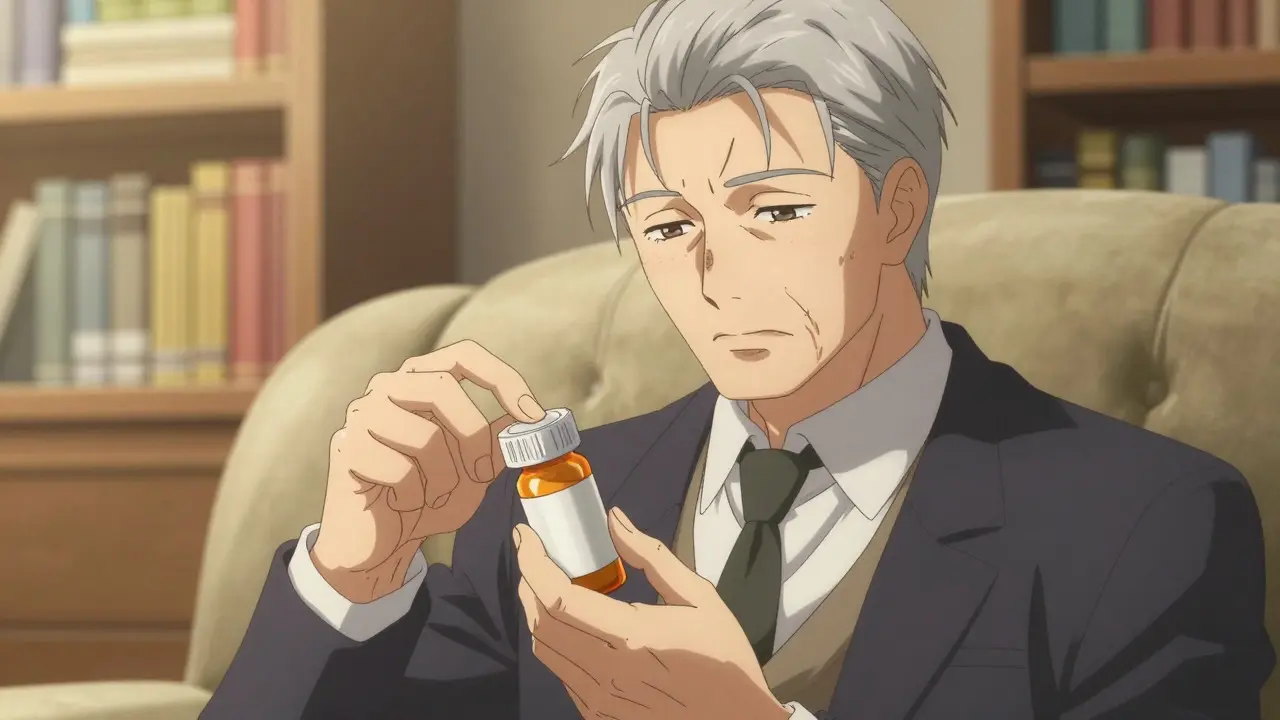
Struggling to open your medicine bottle shouldn't mean missing a dose. For millions of adults over 65, standard child-resistant packaging is pharmaceutical containers designed with mechanisms like push-and-turn or squeeze-and-turn to prevent access by young children feels like opening a safe without the combination. You push, you twist, your hands shake, and nothing happens. Meanwhile, the clock is ticking on your medication schedule. The good news? You have the right to request alternatives that keep kids safe but let you take your meds without pain or frustration.
This guide cuts through the pharmacy jargon and tells you exactly how to get easy-open caps and accessible labels. We’ll cover what to ask for, how to prove you need it (spoiler: you often don’t have to), and which technologies actually work in real life.
Why Standard Caps Are So Hard to Open
To understand why you’re struggling, you first need to know how these caps are built. Under the Poison Prevention Packaging Act of 1970, most prescription bottles must use closures that stymie 85% of children aged 42-51 months for at least 10 minutes. That’s a high bar for safety. But the same regulations require that 70-80% of adults aged 50-70 can open them within five minutes.
The problem? The average adult doesn’t stay in that "capable" bracket forever. A 2022 report from the FDA Consumer Safety Office found that nearly half of all adults over 65 struggle with standard closures. Arthritis, reduced grip strength, and tremors make the required force-often 6 to 10 pounds of pressure while twisting-a physical barrier to health.
| Closure Type | Opening Force Required | Child Resistance Effectiveness | Senior Accessibility Rate |
|---|---|---|---|
| Standard Push-and-Turn | 4.5-8.5 lbf + rotation | 98% | 51% (struggle rate) |
| Squeeze-and-Turn | 6-10 lbf radial pressure | 95% | Low (high dexterity needed) |
| SnapSlide Rx | <2.5 lbf sliding motion | 94% | 87% success rate |
| EZ-Open (Non-CR) | Minimal torque | 0% (Not Child-Resistant) | Near 100% |
Notice the gap. Traditional caps prioritize child safety at the expense of senior accessibility. Newer options like the SnapSlide Rx closure bridge this gap by using a sliding mechanism rather than a twisting one, requiring less than 2.5 pounds of force. This isn’t just a minor tweak; independent testing by the University of Scranton in early 2024 showed that 87% of seniors with arthritis could open these successfully within 30 seconds.
Types of Accessible Packaging Available
When you ask for help, you might hear terms like "senior-friendly," "accessible," or "non-child-resistant." It’s crucial to know the difference so you get what you actually need.
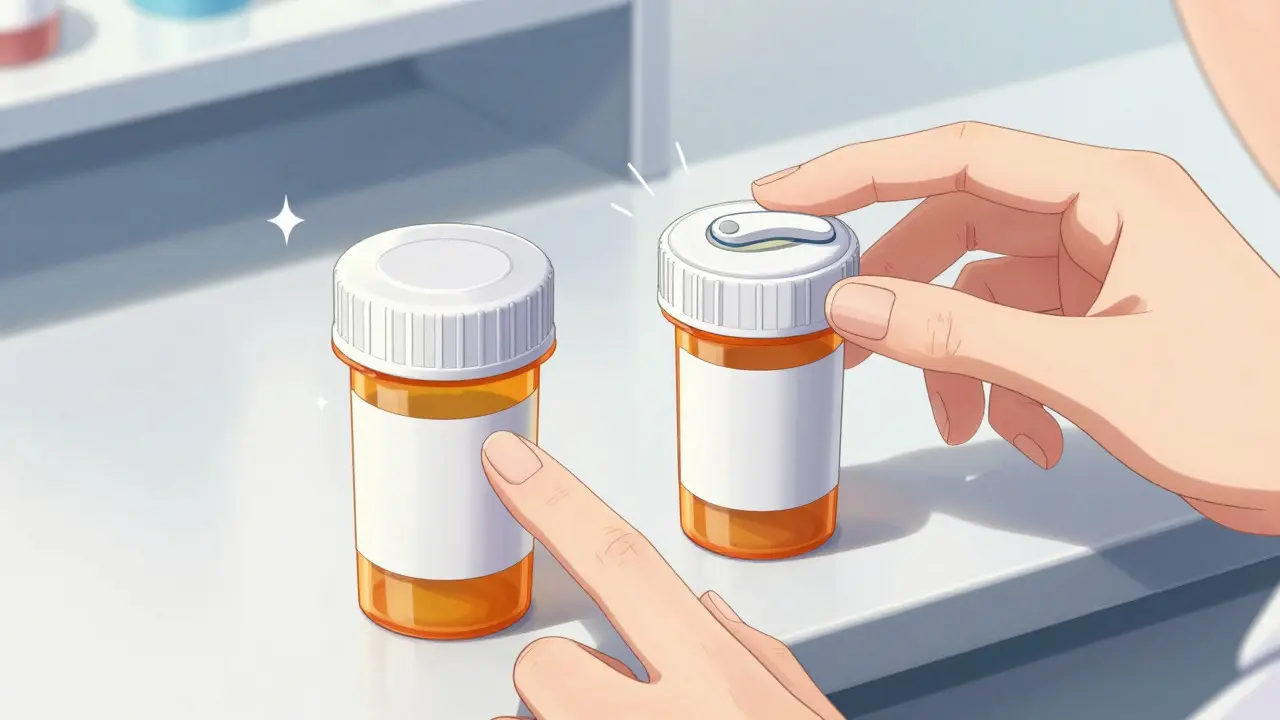
- Senior-Friendly Child-Resistant Closures: These still protect children but are easier for adults to operate. Examples include the SnapSlide Rx and certain flip-top designs. They meet ISO 8317 standards for child resistance while lowering the physical effort required by seniors.
- Non-Child-Resistant (NCR) Bottles: Also known as EZ-Open bottles, these have simple screw tops. They are the easiest to open but offer zero protection against curious toddlers. You typically need a specific reason (like living alone without children) to qualify for these under some insurance plans, though many pharmacies will provide them upon request if documented.
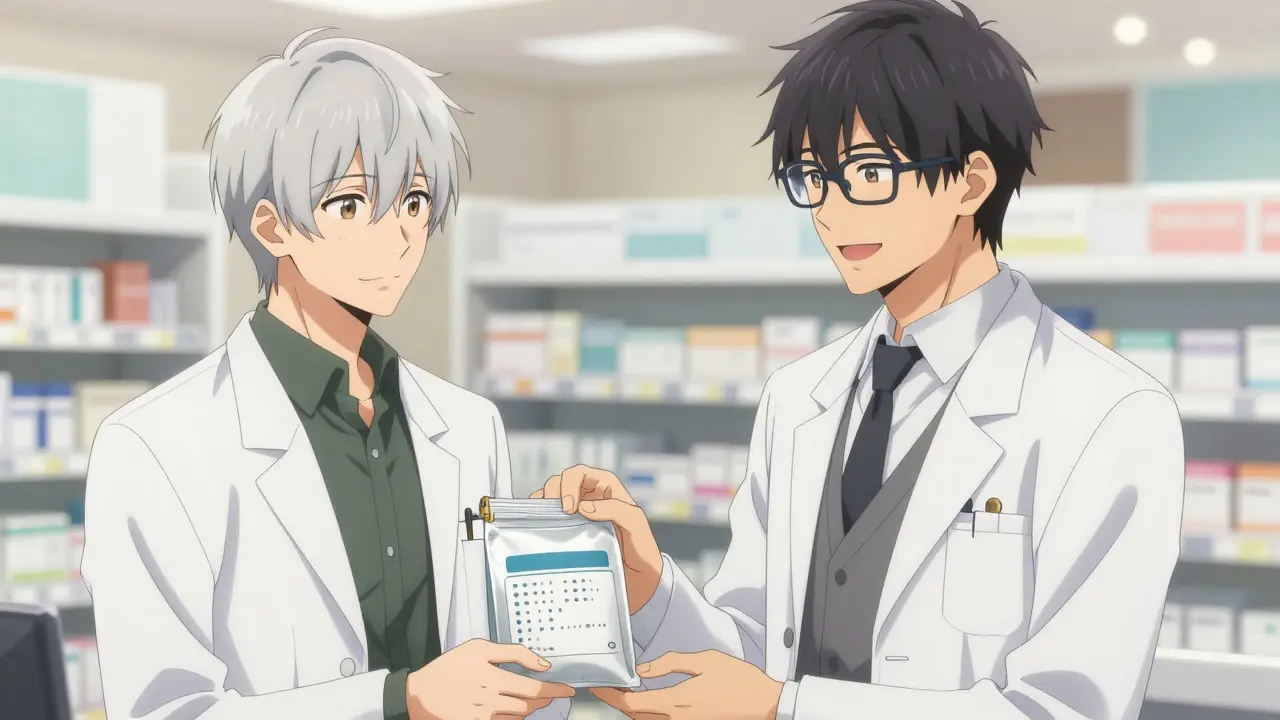
- Accessible Labels: Packaging isn’t just about the cap. If you have low vision, standard 10-point font is useless. Accessible labels come in large print (minimum 16-point font), Braille (Grade 2 standards with 0.5mm dot height), or even audible formats that read the label information in under 90 seconds.
The market for these solutions is growing fast. In 2023, the accessible pharmaceutical packaging market hit $385 million, up from $336 million the year before. Senior-friendly closures make up more than half of this segment. However, availability varies wildly between big chains and local independents.
Step-by-Step: How to Request Your Preferred Packaging
Getting the right packaging isn’t automatic. You have to ask, and you have to do it correctly. Here is the practical workflow to ensure you get your meds safely and on time.
- Ask Early, Not at Pickup: Do not wait until you are standing at the counter with a headache and a stiff hand. Contact your pharmacist when the prescription is first entered into the system. According to guidance from the American Pharmacists Association, initiating the request during creation prevents delays. Pharmacies often need 24 to 72 hours to source special bottles or print custom labels.
- Specify the Mechanism: Don’t just say "hard to open." Say, "I need a senior-friendly child-resistant cap like SnapSlide" or "I need a non-child-resistant bottle because I live alone." Specificity helps the pharmacist find the right inventory immediately.
- Provide Documentation (If Needed): While the Access Board’s 2019 guidelines state that pharmacies should provide accessible options upon request without proof, many pharmacists still ask for a note from your doctor confirming arthritis, visual impairment, or limited dexterity. Having this ready speeds up the process significantly. A simple letterhead note works best.
- Check Insurance Coverage: Medicare Part D updated its policies in 2024 to cover the cost premium of accessible packaging for beneficiaries with documented limitations. Before you pay out of pocket, ask your pharmacist to check if your plan covers the 15-20% price difference associated with these specialized closures.
- Verify Labeling Options: If you need large print or Braille, confirm the pharmacy has the capability. Some smaller locations may need to order these labels separately, adding another day to your wait time.
Overcoming Common Pharmacy Hurdles
Even when you follow the steps, things can go wrong. User experiences shared on forums like Reddit’s r/Pharmacy community highlight common friction points.
The "No Inventory" Excuse: It’s not uncommon for a pharmacy to claim they don’t have accessible bottles. As one user noted in a 2024 review, they were told "no inventory" three times before citing HIPAA and accessibility regulations prompted action. If this happens, ask to speak to the manager or try a different location within the same chain. Large retailers like CVS Health implemented system-wide accessible packaging options in late 2023, making availability much higher there than at independent shops.
Confusion Over Safety: Many patients worry that an "easy-open" cap means their grandkids can eat their pills. Reassure yourself with the data: 92% of senior-friendly closures still meet strict child-resistance standards. The innovation lies in the mechanics (sliding vs. twisting), not in removing safety features. Only non-child-resistant (NCR) bottles drop this protection entirely.
Cost Concerns: Accessible packaging costs more to manufacture. Without insurance coverage, this could mean paying extra per prescription. However, consider the alternative: missed doses. A Kaiser Permanente study tracking 15,000 patients found that switching to senior-friendly packaging reduced medication non-adherence by 32%. The cost of a hospital visit for a missed heart medication dose far outweighs the price of a special bottle.
Future Trends and What to Expect
The landscape of prescription packaging is shifting rapidly due to demographic changes. By 2040, nearly 21% of the U.S. population will be over 65, driving demand for accessible solutions. Regulatory bodies are catching up. The FDA released draft guidance in May 2024 proposing mandatory accessibility assessments for all new prescription products. Similarly, the European Union’s Medical Device Regulation updates effective in 2025 will require dual testing for both child resistance and senior accessibility.
Innovation continues too. SnapSlide LLC announced Version 2.0 of their closure in mid-2024, featuring biometric authentication to enhance security while maintaining ease of use. Industry analysts predict that by 2027, two-thirds of all prescription medications will feature integrated accessibility features. For now, however, you still need to advocate for yourself. The technology exists, but it’s not yet the default.
Frequently Asked Questions
Do I need a doctor's note to get easy-open caps?
Technically, no. The Access Board’s guidelines state that pharmacies should provide accessible packaging upon request without requiring documentation. However, in practice, many pharmacists prefer or require a note from your physician confirming conditions like arthritis or limited dexterity to justify the switch, especially if there are insurance implications. Bringing a note ensures a smoother process.
Are easy-open caps still safe for children?
Most senior-friendly caps, such as the SnapSlide Rx, are still child-resistant. They meet ISO 8317 standards, meaning they prevent access by 94% of young children. The key difference is the mechanism: they use sliding or lower-force actions instead of the high-pressure twisting required by traditional caps. Only non-child-resistant (NCR) bottles lack this protection.
How long does it take to get accessible packaging?
Pharmacies typically need 24 to 72 hours to prepare accessible packaging. This delay is due to sourcing special bottles and printing custom labels like large print or Braille. To avoid running out of medication, request these options when your prescription is first written or refilled, rather than waiting until pickup day.
Does insurance cover the cost of senior-friendly bottles?
Coverage varies by plan. Medicare Part D updated its policy in 2024 to cover the cost premium for accessible packaging for beneficiaries with documented dexterity or vision limitations. Private insurers may also cover it. Always ask your pharmacist to verify coverage before paying out of pocket, as the markup is typically 15-20% over standard bottles.
What types of accessible labels are available?
Accessible labels come in several formats to aid those with visual impairments. Large print labels use a minimum 16-point font compared to the standard 10-12 point. Braille labels follow Grade 2 standards with raised dots. Some services also offer audible labels, where a QR code or NFC chip links to an audio file reading the medication details in under 90 seconds.
Which pharmacies are most likely to have accessible packaging?
Large national chains like CVS Health have implemented system-wide accessible packaging options across their thousands of locations. Independent pharmacies have lower adoption rates (around 37%) due to inventory constraints. If your local pharmacy struggles to provide these options, consider switching to a larger chain or asking if they can order the specific closure type for you.