
Every year, millions of pregnant women turn to the internet to find out if a medication is safe. They search for answers about paracetamol, antidepressants, antibiotics, or even herbal teas. But here’s the hard truth: online pregnancy medication advice is often wrong. A 2019 study found that only 57% of online posts about medication safety during pregnancy matched the official medical guidelines. That means nearly half the advice you read could be misleading, outdated, or dangerously inaccurate.
Why This Matters More Than You Think
When a pregnant woman stops taking a necessary medication because she read a scary post on Instagram or Reddit, it’s not just a risk-it’s a real health threat. Women with epilepsy who stop lamotrigine because they fear seizures in the baby may face life-threatening seizures themselves. Those who avoid asthma inhalers like salbutamol risk low oxygen for the baby. Even common drugs like paracetamol get misreported-some sites claim it causes autism, despite a 2021 study of 95,000 pregnancies showing no link. The problem isn’t just misinformation. It’s the false confidence people have in it. One study found women rated their ability to judge online advice at 7.8 out of 10, but only 42% could correctly identify a trustworthy source when tested. That gap between confidence and competence is dangerous.The Gold Standard: Teratology Information Services (TIS)
Not all medication risk categories are created equal. The medical community uses a system called Teratology Information Services (TIS) to classify drugs during pregnancy. It has four clear levels:- Safe - Proven safe in human studies with no known risk
- Contraindicated - Known to cause harm, avoid completely
- On strict indication or second-line - May be used only if benefits clearly outweigh risks
- Insufficient knowledge - Not enough data to say for sure
Where to Look: The Three Trusted Sources
Forget blogs, Reddit threads, or Instagram influencers. For accurate pregnancy medication info, you need to go straight to the source. These three are backed by decades of research and updated regularly:- LactMed - Run by the National Library of Medicine. Updated weekly. Covers both pregnancy and breastfeeding. Free. No ads.
- MotherToBaby - Operated by the Organization of Teratology Information Specialists (OTIS). Offers free expert consultations by phone or chat. Their website has 92% accuracy in independent reviews.
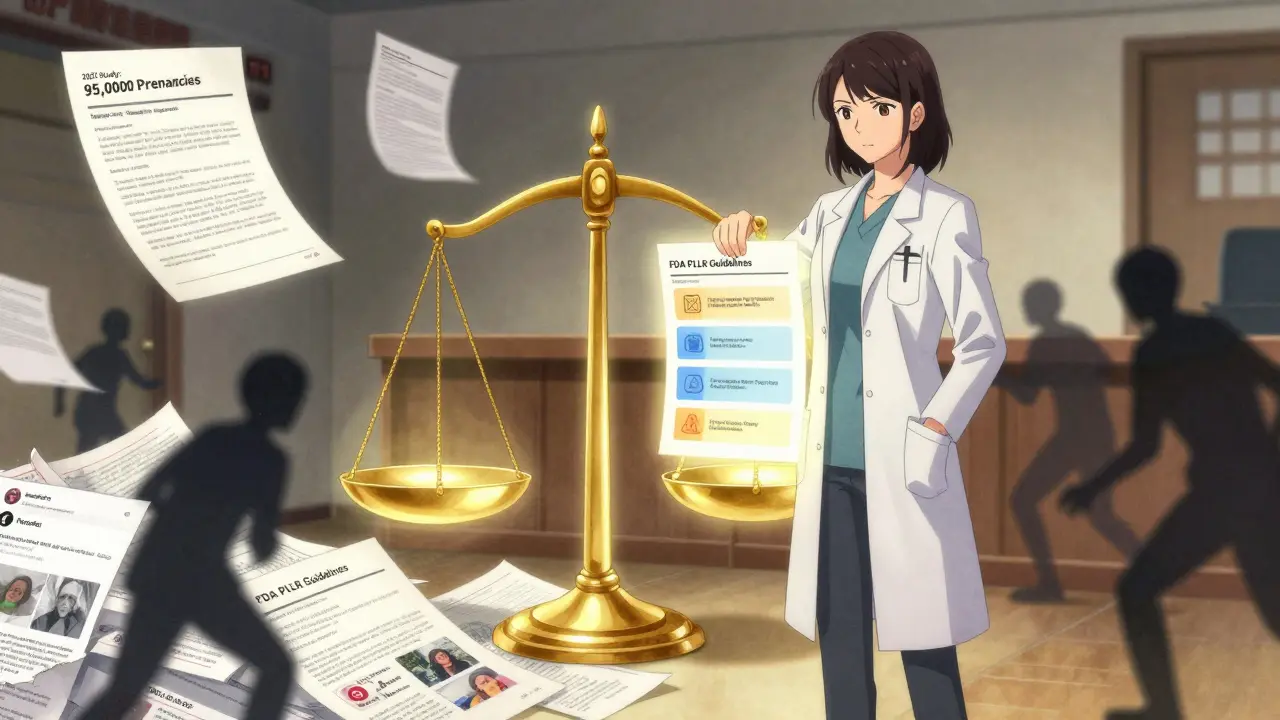
- ACOG and FDA guidelines - The American College of Obstetricians and Gynecologists and the FDA’s Pregnancy and Lactation Labeling Rule (PLLR) replaced old letter categories (A, B, C, D, X) with detailed, evidence-based summaries. Always check if a source references these.
Spotting Fake Expertise
You don’t need a medical degree to tell if someone’s qualified. Look for these red flags:- “Natural” doesn’t mean safe - Herbal supplements, essential oils, or home remedies are often promoted as “safe because they’re natural.” But 63% of women wrongly believe these need FDA approval. In reality, less than 0.3% of herbal products are tested for pregnancy safety before sale.
- Too certain - Experts say the most reliable sources admit uncertainty. Phrases like “current evidence suggests” or “limited data available” are signs of honesty. If a site says, “This drug is 100% safe,” it’s lying.
- Hidden sponsors - 42% of websites that look educational are secretly paid for by drug companies. Look for disclaimers like “Sponsored by [Pharma Brand]” or check the FDA’s Warning Letters database for past violations.
- Old information - Drug safety knowledge changes fast. A 2023 review found 78% of standard drug labels still use outdated risk data from before 2015. If the article doesn’t say when it was last updated, assume it’s outdated.
The 5-Step Accuracy Check
You don’t need to be a doctor to verify online advice. Here’s a simple, practical five-step method that takes under 30 minutes:- Check the source - Is it .gov, .edu, or certified by HONcode? Avoid .com sites with no clear ownership.
- Find the author - Look for credentials: OB-GYN, clinical pharmacist, or teratology specialist. Verify their board certification on the American Board of Medical Specialties site.
- Trace the evidence - Does it cite a real study? Look for the journal name, year, author, and sample size. If it says “a study found…” without details, skip it.
- Check the date - Anything older than two years should be treated with caution. New research comes out every month.
- Cross-reference - Go to LactMed, MotherToBaby, and ACOG. If all three agree, you can trust it. If they contradict, call your provider.

What About Social Media?
Reddit, Facebook groups, and TikTok are where most women turn first. But they’re also the worst place to get medical advice. A 2024 analysis of Reddit’s r/BabyBumps found 87 cases where women stopped antidepressants after reading posts claiming they caused birth defects. Twenty-nine of them ended up in emergency care. Social media thrives on emotion, not evidence. Posts that say “I took this and my baby was fine” or “This drug caused my child’s autism” get shared 3.7 times more than factual corrections. The algorithm rewards fear, not facts. If you find advice on social media, treat it as a starting point-not an answer. Use it to ask your doctor: “I saw this online. Can you check if it’s true?”The Future Is Here
There’s good news. In January 2025, the NIH launched a $4.7 million project to build browser extensions that automatically check pregnancy medication claims against the OTIS database. By late 2025, a University of Washington API will give real-time credibility scores to any drug claim you search. The FDA’s new Digital Health Software Precertification Program, launching in 2026, could cut misinformation by 60% by requiring pregnancy apps to prove their advice is accurate before being sold. But until then, the power is still in your hands. You don’t need to be an expert. You just need to be skeptical-and know where to look.What to Do Right Now
If you’re pregnant or planning to be, take five minutes today:- Bookmark LactMed
- Save the MotherToBaby number: 1-866-626-6847
- Next time you read something online, ask: “Does this cite a real study? Is it under two years old? Is it from a trusted source?”
Can I trust advice from my pharmacist about pregnancy medications?
Pharmacists are trained professionals, but many report feeling underprepared to answer pregnancy-specific questions. A 2024 study found 65.7% of pregnant women felt their pharmacists gave insufficient information. Always ask for the source of their advice-preferably from LactMed, OTIS, or ACOG. If they can’t point to a guideline, ask for a follow-up with your OB-GYN.
Are herbal supplements safe during pregnancy?
No, not unless proven safe by research. Unlike prescription drugs, herbal supplements don’t need FDA approval before being sold. Only 0.3% undergo any pregnancy safety testing. Common supplements like black cohosh, dong quai, or high-dose ginger can trigger contractions or affect fetal development. Always check LactMed or call MotherToBaby before using any herb.
What if I took a medication before I knew I was pregnant?
Most medications taken in the first two weeks after conception either have no effect or cause an “all or nothing” outcome-meaning the pregnancy either continues normally or ends in miscarriage. Don’t panic. Call MotherToBaby or your provider. They’ll review the drug, timing, and dose. In most cases, there’s no increased risk. The fear of harm is often worse than the actual risk.
Is it safe to take paracetamol during pregnancy?
Yes, when used as directed. A 2021 study of 95,000 pregnancies found no link between paracetamol use and neurodevelopmental issues in children. It’s still the preferred pain reliever for pregnant women. Avoid high doses or long-term use without medical advice, but occasional use for headaches or fever is safe and recommended over NSAIDs like ibuprofen.
How do I know if a website is hiding a pharmaceutical sponsor?
Look for subtle signs: if the site uses branded drug names instead of generic ones, pushes a specific product, or avoids mentioning alternatives, it may be sponsored. Search the FDA’s Warning Letters database for the company name. If they’ve been warned for false claims before, treat their site with extreme caution. Trusted sites like LactMed and MotherToBaby are government-funded and have no commercial sponsors.
Can AI tools help me check medication safety online?
Yes-new tools are emerging. The FDA’s pilot AI scanner, launched in September 2024, flags 83% of inaccurate pregnancy medication claims with only 12% false positives. Browser extensions from the NIH’s PRISM initiative will be available in 2025. But don’t rely on them yet. Always cross-check with human-reviewed sources like LactMed or MotherToBaby. AI is a helper, not a replacement for expert knowledge.


