The global generic drug market is on track to become a trillion-dollar industry within the next decade. By 2030, it could be worth anywhere between $640 billion and $800 billion, depending on how fast patents expire and how quickly regulators approve new versions of expensive branded drugs. This isn’t just a niche trend-it’s a fundamental shift in how the world pays for medicine. As healthcare systems struggle with rising costs and aging populations, generic drugs are no longer seen as a fallback option. They’re now the backbone of affordable care.
Why Generic Drugs Are Becoming Essential
Generic drugs aren’t cheap knockoffs. They’re exact copies of brand-name medications, with the same active ingredients, dosage, and effectiveness. The only difference? They cost 80% to 90% less. That’s why countries like Germany and the UK have pushed hard to make generics the default choice in public health systems. In the U.S., over 90% of prescriptions filled are for generics-but they account for just 15% of total drug spending. That’s the power of scale. The real turning point came with the 1984 Hatch-Waxman Act in the U.S., which created a fast-track approval process called the ANDA. This allowed manufacturers to skip expensive clinical trials if they could prove their version worked the same as the original. Since then, the market has grown from $225 billion in 2011 to nearly $500 billion today. And it’s accelerating.Patent Expirations Are the Main Engine
The biggest driver of growth isn’t demand-it’s expiration. Between 2025 and 2030, drugs generating $217 billion to $236 billion in annual sales will lose patent protection. That’s a massive wave of opportunity. Drugs like ustekinumab (Stelara), vedolizumab (Entyvio), and liraglutide (Victoza) are all set to go generic soon. These aren’t minor medications-they’re blockbuster treatments for autoimmune diseases and diabetes. Biosimilars, which are generic versions of biologic drugs (complex proteins made from living cells), are growing even faster. While traditional generics grow at around 5-7% annually, biosimilars are projected to grow at 8.2% through 2030. Why? Because biologics are expensive to make and hard to copy. But once a biosimilar clears regulatory hurdles, it can undercut the original by 30-70%. The EU and Japan are speeding up approvals, and companies are racing to be first to market.Regional Growth Patterns: Who’s Leading?
The market isn’t growing evenly. Asia-Pacific is the fastest-growing region, with India and China driving most of the action. India produces 20% of the world’s generic drugs and 60% of its vaccines. Chinese manufacturers are reshaping global pricing through aggressive volume-based tenders-buying in bulk to drive down costs. When China sets a price for a generic antibiotic, it often becomes the new global benchmark. Europe is mature but stable. Germany and the UK lead in adoption thanks to strong public health policies. The U.S. market is crowded and competitive, dominated by giants like Teva, Viatris, and Sandoz. But even here, pressure is mounting. With over $100 billion in at-risk sales expected by 2028, manufacturers are preparing for a flood of new generic entries. Latin America, the Middle East, and Africa are catching up. Brazil, Mexico, and South Africa are expanding regulatory systems to approve more generics. But infrastructure gaps still limit access. These regions represent the next frontier-not because they’re rich, but because they’re desperate for affordable medicine.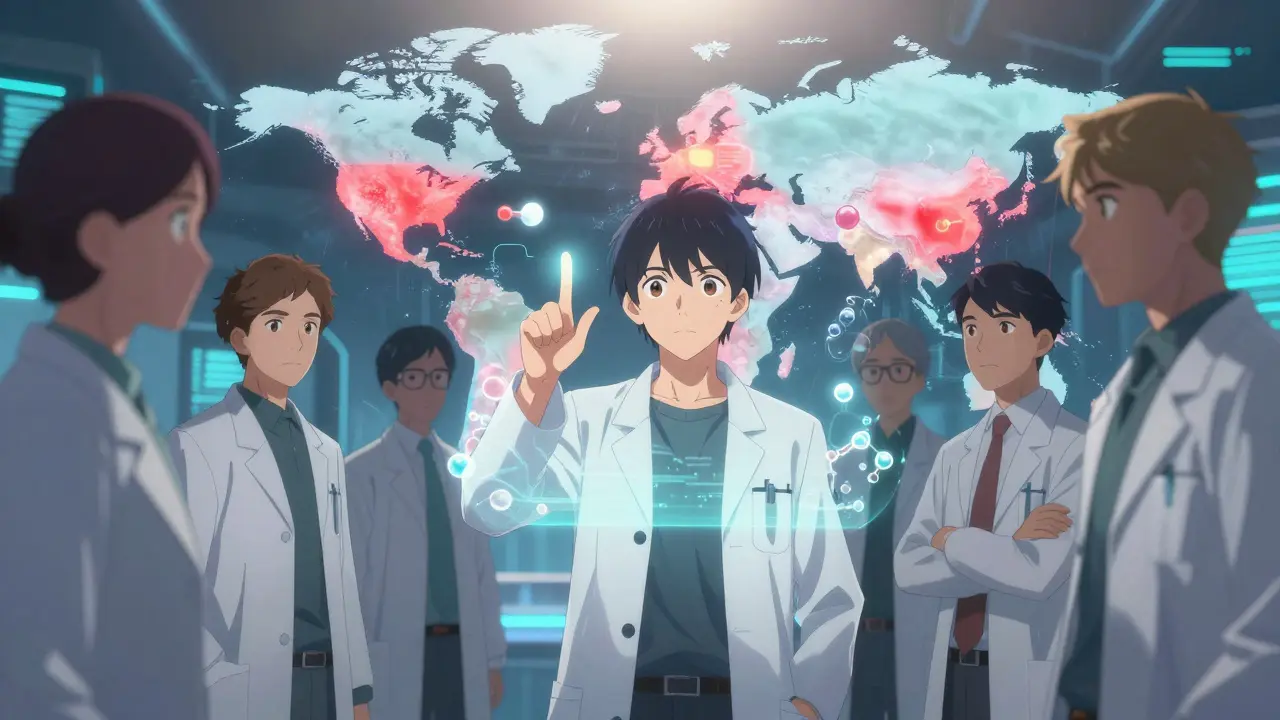
Therapeutic Areas Driving Demand
Not all generics are created equal. Some therapeutic areas are seeing explosive growth:- Oncology: Cancer drugs are the most valuable therapy area globally, with over $300 billion in projected sales by 2030. As branded drugs like Keytruda and Opdivo lose exclusivity, biosimilars will enter the market, slashing costs for patients and insurers.
- Diabetes: With over 500 million people living with diabetes worldwide, drugs like metformin and insulin are in constant demand. Newer GLP-1 agonists like liraglutide and semaglutide are next in line for generic versions.
- Cardiovascular: High blood pressure and cholesterol meds are among the most prescribed drugs globally. Generic statins and ACE inhibitors have been staples for years, but newer combinations are emerging.
- Inflammatory diseases: Drugs like Dupixent and Skyrizi are top sellers today, but their patents expire in the early 2030s. That’s a $20+ billion opportunity waiting to be unlocked.
Technology Is Changing How Generics Are Made
Manufacturing isn’t just about chemistry anymore. Robotic process automation is cutting production time and errors. AI is helping predict which drugs are most likely to face patent challenges. And digital tools-like apps that remind patients to refill prescriptions-are improving adherence, which boosts sales for manufacturers. One under-the-radar trend: dual-source manufacturing. In Southeast Asia, procurement agencies are starting to award contracts to two suppliers at once, requiring each to maintain separate, validated production lines. This reduces supply chain risk and encourages local investment. Companies are now building fill-and-finish facilities in India and Thailand-not just to cut costs, but to qualify for these contracts.
Challenges Ahead: Pricing Pressure and Complexity
Growth doesn’t mean easy profits. The biggest threat isn’t lack of demand-it’s falling prices. China’s volume-based tenders have forced manufacturers to compete on cost, not quality. Some small players have gone out of business. Even big firms are trimming margins. Another hurdle: complexity. Older generics were simple pills. Today’s generics include injectables, inhalers, and biologics. Making a biosimilar requires understanding cell cultures, protein folding, and stability testing. It’s not something a small lab can do overnight. That’s creating a barrier to entry-but also a chance for specialized players to dominate.What’s Next? The Road to 2034
Analysts disagree on exact numbers, but they all agree: the market will keep growing. Custom Market Insights predicts $926 billion by 2034. Towards Healthcare forecasts $947 billion. Even the most conservative estimates put it above $700 billion. The future belongs to companies that can do three things:- Move fast on patent cliffs-especially for high-value drugs
- Invest in biosimilars and complex formulations
- Build resilient supply chains with multiple manufacturing sites
Are generic drugs as safe and effective as brand-name drugs?
Yes. Generic drugs must meet the same strict standards as brand-name drugs. Regulatory agencies like the U.S. FDA and the European Medicines Agency require generics to have the same active ingredient, strength, dosage form, and route of administration. They must also prove bioequivalence-meaning they work the same way in the body. Millions of patients use generics every day without any loss in effectiveness or safety.
Why are biosimilars growing faster than traditional generics?
Biosimilars are complex biological drugs-like those used for cancer or autoimmune diseases-that were previously only available as expensive branded products. Because they’re harder to replicate than simple pills, they’ve had less competition. Now that patents are expiring, companies are racing to enter the market. Since biosimilars can cut costs by 30-70%, payers and patients are eager to adopt them. Regulatory agencies are also speeding up approvals, making this segment grow at nearly twice the rate of traditional generics.
Which countries are the biggest producers of generic drugs?
India is the world’s largest supplier of generic drugs by volume, producing about 20% of global supply and 60% of vaccines. China is the second-largest producer and has become a major force in pricing due to its government-run bulk procurement system. The U.S. and Germany are major consumers and also have strong domestic manufacturing, but they rely heavily on imports from Asia for cost-effective production.
Will generic drugs replace branded drugs completely?
No, but they will dominate in volume. Branded drugs will still lead in innovation-especially for new diseases or complex treatments. But once a drug’s patent expires, generics will quickly take over most prescriptions. In fact, in most countries, doctors are encouraged or even required to prescribe generics when available. The future is a mix: branded drugs for breakthrough treatments, generics for everyday, long-term care.
How do patent expirations affect drug prices?
When a patent expires, multiple generic manufacturers enter the market. Competition drives prices down rapidly-often by 80% or more within a year. For example, when Lipitor (atorvastatin) lost its patent in 2011, its price dropped from over $100 per pill to less than $0.10 per pill in generic form. The more competitors that enter, the lower prices go. This is why the next wave of expirations-especially for high-revenue drugs-is so significant for healthcare cost savings.


