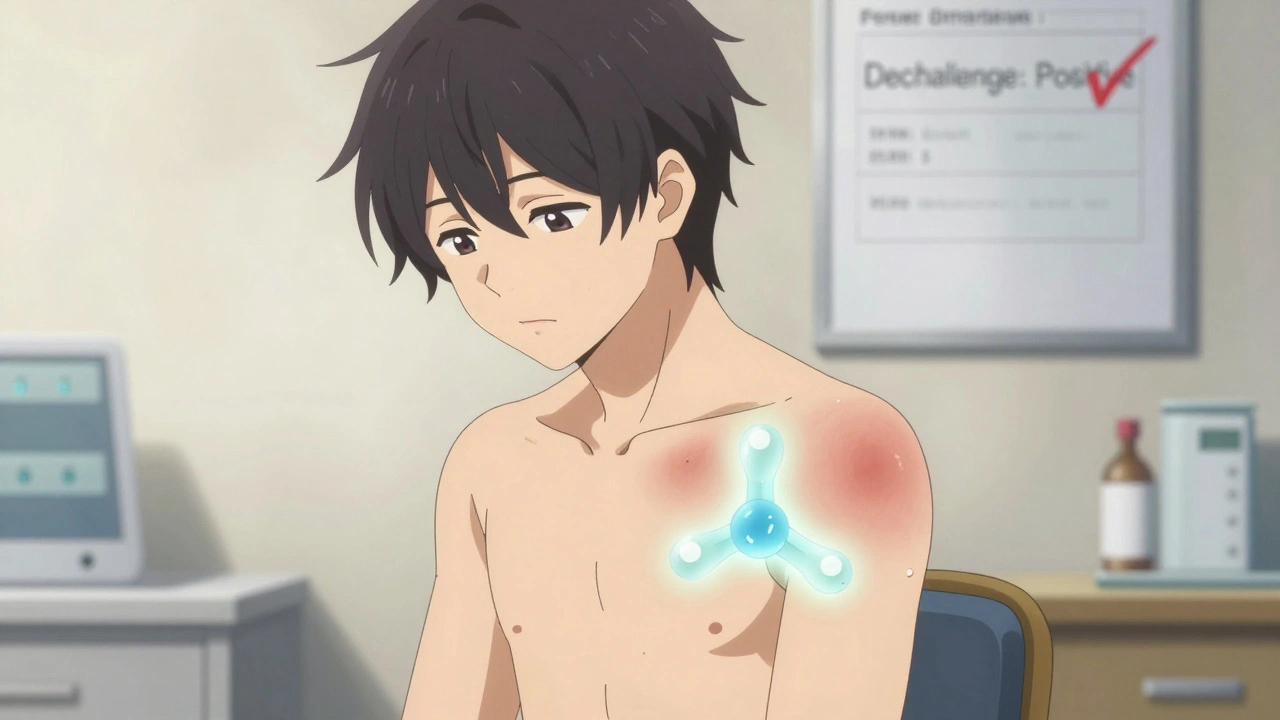
When a patient starts feeling worse after taking a new medication, doctors don’t just assume it’s the drug’s fault. They need proof. That’s where dechallenge and rechallenge come in-two simple but powerful clinical tools used to figure out if a drug is truly causing the problem.
What Is Dechallenge?
Dechallenge means stopping the suspected drug and watching to see if the side effect goes away. It’s the first step in confirming a drug is to blame. If symptoms improve after stopping the medication, that’s called a positive dechallenge. It doesn’t prove the drug caused the reaction, but it strongly suggests it.For example, someone develops a rash after starting a new antibiotic. The doctor tells them to stop taking it. If the rash fades over the next few days, that’s a positive dechallenge. The timing matters. If the rash clears within the same timeframe the drug leaves the body-usually a few days to a week-it adds weight to the case. But if the rash sticks around, or gets worse, the dechallenge is negative. That means something else might be going on.
Real-world cases show how this works. In one documented case, a patient developed a fixed drug reaction-a rash that always appears in the same spot-after taking metronidazole. Once they stopped the drug, the rash faded over two weeks, even though it left behind darkened skin. That’s a textbook positive dechallenge.
But here’s the catch: patients often stop meds on their own. They feel bad, so they quit. That’s not a real dechallenge. For it to count, the stop has to be planned, monitored, and documented. Otherwise, you can’t tell if the improvement was because of stopping the drug-or because they changed their diet, got better from an infection, or just got lucky.
What Is Rechallenge?
Rechallenge is when you give the drug back-on purpose-to see if the side effect returns. If it does, you’ve got near-conclusive proof that the drug caused the reaction.This is the gold standard. If a rash comes back exactly where it was before, within 48 hours of restarting the same drug, there’s almost no doubt. In the metronidazole case, the patient was rechallenged under medical supervision three months later. The rash returned in the exact same spot. That’s not coincidence. That’s causation.
But rechallenge is risky. Giving someone a drug that once made them sick could make them sicker-sometimes dangerously so. If the reaction was Stevens-Johnson syndrome, liver failure, or anaphylaxis, rechallenge could kill them. That’s why it’s rarely done. In fact, fewer than 1 in 300 serious drug reactions get rechallenged. Regulatory agencies like the FDA only allow it under strict conditions: in a controlled setting, with emergency care ready, and only for non-life-threatening reactions.
Most of the time, doctors rely on dechallenge alone. In dermatology, about 85% of suspected drug reactions are assessed using dechallenge only. In liver injury cases, it’s around 79%. But in psychiatry, where stopping a drug can trigger a mental health crisis, rechallenge is almost never used. The risks outweigh the benefits.
Why These Tests Matter
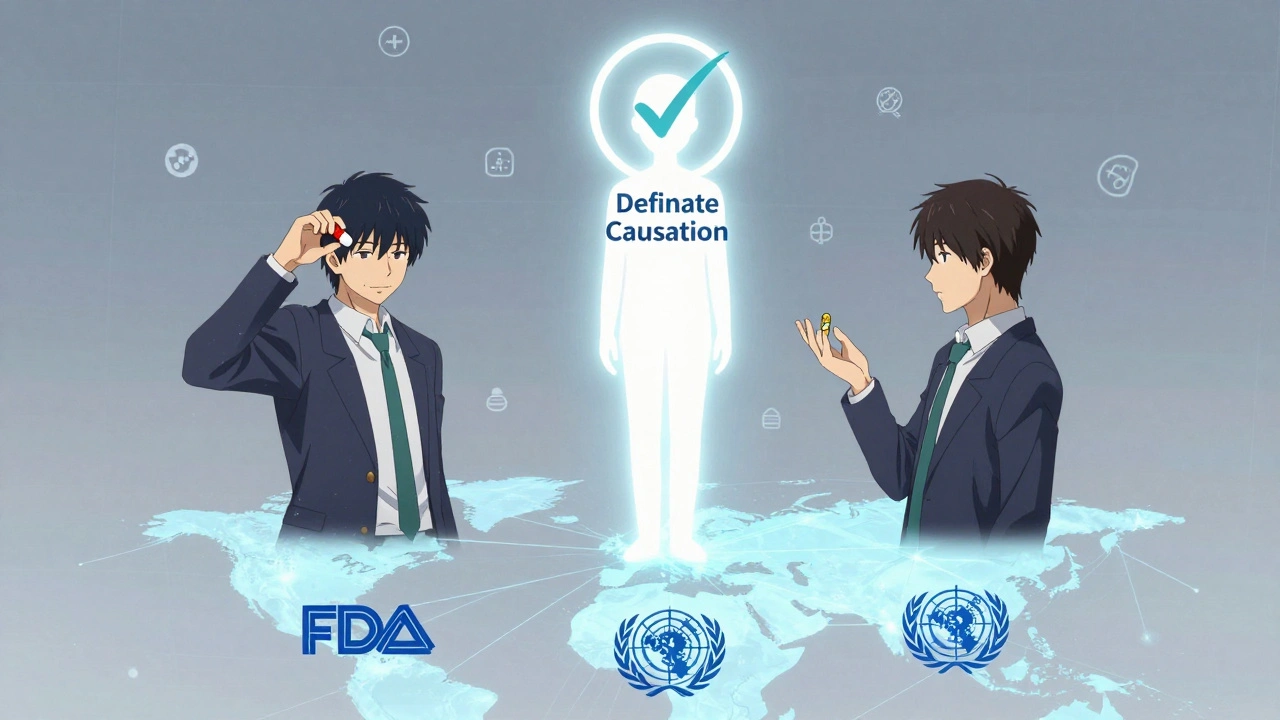
Doctors don’t use dechallenge and rechallenge just to be thorough. These tests are part of a global system called pharmacovigilance-the science of detecting, understanding, and preventing drug side effects. Every time a patient reports a bad reaction, regulators need to know if it’s real.The World Health Organization’s causality assessment system rates drug reactions from “unlikely” to “definite.” A positive dechallenge bumps it to “probable.” A successful rechallenge? That’s “definite.” And “definite” matters. It’s what triggers drug warnings, label changes, or even removal from the market.
Take the case of the diabetes drug rosiglitazone. Early reports linked it to heart attacks. But without clear dechallenge/rechallenge data, regulators hesitated. Once real-world evidence showed that patients’ heart problems improved after stopping the drug-and worsened again when restarted-the FDA added a black box warning. That change saved lives.
Without dechallenge and rechallenge, we’d be guessing. Algorithms and statistical tools like the Naranjo scale can help, but they’re just estimates. They don’t show what actually happens in a human body. Only watching a reaction fade-and then return-gives you real evidence.
The Ethical Line
The biggest problem with rechallenge isn’t science-it’s ethics. You can’t just say, “Let’s see if this kills you again.” Even if the patient consents, the risk is too high. That’s why doctors avoid it unless absolutely necessary.There are alternatives being developed. Researchers are testing blood tests that measure how immune cells react to drugs in a lab. One study showed an 89% accuracy rate in predicting who’ll have a reaction, without ever giving them the drug again. Wearable sensors now track heart rate, skin temperature, and inflammation markers in real time during dechallenge, giving objective data instead of relying on patient memory.
But these tools aren’t replacements. They’re helpers. The WHO says clearly: no algorithm can substitute for the clinical reality of a symptom resolving after stopping a drug. That’s why dechallenge remains the backbone of every serious drug safety investigation.
How It’s Done in Practice
In hospitals and clinics, dechallenge is routine. When a patient reports a side effect, the medical team asks: When did it start? What drugs were started around that time? Which one was stopped first? Did symptoms improve?They use checklists. One common tool asks:
- Was the drug taken before the reaction?
- Did the reaction improve after stopping the drug?
- Did it return when the drug was restarted?
- Is there a known biological reason this drug causes this reaction?
If three out of four answers are yes, the reaction is likely drug-related. If rechallenge is included, it’s almost certain.
But real life is messy. Patients take five medications. One is stopped, then another. Symptoms improve-but was it drug A, B, or C? That’s called polypharmacy confusion. It’s why detailed records matter. Electronic health systems now flag possible drug reactions and ask doctors to document dechallenge outcomes. In 2023, 67% of big pharma companies required this data in safety reports. That’s up from 38% in 2018.
What Happens Next?
If dechallenge is positive and rechallenge is possible, the reaction gets reported to national drug safety agencies. In the U.S., that’s the FDA’s MedWatch program. In Europe, it’s EudraVigilance. These databases track millions of reports every year.When enough reports point to the same drug-reaction pair, regulators investigate. If the evidence is strong-especially if rechallenge was involved-they may issue a warning, restrict use, or pull the drug entirely.
And it’s not just about new drugs. Even old, well-known medications can have hidden side effects. Dechallenge and rechallenge are how we find them.
Bottom Line
Dechallenge tells you a drug might be the culprit. Rechallenge tells you it is. Together, they turn suspicion into certainty. They’re not flashy. They don’t involve fancy machines or AI. But they’re the most reliable way we have to protect patients from harmful drugs.For patients, the takeaway is simple: if you think a drug is making you sick, don’t just quit it. Tell your doctor. Let them guide the process. Document what happens. That information could help you-and thousands of others-avoid harm in the future.
Can dechallenge and rechallenge be done at home?
No. Dechallenge should only be done under medical supervision. Stopping certain drugs suddenly-like antidepressants, blood pressure meds, or steroids-can cause dangerous withdrawal effects. Rechallenge should never be attempted at home. It requires a controlled environment with emergency care ready in case the reaction returns severely.
If a drug reaction goes away after stopping the drug, does that mean it’s definitely the drug’s fault?
Not always. Other factors could be involved-like an infection, stress, or another medication. But a clear improvement after stopping the drug, especially if it matches the drug’s half-life, strongly suggests it’s the cause. That’s why doctors look at the full picture: timing, symptoms, and whether other drugs were changed too.
Why isn’t rechallenge done more often?
Because it’s dangerous. Re-exposing someone to a drug that once caused a serious reaction-like a life-threatening rash or liver damage-could kill them. Ethical review boards only approve rechallenge in rare cases: mild reactions, no alternatives, and with full consent and emergency support. Less than 0.3% of serious cases get rechallenged.
Are there any drugs where rechallenge is commonly accepted?
Yes, but only for mild reactions. For example, in cases of mild skin rashes from antibiotics like penicillin (not anaphylaxis), rechallenge might be done in allergy clinics to confirm the diagnosis. It’s also used in research settings for non-life-threatening reactions where the benefit of confirming causality outweighs the small risk.
How do doctors know if a reaction is truly caused by a drug and not something else?
They use four key clues: 1) Did the reaction start after the drug was taken? 2) Did it improve after stopping the drug (dechallenge)? 3) Did it return when the drug was given again (rechallenge)? 4) Is there a known biological reason the drug causes this reaction? If all four fit, it’s almost certainly the drug.
Dechallenge and rechallenge are quiet tools. You won’t see them in ads or on TV. But they’re the reason we know which drugs are safe-and which ones aren’t. Every time a patient reports a side effect and a doctor listens, tracks, and tests, they’re helping build a safer system for everyone.


