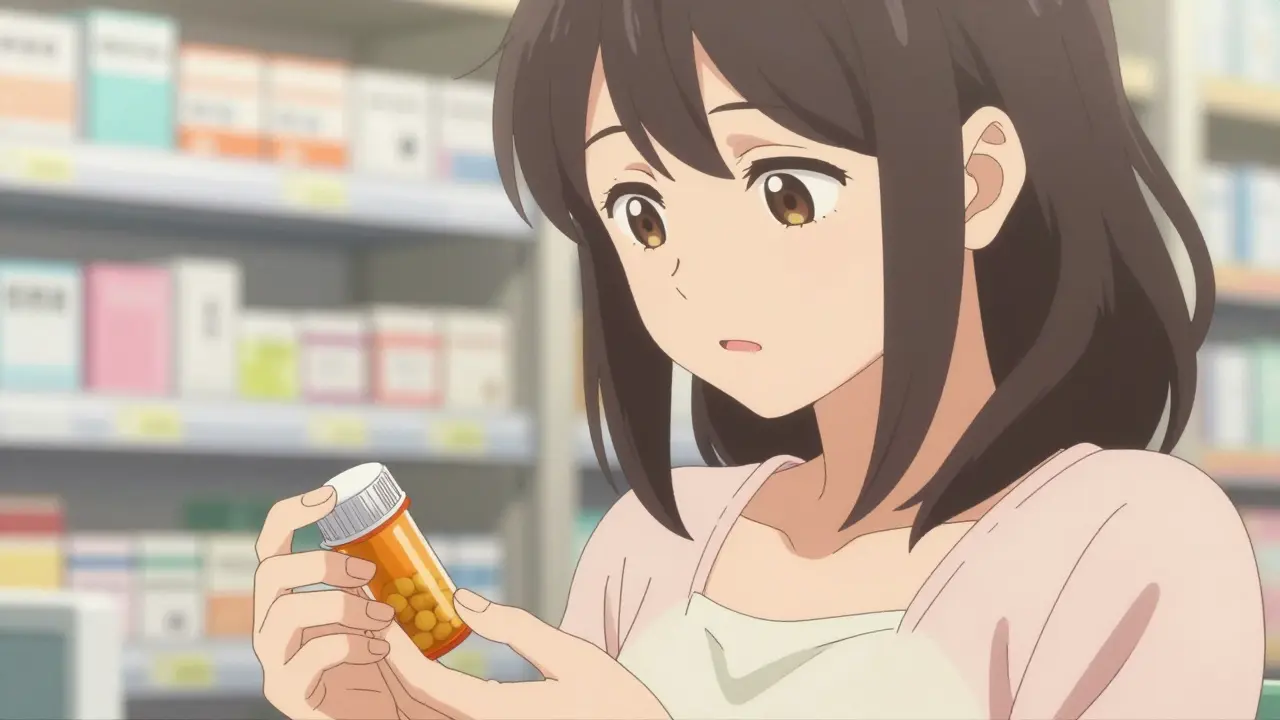
Imagine you are eight weeks pregnant. Your morning sickness is severe, and your doctor prescribes a medication to help you keep food down. At the pharmacy, you receive a pill that looks different from the one your friend took. It’s smaller, a different color, and costs significantly less. It is a generic drug. Suddenly, anxiety sets in. Is this cheaper version safe for your baby? Will it work as well? You are not alone in this worry. Many expectant mothers hesitate when handed a generic prescription, fearing that "cheaper" might mean "less effective" or "riskier."
The short answer is yes, generic medications are generally safe and effective during pregnancy. However, understanding why requires looking beyond the price tag and into the science of how these drugs are regulated and tested. This guide breaks down the safety data, explains what bioequivalence really means for your changing body, and highlights specific situations where you might need to pay closer attention.
What Exactly Is a Generic Drug?
To understand safety, we first need to define what we are talking about. A generic drug is not a "copycat" product made with lower standards. Legally, it must be equivalent to the brand-name drug in dosage form, safety, strength, route of administration, quality, performance characteristics, and intended use. In the United States, this equivalence is mandated by the Hatch-Waxman Act of 1984.
The U.S. Food and Drug Administration (FDA) requires that generic drugs demonstrate bioequivalence to their brand-name counterparts. Bioequivalence means that the generic drug delivers the same amount of active ingredient into your bloodstream over the same period of time as the brand-name drug. The legal requirement allows for a range of 80-125% similarity in pharmacokinetic profiles. While this sounds like a wide margin, statistically, it ensures that the difference in absorption is clinically insignificant for the vast majority of patients.
Think of it like two different brands of water. One comes in a fancy glass bottle, the other in a plastic jug. If both contain purified H2O, the hydration effect on your body is identical, regardless of the packaging. Similarly, the active pharmaceutical ingredient (API) in a generic drug is chemically identical to the brand-name version. The differences lie only in inactive ingredients-excipients like dyes, binders, or fillers-which determine the pill’s color, shape, and taste but do not affect its therapeutic action.
| Feature | Brand-Name Drug | Generic Drug |
|---|---|---|
| Active Ingredient | Specific chemical compound | Identical chemical compound |
| Inactive Ingredients | Proprietary mix | May differ (dyes, fillers) |
| Bioavailability | Reference standard | 80-125% equivalent to brand |
| Cost | High (R&D recovery) | Low (no R&D cost) |
| Pregnancy Safety Data | Original clinical trials | Rely on brand-name data |
The Evolution of Pregnancy Safety Labels
If you have been following medical advice for years, you might remember the old FDA pregnancy categories: A, B, C, D, and X. These letters provided a quick snapshot of risk. Category A meant controlled studies showed no risk, while Category X meant contraindicated in pregnancy due to fetal abnormalities. For decades, these labels applied equally to both brand-name and generic versions of medications.
However, in June 2015, the FDA replaced this simplistic letter system with the Pregnancy and Lactation Labeling Rule (PLLR). Why the change? Because pregnancy is complex. A single letter could not capture the nuances of timing, dosage, or individual patient history. The PLLR introduced three new sections on drug labels: "Pregnancy," "Lactation," and "Females and Males of Reproductive Potential."
This shift provides more detailed narrative descriptions of risks rather than a one-size-fits-all category. Crucially, this updated labeling applies to generics as well. When a brand-name drug receives a safety update based on new data, all generic manufacturers must update their labels within 30 days under 21 CFR 314.94(a)(8). This means the safety information you read on a generic bottle is just as current and comprehensive as that on a brand-name box.
What Do Experts Say About Generics in Pregnancy?
Medical organizations are clear on this issue. According to the American College of Obstetricians and Gynecologists (ACOG) Practice Bulletin Number 222, published in October 2020, "generic medications approved by the FDA are considered therapeutically equivalent to their brand-name counterparts and therefore share the same pregnancy safety profile when they contain identical active ingredients." Dr. Siobhan Dolan, Professor of Obstetrics & Gynecology at Albert Einstein College of Medicine, emphasizes that "the molecular structure of generic medications is identical to brand-name versions, so pregnancy safety data applies equally." She notes that while providers monitor for formulation differences, there is no evidence suggesting generics are less safe.
Supporting this view, a 2019 study published in the Journal of Obstetrics and Gynaecology Canada analyzed 127 generic substitutions for pregnancy-critical medications. The researchers found no statistically significant differences in pregnancy outcomes between those who took brand-name drugs and those who switched to generics (p=0.37). Despite this data, 4.7% of surveyed obstetricians reported that patients expressed concerns about generic substitutions, highlighting a gap between scientific evidence and public perception.

When Should You Be Cautious? Narrow Therapeutic Index Drugs
While most generics are perfectly safe, there is a specific class of medications where precision matters immensely: those with a Narrow Therapeutic Index (NTI). These are drugs where a small difference in blood concentration can lead to treatment failure or toxicity. Levothyroxine, used to treat hypothyroidism, is a prime example.
Untreated hypothyroidism during pregnancy increases miscarriage risk by 61% and preterm delivery risk by 39%, according to a 2021 meta-analysis in Thyroid. Because thyroid hormone levels must be tightly controlled, the FDA implemented tighter bioequivalence requirements for levothyroxine in 2012. Instead of the standard 80-125% range, NTI drugs must fall within a narrower 90-112% equivalence range.
If you are taking an NTI medication, consistency is key. Switching between different generic manufacturers might cause slight fluctuations in absorption, even if each manufacturer meets the strict FDA standards. Dr. Kristin Palmsten of the University of Massachusetts cautions that "pregnancy-induced changes in gastrointestinal motility, plasma volume, and renal clearance may theoretically amplify minor formulation differences." While current evidence doesn't support changing clinical practice broadly, many doctors prefer that pregnant patients stick with one specific manufacturer of NTI drugs to avoid unnecessary variability.
Real-World Experiences: Nausea and Tolerance
Data from clinical trials is one thing; real-life experience is another. Some women report feeling different effects when switching from brand to generic, particularly with medications for nausea or pain. A 2020 study in the American Journal of Managed Care found that 32.7% of pharmacists reported instances where different generic manufacturers of the same medication produced varying patient experiences during pregnancy.
Why does this happen? It often comes down to inactive ingredients. For example, ondansetron (Zofran) is commonly prescribed for severe morning sickness. Some generic formulations may contain different dyes or fillers that irritate a sensitive stomach, leading to increased nausea-not because the active drug is failing, but because the "vehicle" delivering it is harder to tolerate.
User forums reflect this nuance. On Reddit’s r/BabyBumps, a thread discussing prenatal vitamins revealed that while 63% of users saw no difference, 29% found generics caused more nausea. Conversely, 8% reported better tolerance with generics. If you find a generic causes side effects, don’t assume the drug itself is unsafe. Talk to your pharmacist. They may be able to switch you to a different generic manufacturer with a different inactive ingredient profile, or back to the brand name if medically necessary and affordable.

High-Risk Medications and REMS Programs
For medications known to cause birth defects, such as isotretinoin (formerly Accutane), safety protocols are extremely strict. Isotretinoin is teratogenic, meaning it can cause severe birth defects. Both brand-name and generic versions are subject to the iPLEDGE program, a Risk Evaluation and Mitigation Strategy (REMS) required by the FDA.
iPLEDGE mandates monthly pregnancy tests, two forms of contraception, and mandatory registration for all users of isotretinoin, regardless of whether the pill is branded or generic. Data from the FDA’s Adverse Event Reporting System (FAERS) from 2018-2022 shows no significant difference in pregnancy-related adverse events between brand-name and generic isotretinoin (p=0.72). The pregnancy rate was 0.21% for brand versus 0.23% for generics, confirming that the safety mechanisms work equally well for both.
Practical Tips for Expectant Mothers
Navigating medication choices during pregnancy can feel overwhelming. Here are some actionable steps to ensure your safety and peace of mind:
- Ask Questions: Never hesitate to ask your pharmacist or doctor if a generic is appropriate for your condition. They can explain the specific drug’s safety profile.
- Check for NTI Status: If you take thyroid medication, seizure drugs, or certain heart medications, ask if you should stay with one manufacturer.
- Monitor Side Effects: If you switch from brand to generic and notice new symptoms like increased nausea or headaches, track them. Report them to your provider. It might be an issue with inactive ingredients, not the drug itself.
- Avoid Compounded Meds: The University of North Carolina’s 'Safe Supplements and Over-the-Counter Medications in Pregnancy' guide warns against compounded medications during pregnancy unless absolutely necessary, as they are not FDA-approved generics and lack standardized safety testing.
- Use Trusted Resources: Refer to guides like MotherToBaby, operated by the Organization of Teratology Information Specialists, which documents thousands of medication exposures to provide evidence-based answers.
The Bottom Line on Cost and Access
One undeniable benefit of generics is cost. The generic pharmaceutical market was valued at $220.3 billion globally in 2022, offering significant savings compared to brand names. For many families, this affordability reduces stress and improves adherence to treatment plans. Approximately 90% of all prescriptions dispensed in the U.S. are generics, according to the Association for Accessible Medicines. By choosing generics, you are not compromising safety; you are accessing the same proven therapies at a fraction of the cost.
As the FDA continues to enhance post-marketing surveillance through initiatives like GDUFA III and the Sentinel Initiative, the monitoring of generic safety during pregnancy becomes more robust. The goal is clear: to ensure that every expectant mother has access to safe, effective, and affordable care. Trust the process, communicate with your healthcare team, and rest assured that the science supports the safety of generic medications.
Are generic prenatal vitamins as good as brand-name ones?
Yes. Prenatal vitamins are supplements, but if they are USP-verified or meet FDA standards, the active ingredients (folic acid, iron, etc.) are identical. Some women find brand-name vitamins easier to digest due to different filler ingredients, but nutritionally, they provide the same benefits for fetal development.
Can I switch between different generic manufacturers during pregnancy?
Generally, yes. However, for medications with a Narrow Therapeutic Index (like levothyroxine), it is best to stick with one manufacturer to maintain consistent blood levels. For most other drugs, switching manufacturers is safe, though you should monitor for any changes in side effects related to inactive ingredients.
Do generic drugs have the same pregnancy warnings as brand-name drugs?
Yes. Federal law requires generic drugs to carry the exact same pregnancy warnings and safety information as their brand-name equivalents. If a brand-name drug gets a new warning label, all generics must update theirs within 30 days.


