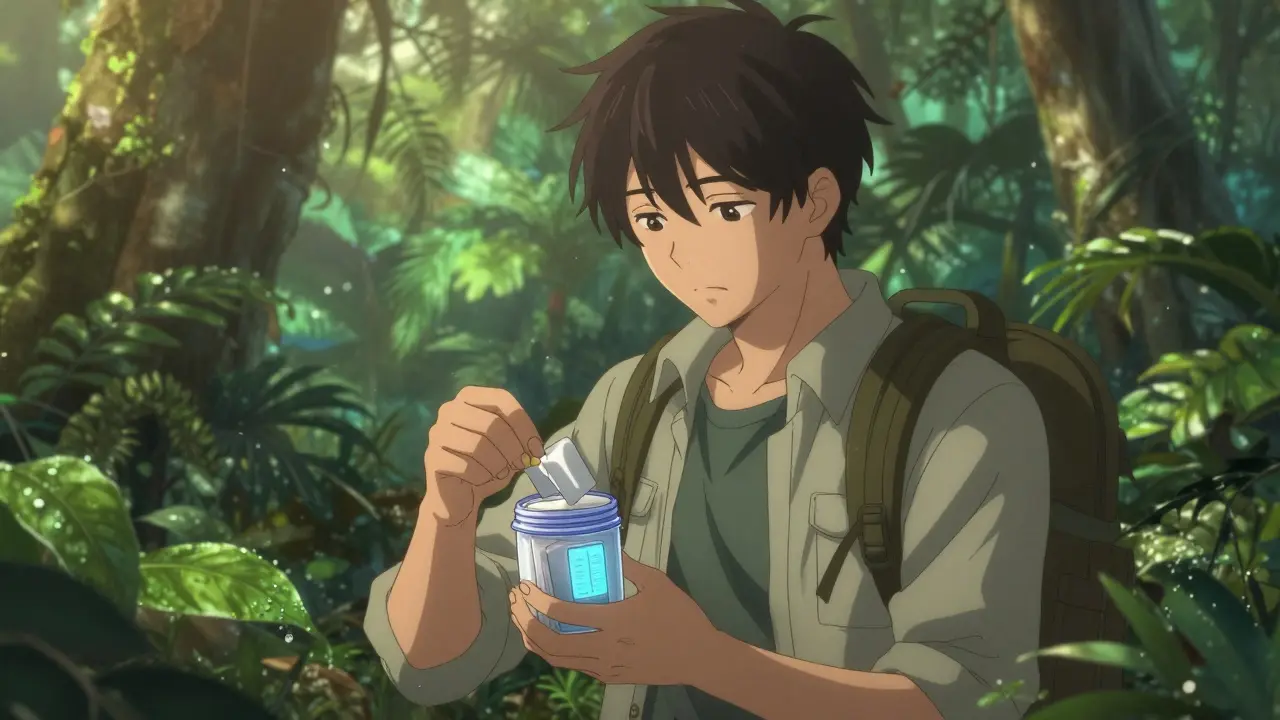
When you're traveling to a tropical destination, the last thing you want is for your medicine to stop working. High heat and thick, wet air don't just make you uncomfortable-they can wreck your pills, capsules, and inhalers before you even take them. Medication degradation from humidity isn't a myth. It’s a real, documented problem that affects millions of people every year, especially in places like Southeast Asia, Central America, and sub-Saharan Africa. The World Health Organization estimates that 30% of medications in these regions lose potency before reaching patients. And if you're carrying life-saving drugs like insulin, antibiotics, or asthma inhalers, this isn't just inconvenient-it’s dangerous.
Why Humidity Kills Your Medicine
Medications aren't like snacks or clothes. They’re complex chemical formulas designed to stay stable under specific conditions. In tropical humidity-where relative humidity often hits 70-95% and temperatures stay above 25°C-water doesn’t just sit around. It actively attacks your drugs. The biggest culprit is hydrolysis. That’s when water molecules break apart the active ingredients in your pills. For example, lamotrigine (used for epilepsy) can lose up to 38% of its effectiveness after just four weeks in 75% humidity. Antibiotics like tetracycline degrade 3.5 times faster under those same conditions. Some drugs even change color-tetracycline turns yellow or brown when it breaks down, a clear sign it’s no longer safe. Other problems include:- Tablets cracking or sticking together (called caking)
- Capsules getting soft and leaking
- Powders clumping into useless lumps
- Inhalers clogging because moisture makes particles stick together
- Microbes like mold growing on exposed medication (Aspergillus and Penicillium fungi can appear in as little as 72 hours)
Even if your medicine looks fine, it might not work. You won’t know until it’s too late-like when your malaria pill doesn’t prevent infection, or your antibiotic doesn’t clear the infection.
Which Medications Are Most at Risk?
Not all drugs are equally fragile. Some are built to handle moisture better. Others? They’re like sugar cubes in the rain. High-risk medications:- Antibiotics (amoxicillin, tetracycline, doxycycline): These are hygroscopic-they soak up water like a sponge. Amoxicillin trihydrate can absorb up to 10% of its weight in moisture at 75% RH, cutting potency by half in 30 days.
- Antifungals (fluconazole, itraconazole): These degrade quickly in damp conditions and lose effectiveness against yeast and mold infections.
- Pediatric formulations: Liquid suspensions, chewables, and orally disintegrating tablets (ODTs) are especially vulnerable. ODTs can take 5 times longer to dissolve in humidity, meaning they won’t work fast enough when you need them.
- Insulin and biologics: These are temperature-sensitive, but humidity accelerates breakdown. Even a few hours in a hot, humid bathroom can ruin a vial.
- Dry powder inhalers (like Advair or Symbicort): Moisture causes the powder to clump, reducing the amount that reaches your lungs by up to 25%.
On the other hand, solid tablets with stable coatings (like aspirin or ibuprofen) hold up better-but they’re not immune. If you’re carrying multiple types of meds, assume everything is at risk.
What’s the Safe Storage Zone?
You don’t need a lab to keep your meds safe. You just need to know the numbers. The International Pharmaceutical Federation (FIP) recommends keeping medications in an environment with:- Temperature: 15-25°C (59-77°F)
- Humidity: 30-45% relative humidity (RH)
Anything above 60% RH starts causing problems. Above 70%? That’s where serious degradation begins. The WHO says “controlled room temperature” means below 30°C and 65% RH-but that’s the absolute upper limit. You want to stay well below it.
Here’s what you should avoid:
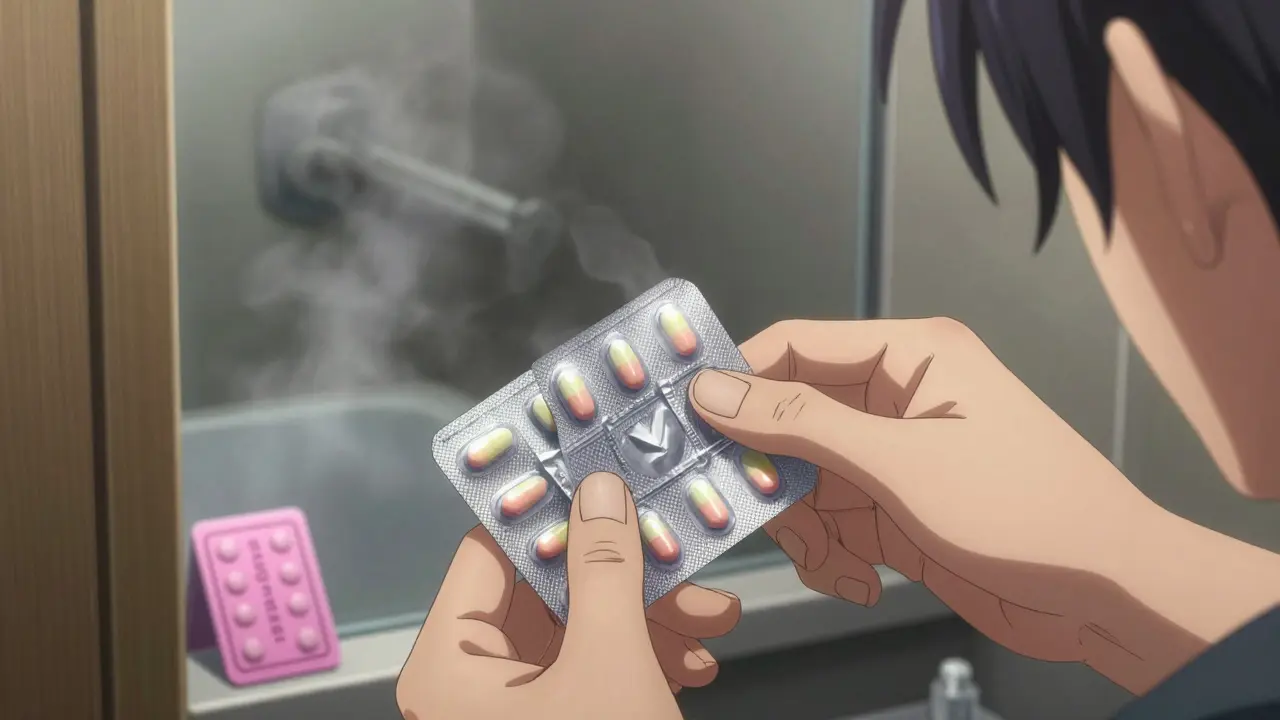
- Bathrooms: Humidity regularly hits 80-90% after showers. Even if it’s cool, the moisture is enough to ruin your meds.
- Car glove compartments: In tropical climates, these can hit 50°C (122°F) in the sun.
- Hotel drawers near windows: Heat and humidity build up near glass.
- Backpacks left on hot floors: Direct contact with warm surfaces speeds up degradation.
Your goal? Keep meds cool, dry, and out of direct light.
Practical Storage Solutions for Travelers
You don’t need expensive gear to protect your meds. Here’s what works, ranked by effectiveness. 1. Airtight Containers with Desiccants The cheapest, most reliable method. Buy small, sealable plastic containers (like those used for pills or spices). Add silica gel desiccant packs-those little white packets you find in shoeboxes or supplement bottles. Use one pack per 100 mL of container space. Replace them every 30 days in humid climates. 2. Humidity Indicator Cards These are cheap, credit-card-sized cards that change color when humidity rises. Blue means dry. Pink means wet. Put one in your container. If it turns pink, replace the desiccant immediately. You can buy them online for under $5 for a pack of 10. 3. Dry Cabinets (For Long-Term or High-Value Meds) If you’re staying months in a tropical country and carry insulin, vaccines, or expensive biologics, consider a portable dry cabinet. Brands like SMT DryBox maintain 5-15% RH and ±0.5°C stability. They run on batteries or USB. Cost: $200-$500. Worth it if your life depends on it. 4. Original Blister Packs Never transfer pills to a plastic bag. Keep them in their original aluminum blister packs. These are designed with a 99.9% moisture barrier. If you need to split doses, use a pill splitter and reseal the blister with tape. 5. The PharmaSeal System (For Extended Trips) Used by NGOs across Africa and Southeast Asia, this is a reusable desiccant canister that fits inside a plastic container. It lasts six months and costs less than $1 per unit. You can buy similar kits from medical supply stores.What NOT to Do
A lot of travelers make simple mistakes that cost them their meds.- Don’t use rice as a desiccant. Rice absorbs some moisture, but it’s slow, messy, and can introduce mold spores. Silica gel is 10x more effective.
- Don’t store meds in your suitcase. Suitcases get tossed around, exposed to heat, and often sit in hot cargo holds.
- Don’t assume your hotel fridge is safe. Fridges in tropical hotels often have high humidity inside. Condensation forms on bottles. Put meds in a sealed container inside the fridge.
- Don’t ignore expiration dates. Heat and humidity shorten shelf life. If your medicine is old and you’re heading to a humid place, replace it before you go.
Monitoring Your Medication’s Health
You can’t see degradation with the naked eye. But you can track conditions. Buy a small digital humidity and temperature logger-like the TL-4RH model. It records data every 15 minutes and stores it for weeks. Plug it into your phone via Bluetooth. Check the app before you take your medicine. If humidity has been above 60% for more than 24 hours, be cautious. If it’s been above 70%, assume the drug is compromised. For travelers without tech, use the 30-30 Rule from the WHO: if the temperature is above 30°C, replace your desiccant every 30 days. In cooler tropical zones, every 45 days is fine.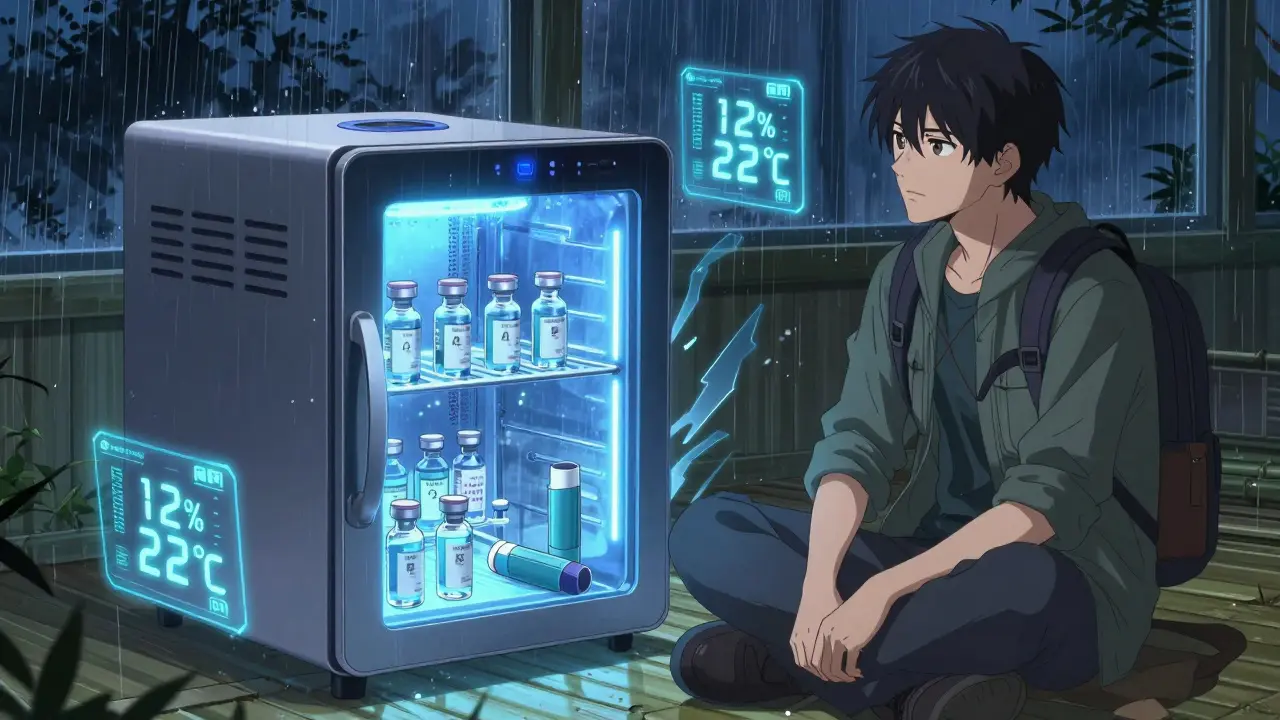
What to Do If Your Medicine Looks Damaged
If you notice:- Tablets that are sticky, cracked, or discolored
- Capsules that are soft, leaking, or misshapen
- Powders that have formed hard lumps
- Inhalers that don’t spray properly
Don’t take it. Even if it’s your only dose. Degraded meds can be ineffective-or worse, toxic. Tetracycline, for example, breaks down into compounds that can damage your kidneys.
Carry a backup. Always bring extra of essential meds. If you’re on a long-term treatment, ask your doctor for a prescription you can fill locally. Many tropical countries have pharmacies that stock WHO-approved generics.
Future Solutions Are Coming
The science is advancing fast. New blister packs now have moisture-scavenging polymers built into the foil-no extra desiccant needed. MIT researchers are testing graphene oxide coatings that block 99.7% of moisture. The Gates Foundation has already distributed over 500 million of these advanced blister packs across Africa. By 2025, new global guidelines (ICH Q1H) will require all new drugs targeting tropical markets to prove they’re stable in 30°C/75% RH conditions. That means future medications will be better designed for humid climates. But until then? You’re still responsible for your own meds.Final Checklist Before You Travel
Before you leave for a tropical destination, do this:- Check all expiration dates. Replace anything expiring within 3 months.
- Keep meds in original packaging with aluminum blisters.
- Buy 2-3 silica gel desiccant packs per medication container.
- Store meds in a small airtight container with a humidity indicator card.
- Never store in bathroom, car, or near windows.
- Carry a backup supply of essential drugs.
- If carrying insulin or vaccines, pack a portable dry cabinet or insulated cooler with ice packs.
- Take a digital humidity logger if you’re staying more than a week.
Medication degradation isn’t something you can afford to guess about. In tropical humidity, your pills are under constant attack. But with simple, low-cost steps, you can protect them. It’s not about buying expensive gear-it’s about knowing what to watch for and how to act before it’s too late.


