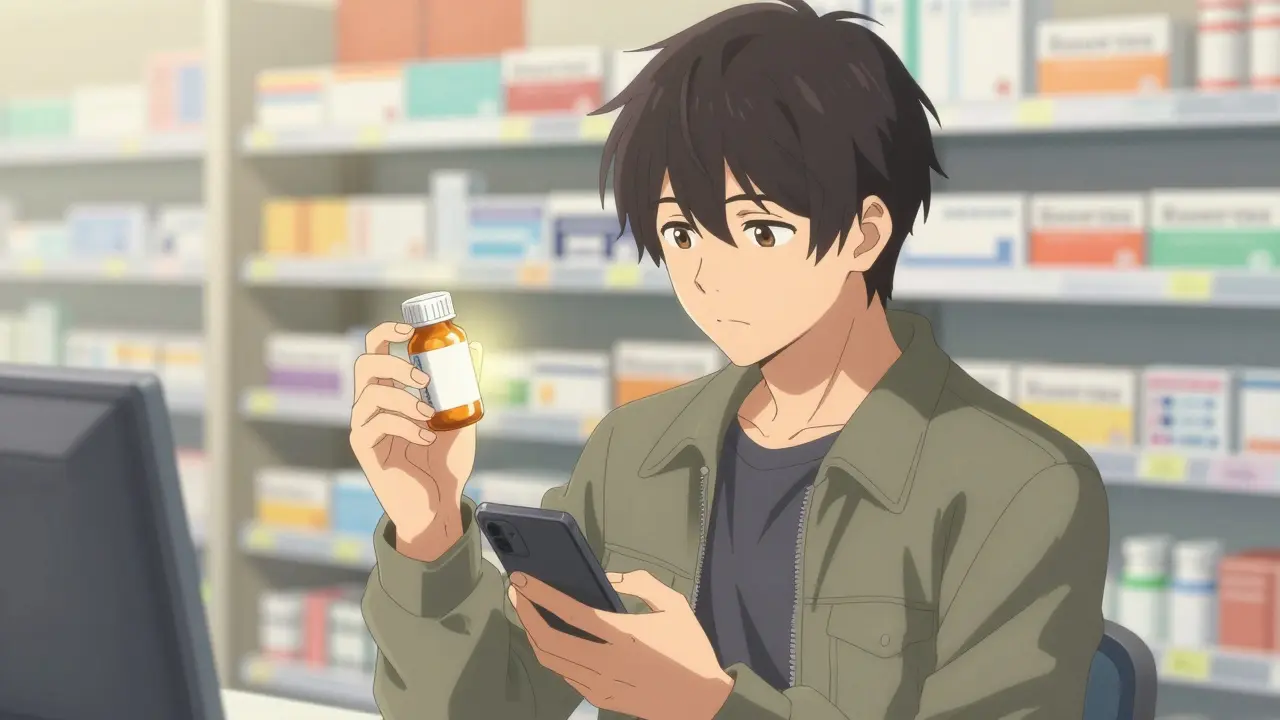
Every year, thousands of people in the UK get the wrong medicine at the pharmacy-not because the pharmacist made a careless mistake, but because no one double-checked the details. You might think the pharmacist has it covered. They should. But mistakes happen. A label gets swapped. A similar-sounding drug is pulled off the shelf. A dose is misread. And if you’re not paying attention, you might not notice until it’s too late.
You don’t need to be a medical expert to protect yourself. You just need a simple habit: check your medicine before you leave the pharmacy. This isn’t about doubting the pharmacist. It’s about adding a layer of safety that no system can fully replace.
Why Your Pharmacy Visit Needs a Personal Safety Checklist
Pharmacies are busy. Pharmacists are overworked. Prescription systems glitch. A patient named John gets a prescription for metformin, but the system pulls metoprolol-two completely different drugs. One lowers blood sugar. The other lowers heart rate. If you take the wrong one, you could end up in the hospital.
Studies show that over 50% of medication errors happen at the dispensing stage-not because of incompetence, but because of human overload. A pharmacist might be handling 120 prescriptions in a single shift. They’re juggling insurance issues, refill requests, and questions from elderly patients. They’re not trying to hurt you. But they’re not always able to catch every tiny mismatch.
That’s where you come in.
You’re the only person who knows what your body feels like. You know what you were prescribed. You know what your usual pills look like. You know if something’s off. No one else has that information.
Your Personal Safety Checklist: 5 Steps Before You Walk Out
Here’s what you can do every single time you pick up a prescription-no training needed, no special tools required.
- Confirm the name on the label matches your full name-not just your first name, not a nickname. If it says “J. Smith” and you’re “Johnathan Smith,” ask them to update it. Names get mixed up more often than you think.
- Check the drug name against your prescription. If your doctor wrote “Lisinopril 10mg,” make sure the bottle says exactly that. Don’t trust your memory. Read it out loud. Say: “This is Lisinopril, right?” Even small differences matter-lisinopril vs. losartan are not interchangeable.
- Compare the pill’s appearance to your last refill. Look at the color, shape, size, and any letters or numbers printed on it. If your last bottle had white oval pills with “10” stamped on one side, and this one is blue and round with “L10,” that’s a red flag. Ask: “Is this the same medicine I got last time?”
- Verify the dosage and instructions. If your prescription says “Take one tablet daily,” but the label says “Take two tablets twice daily,” stop. Ask them to double-check with your doctor. Don’t assume they meant to change it.
- Ask: “Is this for the same condition as before?” If you’re picking up a new prescription for high blood pressure but your last one was for diabetes, ask why. Sometimes, a doctor changes your meds. Sometimes, a mistake happened. Either way, you need to know.
That’s it. Five questions. Takes less than two minutes. But it stops 80% of common dispensing errors.
What to Do If Something Doesn’t Look Right
Don’t be polite. Don’t worry about sounding rude. Your health is not negotiable.
If the pill looks wrong, the dose feels off, or the name doesn’t match-say this:
- “I’m sorry, but this doesn’t match what my doctor prescribed. Can we check the original prescription again?”
- “I’ve been taking this exact pill for six months. This one looks different. Did something change?”
- “Can I speak to the pharmacist directly? I want to make sure this is safe.”
Most pharmacists will appreciate you for catching it. Some might get defensive. That’s okay. If they refuse to check, go to another pharmacy. Bring the prescription with you. Say: “I’m not comfortable taking this. Can you verify it?”
Pharmacies are required by law to verify prescriptions. If they don’t, they’re breaking the rules-not you.
How to Keep Track Between Visits
Keep a simple list of all your medicines. Write down:
- The name of the medicine
- The dose (e.g., 10mg, 500mg)
- How often you take it (e.g., once daily, twice a week)
- Why you take it (e.g., “for blood pressure,” “for arthritis”)
- What it looks like (e.g., “small white oval, ‘Apo’ on one side”)
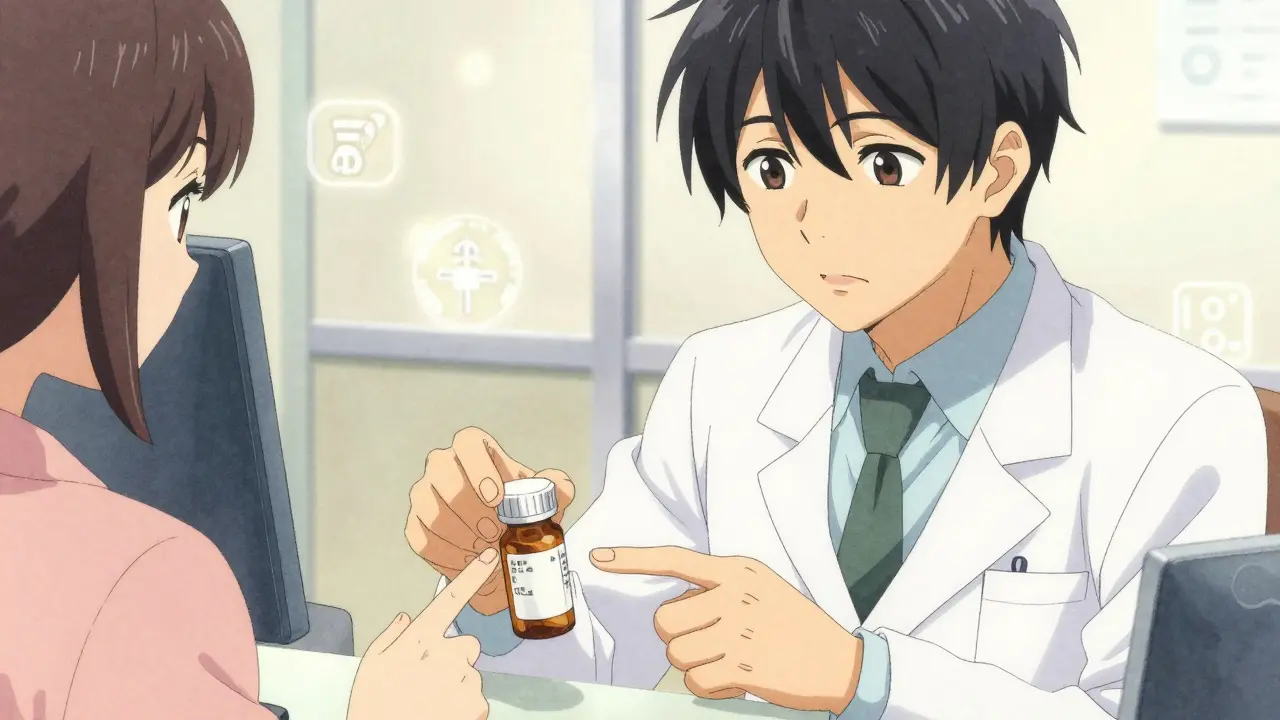
Take a photo of each pill bottle with your phone. Include the label. Store them in a folder on your phone labeled “My Medications.” When you get a new prescription, compare the photo to what you’re handed.
This isn’t just for new meds. It’s for every refill. Because pills change. Manufacturers change. Generic brands look different. You need a reference point.
When to Bring Someone With You
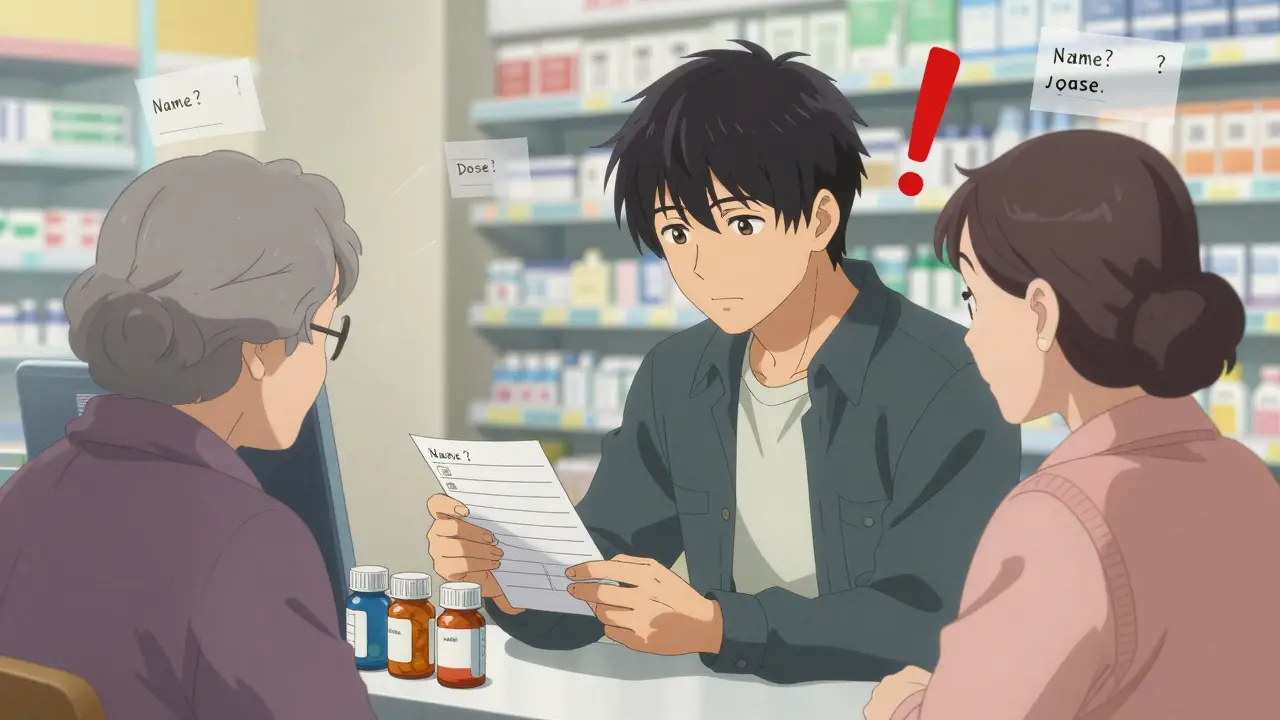
If you’re elderly, have memory issues, take five or more medicines, or feel overwhelmed by the process-bring someone with you.
It doesn’t have to be a family member. A friend, neighbor, or even a community health volunteer can help. Just ask them to sit with you while you pick up your prescription and go through your checklist.
Studies show that patients who bring a second person to pharmacy visits are 60% less likely to receive the wrong medication. Why? Because two sets of eyes catch what one misses.
What You Should Never Do
Don’t assume the pharmacist already checked.
Don’t take the medicine home and hope it’s right.
Don’t ignore a pill that looks different just because “it’s the same drug.”
Don’t feel guilty for asking questions. You’re not being difficult-you’re being smart.
And don’t wait until you feel sick to act. Most errors don’t cause immediate symptoms. They build up slowly. A wrong dose of blood pressure medicine might not make you dizzy right away. But over weeks, it could damage your kidneys or trigger a stroke.
What Pharmacies Should Be Doing (And Why You Can’t Rely on Them Alone)
Yes, pharmacies have safety systems. They scan barcodes. They use automated dispensers. They have double-check policies. But none of these are foolproof.
Barcodes can be misread. Machines can jam. Staff can skip steps under pressure. A 2023 report from the UK’s National Patient Safety Agency found that 37% of dispensing errors occurred despite automated systems being in place.
Technology helps. But it doesn’t replace human attention. And you’re the most important human in this equation.
Pharmacists are trained to catch errors. But they’re not magic. They’re people. And people make mistakes-even in a system designed to prevent them.
Your Safety Is Your Responsibility
You wouldn’t skip checking the brakes before driving a car. You wouldn’t take a flight without verifying the pilot’s credentials. So why accept medicine without verifying it?
Medication errors are preventable. But only if you’re willing to speak up. Only if you’re willing to look. Only if you’re willing to ask.
Start today. Next time you pick up a prescription, use your checklist. Take a photo. Compare the pill. Ask the questions. Write it down.
It’s not complicated. It’s not expensive. It’s not time-consuming.
It’s just necessary.
And it might just save your life.