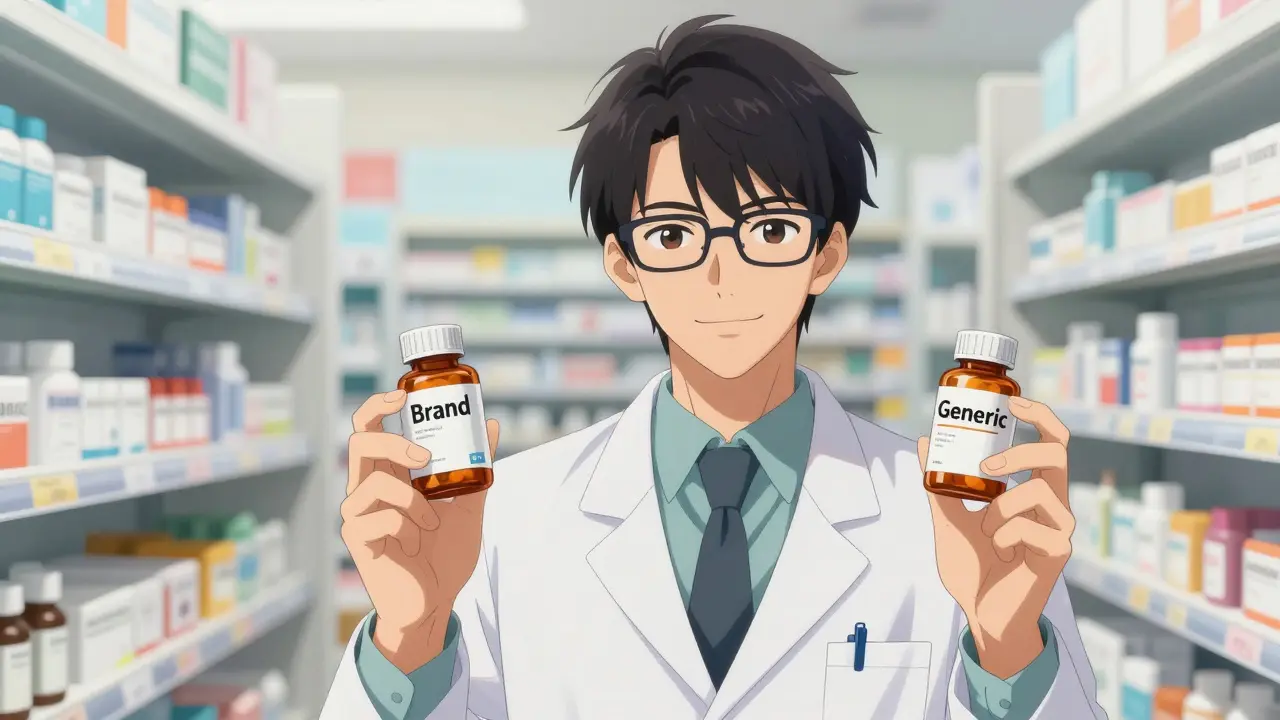
When you pick up a prescription at the pharmacy, there is a ninety percent chance it is not the original brand-name drug. You are likely getting a generic version that costs a fraction of the price but works exactly the same way in your body. This massive shift in how Americans get their medicine did not happen by accident. It was engineered through a specific legal and scientific pathway known as the Abbreviated New Drug Application (ANDA). Understanding this process explains why your medication is affordable, safe, and legally distinct from the expensive brand-name counterpart.
The Core Concept: Why "Abbreviated" Matters
To understand the ANDA, you first need to understand what it is not. It is not a New Drug Application (NDA). An NDA is the massive, multi-billion-dollar submission required for a new molecular entity. The company filing an NDA must prove, from scratch, that a new chemical compound is safe and effective. This involves years of preclinical animal studies and three phases of human clinical trials involving thousands of patients.
An ANDA skips all of that. The word "abbreviated" is literal. The applicant-the generic manufacturer-does not repeat the safety and efficacy studies. Instead, they rely on the U.S. Food and Drug Administration's (FDA) previous findings for the original drug, known as the Reference Listed Drug (RLD). The generic maker only needs to prove one thing: therapeutic equivalence. They must show their product contains the same active ingredient, in the same strength, dosage form, and route of administration, and that it gets into the bloodstream at the same rate and extent as the brand name.
This distinction creates a dramatic difference in cost and time. Developing a new drug via an NDA can cost over $2.3 billion and take more than a decade. Filing an ANDA typically costs between $1 million and $5 million and takes significantly less time. This efficiency is the engine behind the generic drug market, which accounts for roughly 90% of prescriptions dispensed in the United States while representing only about 23% of total spending.
The Legal Foundation: The Hatch-Waxman Act
The ANDA process did not always exist. Before 1984, the system was broken. Brand-name companies held patents that prevented generics from entering the market for too long, keeping prices high. Meanwhile, generic manufacturers lacked a clear path to get their products approved once those patents expired. President Ronald Reagan signed the Drug Price Competition and Patent Term Restoration Act, commonly known as the Hatch-Waxman Act, into law on September 24, 1984. This legislation created a compromise that still defines the industry today.
The act allowed generic manufacturers to file ANDAs before patent expiration, provided they certified their status regarding existing patents. In exchange, it gave brand-name companies extended patent terms to compensate for the time lost during the FDA approval process. This balance incentivized innovation for new drugs while ensuring rapid competition once exclusivity periods ended. Without the Hatch-Waxman framework, the modern generic market-and the billions of dollars in savings it generates annually-would not exist.
Step-by-Step: How an ANDA Gets Approved
The journey from laboratory bench to pharmacy shelf follows a rigorous timeline managed by the FDA's Office of Generic Drugs (OGD) within the Center for Drug Evaluation and Research (CDER). Under the Generic Drug User Fee Amendments (GDUFA III), the FDA aims to review 90% of original ANDAs within 10 months. Here is how that happens:
- Filing Review: The applicant submits the application electronically via the FDA's Electronic Submission Gateway. The Division of Filing Review checks if the package is complete and acceptable. If critical information is missing, the application is rejected outright. If accepted, it moves to the next phase.
- Dicipline Reviews: Teams of scientists review different aspects of the submission. Chemistry, Manufacturing, and Controls (CMC) experts verify the production process meets current Good Manufacturing Practices (cGMP). Bioequivalence reviewers analyze data showing the drug behaves like the reference product. Labeling specialists ensure the patient instructions match the RLD, with minor exceptions.
- Information Requests (IRs): During the review, the FDA often sends questions or requests for additional data. These are called Information Requests. The applicant must respond clearly and completely. Delays here are common; some applicants report receiving dozens of IRs, which can extend the timeline significantly.
- Final Decision: Once all disciplines are satisfied, the FDA makes a decision. If there are no legal barriers, such as unexpired patents, the drug receives Final Approval. If patents block marketing, the drug may receive Tentative Approval, meaning it is scientifically ready but cannot be sold until the legal hurdles clear.

Bioequivalence: The Scientific Heart of the ANDA
The most critical scientific component of an ANDA is the bioequivalence study. You might wonder how a generic pill, made in a different factory with different inactive ingredients (like fillers or dyes), can be considered identical to the brand name. The answer lies in pharmacokinetics-how the body absorbs, distributes, metabolizes, and excretes the drug.
Generic manufacturers conduct studies, usually involving healthy human volunteers, to measure two key metrics: Cmax (the maximum concentration of the drug in the blood) and AUC (the area under the curve, representing total exposure). For a generic to be approved, these values must fall within a strict statistical range compared to the brand name. Typically, the 90% confidence interval for the ratio of geometric means must fall between 80% and 125%. If the generic delivers too little drug, it won't work. If it delivers too much, it could cause toxicity. Staying within this window ensures therapeutic equivalence.
However, bioequivalence is not always straightforward. For simple oral tablets, the science is well-established. But for complex generics-such as inhalers, topical creams, injectables, or extended-release formulations-demonstrating equivalence is far more difficult. These products often require specialized testing methods, local effect studies, or even clinical endpoints. According to FDA data, inadequate bioequivalence protocols are cited in 35% of Complete Response Letters, which are formal rejections requiring significant revisions.
Tentative vs. Final Approval: The Patent Maze
A unique feature of the ANDA process is the concept of Tentative Approval (TA). You might see a generic drug listed as "tentatively approved" for years before it actually hits the shelves. This does not mean the drug is unsafe or ineffective. It means the FDA has determined the product is scientifically equivalent, but legal barriers prevent its immediate marketing.
These barriers are primarily patents and exclusivities granted to the brand-name company. When a generic applicant files an ANDA, they must submit one of four certifications regarding the RLD's patents:
- Certification I: No patent information is listed for the RLD.
- Certification II: The patent has already expired.
- Certification III: The patent will expire on a specific future date.
- Certification IV: The patent is invalid, unenforceable, or will not be infringed by the generic product.
If a generic company files a Certification IV, they are challenging the brand-name patent. This triggers a 30-month stay period, during which the FDA pauses final approval while the parties litigate in court. If the generic wins or settles quickly, the drug launches early. If the brand wins, the generic waits. This mechanism allows for early generic entry without violating intellectual property rights, creating a dynamic competitive landscape that drives prices down rapidly once the first generic launches.

Challenges and Realities for Manufacturers
While the ANDA pathway is efficient compared to developing a new drug, it is not easy. Industry surveys indicate that 65% of generic manufacturers find the process "moderately challenging but predictable." The biggest pain points are unexpected Information Requests, facility inspection delays, and the complexity of patent certifications.
Facility compliance is a major hurdle. The FDA inspects manufacturing sites to ensure they meet cGMP standards. If a facility fails inspection, the entire ANDA can be delayed or rejected. Furthermore, the rise of complex generics has increased the technical burden. Products like nasal sprays or transdermal patches require sophisticated development strategies. Companies often use Quality by Design (QbD) principles to build robustness into their processes from the start, reducing the risk of failure during review.
Despite these challenges, the system works. Major players like Teva Pharmaceuticals, Viatris (formerly Mylan), and Sandoz dominate the market, but smaller companies also thrive by focusing on niche products or fast-follow opportunities. The predictability of the GDUFA timelines allows companies to plan their pipelines effectively, knowing that if they meet the scientific standards, the regulatory clock is ticking in their favor.
| Feature | ANDA (Generic) | NDA (Brand Name) |
|---|---|---|
| Primary Goal | Demonstrate equivalence to RLD | Prove safety and efficacy of new drug |
| Clinical Trials | Bioequivalence studies only | Phase I, II, and III trials required |
| Development Cost | $1-5 million | $2.3+ billion |
| Review Timeline | ~10 months (GDUFA goal) | Years to decades |
| Patent Interaction | Must certify against existing patents | Generates new patents |
| Market Impact | Lowers prices, increases access | Creates new treatment options |
Why This Matters to You
The ANDA process is the invisible infrastructure of American healthcare. By allowing generic manufacturers to skip redundant clinical trials and focus on equivalence, the system saves the U.S. healthcare economy hundreds of billions of dollars annually. In 2021 alone, generic drugs saved an estimated $373 billion. These savings translate directly to lower copays for patients, reduced burdens on insurance providers, and more sustainable healthcare budgets.
For patients, the takeaway is simple: when your doctor prescribes a generic, you are receiving a product that has undergone rigorous scientific scrutiny to ensure it performs identically to the brand name. The differences in color, shape, or inactive ingredients are cosmetic. The active ingredient, the dose, and the therapeutic effect are guaranteed by the ANDA process. Understanding this helps demystify the pharmaceutical supply chain and reinforces confidence in the medications that keep us healthy.
What is the main difference between an ANDA and an NDA?
An NDA is for new drugs and requires full clinical trials to prove safety and efficacy. An ANDA is for generic drugs and relies on the FDA's previous findings for the brand-name drug, requiring only proof of bioequivalence.
How long does it take for the FDA to approve an ANDA?
Under GDUFA III, the FDA aims to review 90% of original ANDAs within 10 months of submission. However, the total time from initial preparation to market launch can vary depending on patent litigation and facility inspections.
What does "Tentative Approval" mean for a generic drug?
Tentative Approval means the FDA has determined the generic drug is scientifically equivalent to the brand name, but it cannot yet be marketed due to patent or exclusivity protections held by the brand-name company.
Are generic drugs as safe as brand-name drugs?
Yes. Generic drugs must demonstrate bioequivalence, meaning they deliver the same amount of active ingredient into the bloodstream at the same rate as the brand-name drug. They are manufactured under the same strict quality standards (cGMP).
Who manages the ANDA process at the FDA?
The Office of Generic Drugs (OGD) within the Center for Drug Evaluation and Research (CDER) administers the ANDA process, reviewing submissions for scientific adequacy and regulatory compliance.