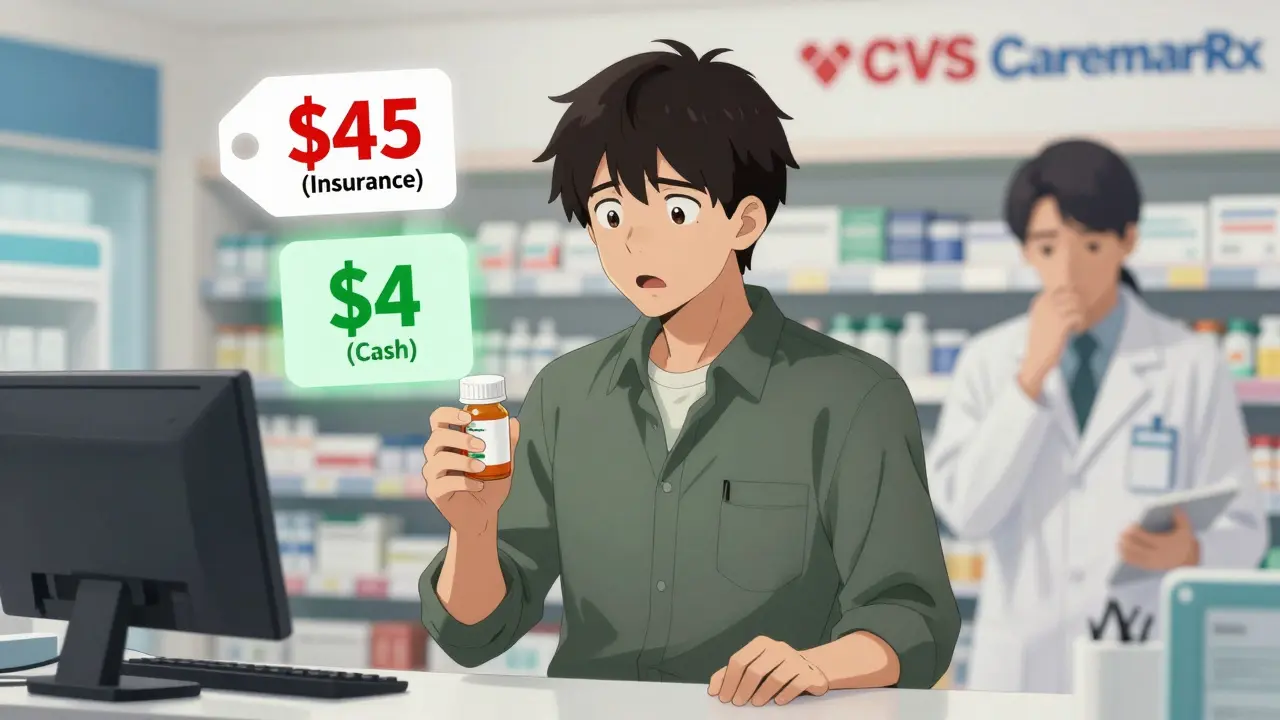
Ever filled a prescription for a generic drug and been shocked by the price - only to find out the cash price at the pharmacy was a fraction of what you paid? This isn’t a mistake. It’s the result of how insurers, pharmacies, and Pharmacy Benefit Managers (PBMs) negotiate prices behind closed doors. The system was built to save money, but for millions of Americans, it does the opposite.
Who Really Sets the Price of Generic Drugs?
When you walk into a pharmacy to pick up a generic version of your medication, the price you pay isn’t set by the drugmaker or the pharmacist. It’s set through a tangled web of contracts between your health plan, a Pharmacy Benefit Manager (PBM), and the pharmacy itself. PBMs act as middlemen. They don’t sell drugs. They don’t dispense them. But they control which drugs are covered and how much you pay for them.
Three companies - OptumRx (UnitedHealth), CVS Caremark, and Express Scripts (Cigna) - handle about 80% of all prescription claims in the U.S. That means most people are stuck in a system run by just a few players. These PBMs negotiate with drugmakers for discounts and with pharmacies for reimbursement rates. But here’s the catch: the price you see at the register often has little to do with what the pharmacy actually gets paid.
The Hidden Math Behind Generic Drug Pricing
PBMs use a handful of formulas to set how much pharmacies get paid for generic drugs. The most common benchmarks are:
- NADAC (National Average Drug Acquisition Cost): The average price pharmacies actually pay to buy the drug from wholesalers.
- AWP (Average Wholesale Price): A list price that’s often inflated and rarely reflects real-world costs.
The PBM takes one of these numbers - usually AWP - and subtracts a percentage or adds a small dispensing fee to create the reimbursement rate. For example, a PBM might say: "We’ll pay the pharmacy NADAC plus $4.50." Sounds fair, right? But then they charge your insurance plan a higher price - sometimes double - for the same drug. That gap? It’s called spread pricing.
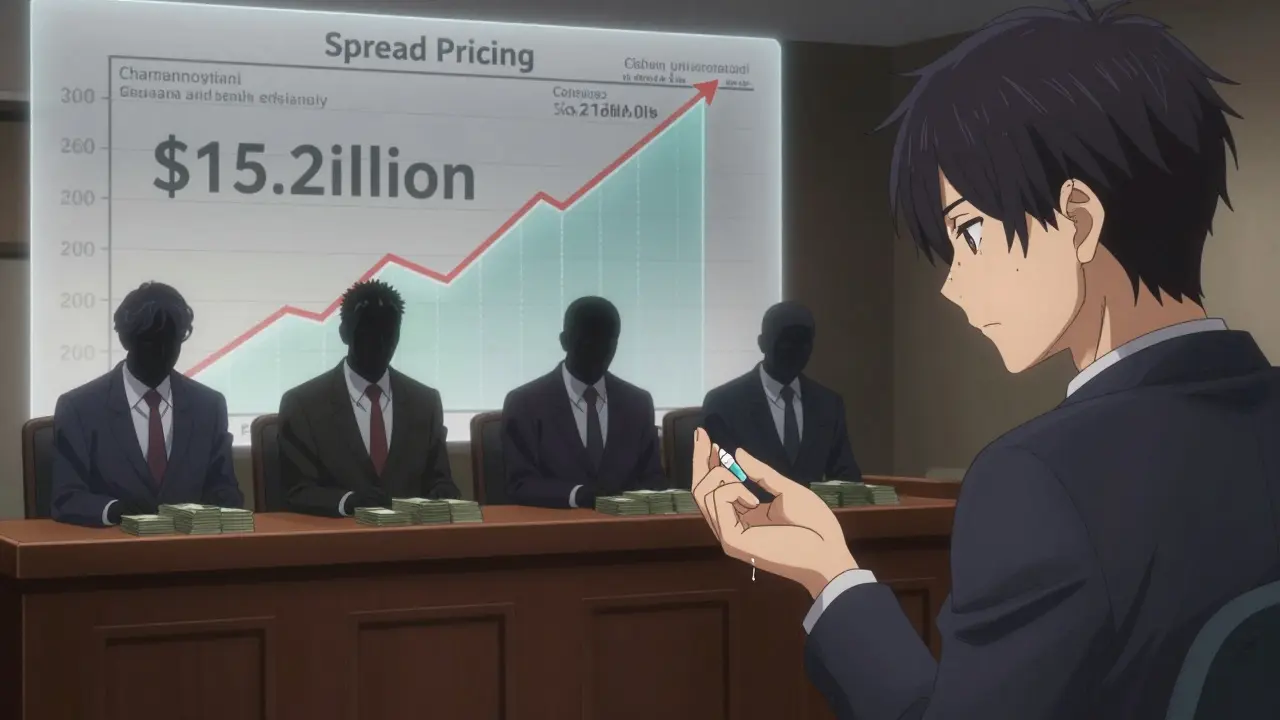
Spread pricing is how PBMs make billions. In 2024, industry analysts estimated it generated $15.2 billion in hidden revenue, mostly from generic drugs. You never see this number on your bill. Your insurer doesn’t see it either. It’s buried in the fine print of contracts.
Why You Pay More Than Cash Customers
Here’s the kicker: if you pay cash for a generic drug at Walmart, CVS, or Costco, you often pay less than you do with insurance. A 2024 Consumer Reports survey found that 42% of insured adults had paid more out-of-pocket for a generic drug than the cash price. One Reddit user reported paying $45 with insurance - while the same drug cost $4 cash.
This happens because PBMs set reimbursement rates low, but charge insurers high prices. When you use insurance, you’re often stuck with a copay based on that inflated price. Meanwhile, cash-paying customers get the real market price - which is lower because pharmacies don’t have to factor in PBM overhead or hidden fees.
And it’s not just small pharmacies. Even big chains like CVS and Walgreens have to accept these terms. If they refuse, they get kicked out of the PBM’s network - meaning patients lose access to them. That’s why 11,300 independent pharmacies closed between 2018 and 2023.
The Gag Rule That Keeps You in the Dark
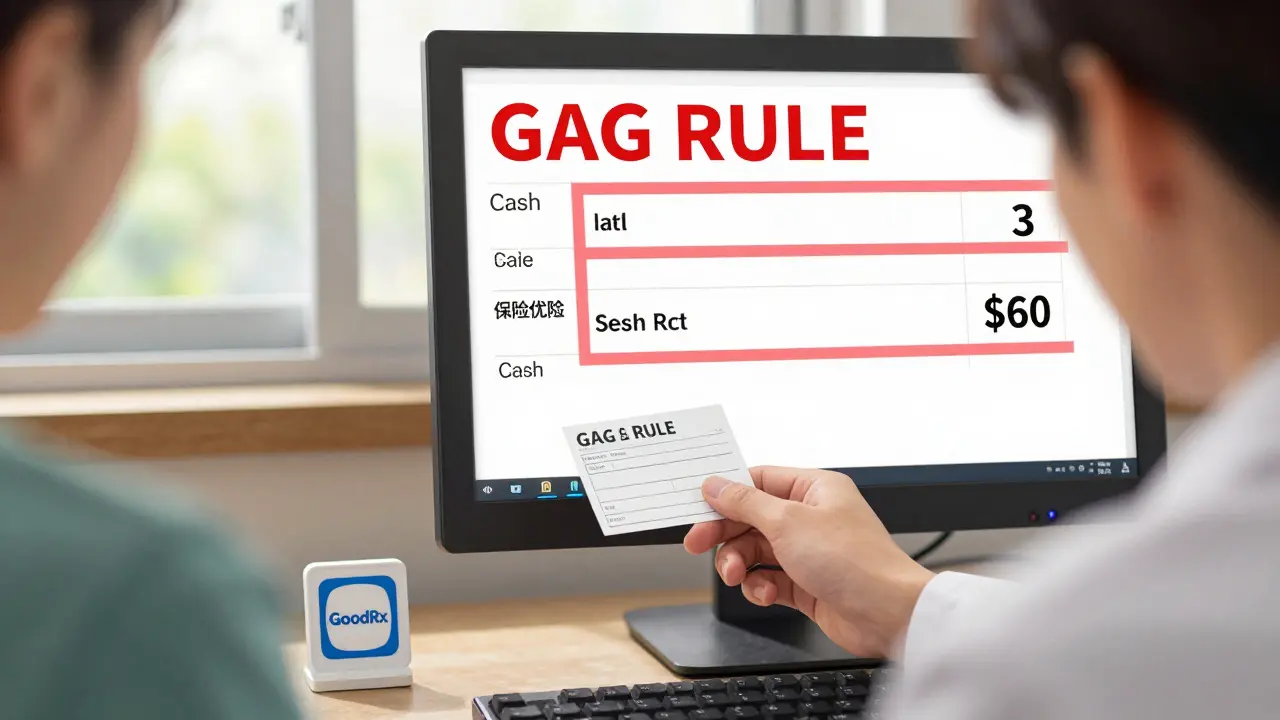
Pharmacists know when a patient is overpaying. They see the cash price on their screen. They know the drug costs $3. But they can’t tell you.
Over 92% of PBM contracts include "gag clauses" - legal terms that forbid pharmacists from informing patients about lower cash prices. These clauses were so widespread that the federal government banned them in 2020 under the No Surprises Act. But enforcement is patchy. Many pharmacies still fear retaliation if they speak up.
Imagine being handed a $60 bill for a generic blood pressure pill - and the pharmacist silently looks away because they’re contractually blocked from saying, "Wait, this same drug is $5 if you pay cash." That’s not a glitch. It’s policy.
How Copays Stay Stuck at $5 (Even After 25 Years)
Back in the late 1990s, the average copay for a generic drug was $5. Today? It’s still around $5.25. That’s it. No inflation adjustment. No improvement.
Why? Because PBMs and insurers have no incentive to change it. Low copays make insurance plans look cheap. They help attract customers. But the real cost of the drug? That’s absorbed by the insurer - and passed on in higher premiums, or worse, hidden in spread pricing.
Meanwhile, the list price of many generics has skyrocketed. Drugmakers raise list prices because PBMs demand bigger rebates. The higher the list price, the bigger the rebate - and the more money PBMs make. It’s a perverse loop: higher list prices → bigger rebates → more profit for PBMs → higher patient cost-sharing.
What’s Being Done About It?
Pressure is building. In September 2024, the Biden administration issued an executive order banning spread pricing in federal health programs - with full implementation by January 2026. That’s a big deal. It means Medicare and Medicaid won’t pay the hidden markup anymore.
Forty-two states have passed or are considering laws requiring PBMs to disclose their pricing practices. The Pharmacy Benefit Manager Transparency Act of 2025 (S.1278) would force PBMs to pass 100% of rebates to insurers - not keep them as profit.
And the Medicare Drug Price Negotiation Program, started under the Inflation Reduction Act, is now expanding to 20 drugs. While it only applies to Medicare, experts believe it will pressure private insurers to follow suit. Stanford researchers estimate that if similar rules were applied to the entire commercial market, it could save $200-250 billion over ten years.
What You Can Do Right Now
You don’t have to wait for Congress to fix this. Here’s what works:
- Always ask for the cash price. Even if you have insurance, the cash price is often cheaper. Use apps like GoodRx, SingleCare, or RxSaver to compare prices before you fill your prescription.
- Check if your pharmacy is in-network. Some pharmacies get better reimbursement rates. Ask your pharmacist: "Do you accept my PBM?" If they say "no," you might be paying more than necessary.
- Call your insurer. Ask: "What’s the maximum allowable cost for this generic drug?" They’re required to tell you. If they say they don’t know - push back.
- Switch plans during open enrollment. If your plan has high generic copays and doesn’t disclose PBM fees, consider switching. Transparency matters.
The system is rigged - but not unbreakable. The real power lies with the patient. You don’t need to understand every contract clause. You just need to know one thing: your insurance isn’t always your friend when it comes to generic drugs. Sometimes, paying cash is the smartest move.
Why do I pay more for a generic drug with insurance than without?
Because your insurer and the PBM agree on a price that’s higher than what the pharmacy actually pays for the drug. The difference - called "spread pricing" - is kept by the PBM as profit. Meanwhile, your copay is based on that inflated price, not the real cost. Paying cash often means you get the pharmacy’s actual purchase price, which is lower.
Are PBMs illegal?
No, PBMs are legal. But many of their practices - like spread pricing, gag clauses, and clawbacks - are now under intense regulatory scrutiny. The federal government banned spread pricing in Medicare and Medicaid programs starting in 2026. Several states have passed laws requiring PBMs to disclose fees and pass rebates to insurers. While not yet illegal, these practices are increasingly seen as unethical and unsustainable.
Do all pharmacies have the same generic drug prices?
No. Prices vary widely depending on which PBM your insurer uses, whether the pharmacy is in-network, and how much the pharmacy paid for the drug. A chain like CVS might get a different reimbursement rate than an independent pharmacy. That’s why the same drug can cost $3 at one pharmacy and $45 with insurance at another.
What’s the difference between NADAC and AWP?
NADAC (National Average Drug Acquisition Cost) reflects what pharmacies actually pay for drugs from wholesalers. AWP (Average Wholesale Price) is a list price set by manufacturers that’s often inflated and rarely matches real-world costs. PBMs often use AWP to set reimbursement rates - which lets them charge insurers more than the drug actually costs.
Can pharmacists tell me the cash price?
They can - and should. Since 2020, federal law prohibits gag clauses that stop pharmacists from telling patients about lower cash prices. But enforcement is inconsistent. Some pharmacists still hesitate due to fear of retaliation from PBMs. Always ask. If they say they can’t tell you, it’s a red flag.


