ISTH DIC Scoring Calculator
How to Use
Enter the patient's lab values to calculate the ISTH DIC score. A score of 5 or higher indicates overt DIC.
- Platelet count: Below 50,000 = 2 points
- PT: >6 seconds longer = 2 points
- D-dimer: >10x upper limit = 3 points
- Fibrinogen: Below 1.0 g/L = 1 point
Results
Drug-induced disseminated intravascular coagulation (DIC) doesn’t come with a warning label in most cases. It shows up suddenly in critically ill patients - often after a routine chemotherapy session, a new blood thinner, or even an antibiotic. No fever. No rash. Just a drop in platelets, a spike in D-dimer, and bleeding that won’t stop. By the time it’s recognized, it’s already life-threatening. This isn’t rare. It’s underdiagnosed. And when it happens, every minute counts.
What Exactly Is Drug-Induced DIC?
Disseminated Intravascular Coagulation is not a disease. It’s a cascade. A runaway reaction where the body’s clotting system goes haywire. Tiny clots form all over the bloodstream, clogging small vessels and starving organs of oxygen. At the same time, the body burns through its clotting factors and platelets. The result? Severe bleeding - from IV sites, gums, guts, even the brain. When drugs trigger this, it’s called drug-induced DIC. It’s not an allergic reaction. It’s not an overdose. It’s a direct biochemical disruption of the coagulation pathway. Some drugs activate tissue factor. Others damage blood vessel walls. A few directly stimulate thrombin. The outcome is the same: chaos in the blood. The most common culprits? Anticancer drugs like oxaliplatin, bevacizumab, and gemtuzumab ozogamicin. Anticoagulants like dabigatran. Even some antibiotics like vancomycin. According to the WHO’s Vigibase, over 4,600 serious cases were reported between 1968 and 2015. And that’s just what got documented. Many more go unnoticed because doctors don’t link the bleeding to the drug.How Do You Spot It?
There’s no single test. No magic number. But there’s a pattern. If a patient on one of these high-risk drugs suddenly develops unexplained bleeding, low platelets, or organ failure - think DIC. The International Society on Thrombosis and Haemostasis (ISTH) scoring system is the gold standard. It looks at four things:- Platelet count: Below 50,000? +2 points.
- Prothrombin time (PT): More than 6 seconds longer than normal? +2 points.
- Fibrin degradation products (D-dimer): More than 10 times the upper limit? +3 points.
- Fibrinogen level: Below 1.0 g/L? +1 point.
Stop the Drug. Immediately.
This is the most important step. And it’s often missed. In sepsis-induced DIC, you give antibiotics. In trauma-induced DIC, you control bleeding. In drug-induced DIC? You stop the drug. No exceptions. Gemtuzumab ozogamicin? Stop it. Dabigatran? Reverse it with idarucizumab. Oxaliplatin? Cancel the next cycle. Bevacizumab? Hold all future doses. Continuing the drug while treating the DIC is like putting gasoline on a fire. A case report from the Journal of Thrombosis and Haemostasis showed a patient who kept getting oxaliplatin despite early signs of DIC. He died within 72 hours. Another patient had the drug stopped on day one. He survived with aggressive support. Don’t assume the drug is safe because it’s FDA-approved. Many drugs linked to DIC - including dabigatran and bevacizumab - don’t list it in their official prescribing information. That’s a gap. And it’s deadly.Supportive Care: The Real Battle
Stopping the drug only stops the fire. You still have to put out the flames. The goal is to replace what’s been used up and prevent further clotting or bleeding. This isn’t about fixing the coagulation system. It’s about keeping the patient alive until the body recovers.- Platelets: Give transfusions if the count drops below 50,000/μL - or below 20,000/μL if there’s no bleeding. But don’t overdo it. Too many transfusions can worsen clotting.
- Fibrinogen: Keep it above 1.5 g/L. Use fibrinogen concentrate or cryoprecipitate. Below 80 mg/dL? Don’t give heparin. It’s too risky.
- Plasma: Fresh frozen plasma (FFP) replaces multiple clotting factors. Give 10-15 mL/kg if PT/aPTT is prolonged and bleeding is active.
- Red blood cells: Transfuse if hemoglobin falls below 7 g/dL - or higher if the patient is unstable.
What About Heparin? Anticoagulants?
This is where things get tricky. In some cases - especially if there’s clear evidence of ongoing clotting - low-dose heparin can help. But it’s not for everyone. Heparin is dangerous if:- The patient has heparin-induced thrombocytopenia (HIT) - which can mimic DIC.
- Fibrinogen is below 80 mg/dL.
- There’s active, uncontrolled bleeding.
What to Avoid
Some treatments sound logical - but they make DIC worse.- Warfarin: Never use in acute DIC. It depletes protein C and S first, causing a dangerous hypercoagulable state. There are documented cases of warfarin-induced skin necrosis in DIC patients.
- Antiplatelet drugs: Aspirin, clopidogrel - stop them. They add to bleeding risk.
- Excessive transfusions: Giving too many platelets or plasma can trigger more clotting. Use only when clinically needed.
- Delaying diagnosis: Waiting for a full ISTH score? Too late. If the clinical picture fits, act.
Monitoring and Follow-Up
You can’t treat DIC and walk away. Check platelets, PT, aPTT, fibrinogen, and D-dimer every 6-12 hours in the first 48 hours. Once stable, daily. If fibrinogen rises above 1.5 g/L and D-dimer drops, that’s a good sign. If platelets climb above 50,000/μL and bleeding stops? You’re turning the corner. The European Medicines Agency now recommends weekly blood tests for patients on high-risk drugs like bevacizumab or antibody-drug conjugates. That’s becoming standard in major cancer centers. Recovery can take days to weeks. Some patients need long-term monitoring for clotting abnormalities. A few develop chronic microangiopathy or organ damage. But most - if caught early - recover fully.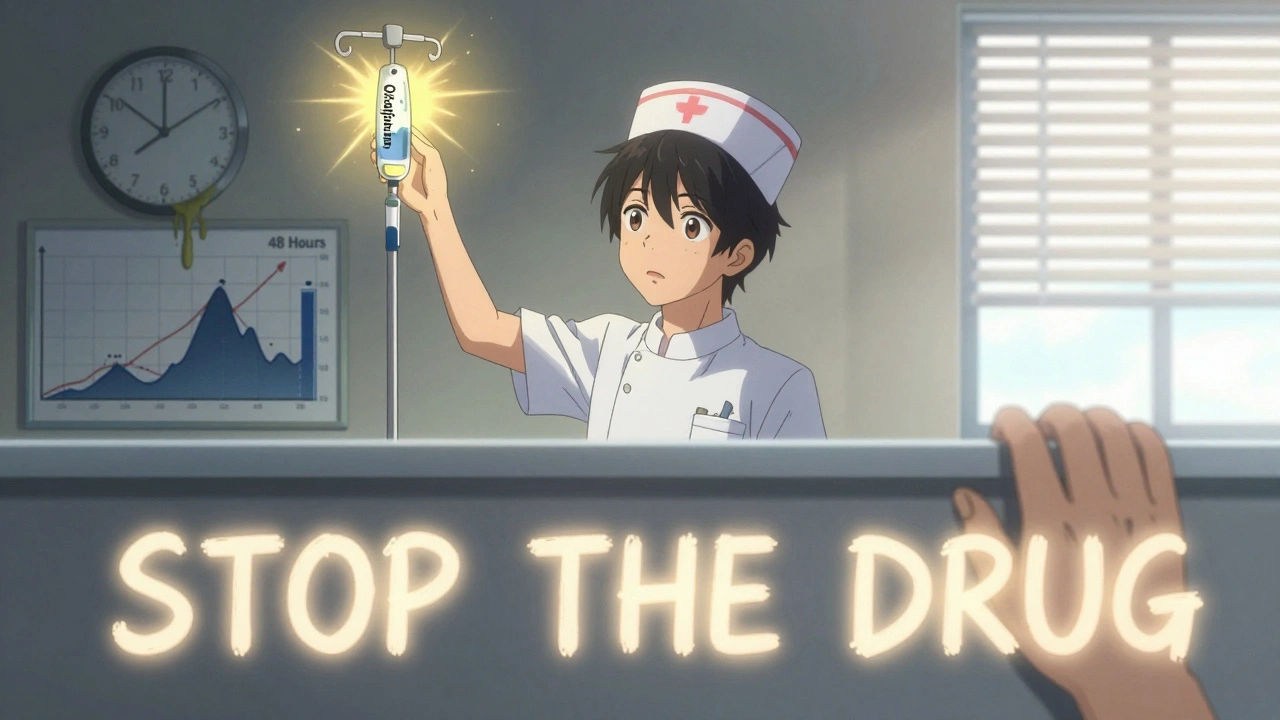
Why This Matters More Than Ever
New drugs are coming fast. Monoclonal antibodies, antibody-drug conjugates, targeted therapies - they’re saving lives. But they’re also causing new types of DIC. FDA reports show a 23% yearly rise in DIC cases tied to these newer agents. The WHO’s Vigibase is growing by 8% a year. Experts predict a 30-40% increase in reported cases over the next five years - not because it’s happening more, but because we’re finally seeing it. The problem isn’t the drugs. It’s the blind spots in our thinking. We assume bleeding after chemo is “expected.” We think a low platelet count is just a side effect. We don’t connect the dots. But DIC doesn’t care about assumptions. It kills.Key Takeaways
- Drug-induced DIC is deadly, underdiagnosed, and often missed because it’s not listed in drug labels.
- Stop the offending drug immediately - no exceptions.
- Use the ISTH scoring system to confirm, but don’t wait for all criteria to be met.
- Support with platelets, fibrinogen, and plasma - only as needed.
- Avoid heparin unless you’re certain it’s safe. Never use warfarin.
- Monitor labs every 6-12 hours in acute phase.
- Mortality remains 40-60% in severe cases. Early recognition saves lives.
Frequently Asked Questions
Can DIC be caused by over-the-counter drugs?
Rarely, but yes. While most cases come from prescription drugs - especially cancer meds and anticoagulants - there are isolated reports linking high-dose NSAIDs, herbal supplements like ginseng or ginkgo, and even certain dietary supplements to DIC. These are uncommon, but if a patient presents with unexplained bleeding and has been using non-prescription products, they should be considered in the differential.
Is DIC the same as DIC from sepsis?
The clotting process looks the same, but the trigger is different. Sepsis causes DIC through inflammation and endotoxin release. Drug-induced DIC happens through direct chemical disruption of clotting pathways. Treatment differs: antibiotics for sepsis, stopping the drug for drug-induced. The ISTH score works for both, but the recovery timeline and prognosis can vary based on the cause.
How long does it take to recover from drug-induced DIC?
Recovery varies. In mild cases, labs normalize in 3-5 days after stopping the drug. In severe cases with organ damage, it can take weeks. Platelets often rebound first, followed by fibrinogen and D-dimer. Full recovery is possible if the patient survives the acute phase. But some develop long-term clotting issues or require ongoing monitoring.
Can DIC recur after the drug is stopped?
Once the drug is stopped and the body clears it, DIC usually doesn’t come back. But if the patient is re-exposed to the same drug - even months later - DIC can return, often more severely. That’s why it’s critical to document the reaction in the medical record and warn the patient permanently against re-use.
Are there any new treatments on the horizon?
Yes. Researchers are testing genetic markers to predict who’s at risk before they even take the drug. A clinical trial (NCT04567891) is looking at mutations in clotting factor genes that might make someone more susceptible. Also, new fibrinogen concentrates are being developed that work faster and require smaller doses. While these won’t replace stopping the drug, they could make supportive care more effective.


