
When you take a pill for high blood pressure or antibiotics, chances are it was made in China or India. These two countries together produce over 80% of the world’s active pharmaceutical ingredients (APIs) - the essential building blocks of most medicines. But while they serve the same purpose, their manufacturing systems, regulatory risks, and FDA oversight are wildly different. If you're a patient, a pharmacist, or even a healthcare company sourcing drugs, understanding these differences isn’t just helpful - it’s critical.
Why FDA Monitoring Matters More Than You Think
The U.S. Food and Drug Administration (FDA) doesn’t just inspect drug factories in America. It sends inspectors to over 100 countries, including China and India, to check if manufacturing meets U.S. safety standards. A single failed inspection can trigger an import alert, halting shipments of life-saving drugs. In 2023, 37% of Chinese pharmaceutical facilities faced FDA import alerts, compared to just 18% of Indian facilities. That’s not a small gap - it’s a signal of deeper, systemic differences in how quality is managed. The FDA doesn’t just look for dirty floors or broken equipment. They check for data integrity, contamination controls, and whether quality testing is being done correctly - or faked. Indian facilities, on average, receive 30% fewer Form 483 observations (the official notice of violations) than Chinese ones between 2020 and 2023. That’s not luck. It’s the result of years of building compliance into operations.India’s Strength: Compliance by Design
India has over 100 FDA-approved manufacturing plants. China has 28. That’s more than double. Why? Because India’s entire pharmaceutical industry was built around export compliance. Since the 1970s, India’s patent laws allowed local companies to reverse-engineer branded drugs and make generics. To sell those generics in the U.S. and Europe, they had to meet strict standards. That forced them to adopt WHO-GMP and FDA protocols early and deeply. Companies like Dr. Reddy’s, Sun Pharma, and Alembic didn’t just build factories - they built systems. Digital monitoring tools now track every batch, every temperature, every test result. Bain & Company’s 2024 report found that Indian manufacturers implemented "digital interventions across plants to eliminate errors and ensure consistent quality." That’s not marketing speak - it’s operational reality. India’s workforce is also more familiar with FDA regulations. Many pharmacists and quality control staff have trained in U.S. standards. English is widely spoken, making communication with inspectors smoother. When an FDA inspector walks into a plant in Hyderabad or Mumbai, they’re not guessing what’s going on - they’re talking to people who understand their checklist.China’s Strength: Scale, Not Standards
China controls roughly 80% of the global supply of APIs. That’s not just a big number - it’s a choke point. If a single Chinese supplier has a contamination issue, it can ripple across thousands of drug products worldwide. China’s advantage isn’t compliance - it’s cost and volume. Labor is cheaper, factories are larger, and the government has poured billions into scaling production. But scale doesn’t guarantee safety. Many Chinese plants still operate under inconsistent quality controls. While large firms like Sinopharm and WuXi AppTec have improved, smaller suppliers - who make up the majority - often cut corners. The FDA has caught these gaps repeatedly: unclean equipment, falsified test data, and unapproved process changes. In 2023, nearly 4 out of 10 Chinese facilities were flagged. That’s why the FDA increased inspections in China after geopolitical tensions rose. China’s biopharmaceutical market is growing fast - 19.3% CAGR between 2015 and 2024 - but that’s mostly focused on high-end drugs. For everyday pills, the system still leans on volume over vigilance. It’s why global pharma companies are shifting away from relying solely on China.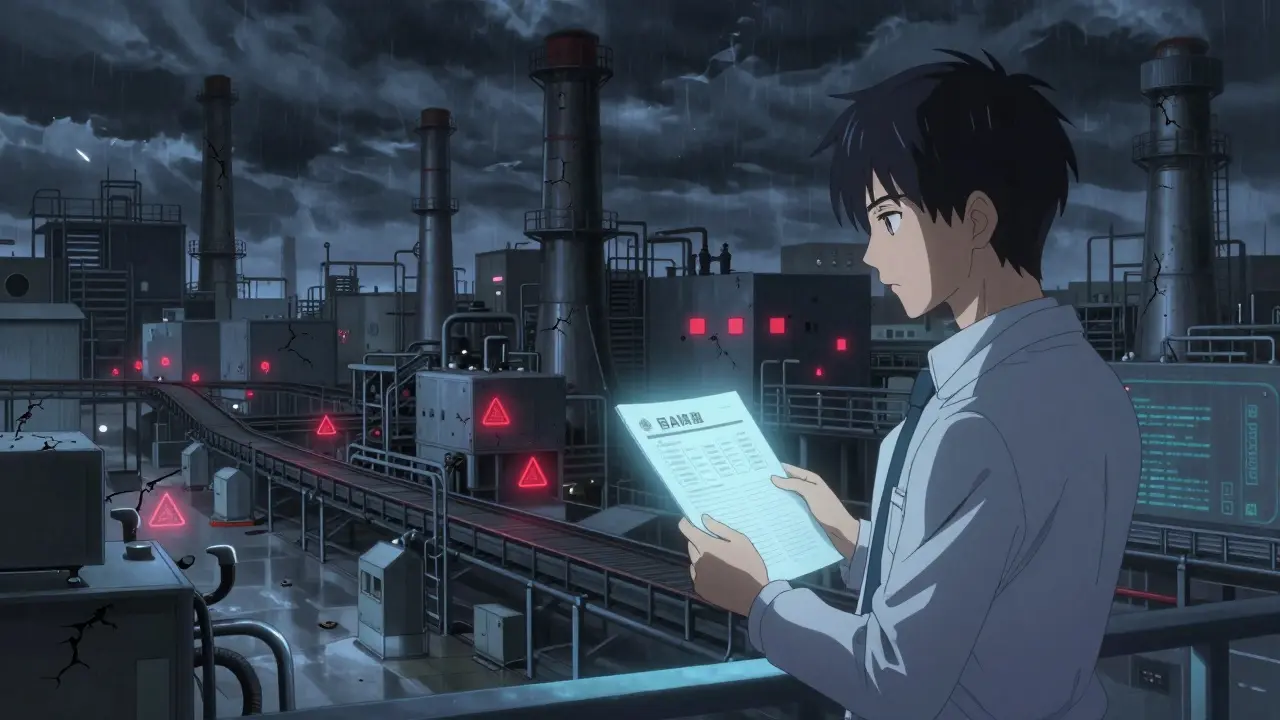
The China+1 Strategy: Why Companies Are Turning to India
The "China+1" strategy isn’t a buzzword - it’s a supply chain survival tactic. After the pandemic, companies realized that depending on one country for 80% of your APIs was risky. So they started looking for alternatives. India became the obvious choice. Why? Because India doesn’t just offer lower costs - it offers predictability. A 2022 survey by PharmaBoardroom found that 12% of U.S. pharmaceutical companies preferred India as a manufacturing destination, compared to just 9% choosing China. The reasons? "Good pricing, good labor force, and a solid compliance history," according to Medstown’s 2023 analysis. India’s "Make in India" initiative has poured nearly $3 billion into incentives for pharma and medical device production. Over $4 billion in private investment has followed. That money isn’t just building more factories - it’s upgrading them to meet global standards. The 2023 revision of Schedule M, India’s drug manufacturing rules, now requires real-time monitoring, digital records, and stricter environmental controls. It’s not perfect, but it’s moving in the right direction.The Hidden Risk: India’s Dependence on China
Here’s the twist: India can’t make its own APIs. About 72% of India’s bulk drug ingredients - the raw materials used to make pills - come from China. That’s up from 66% in 2022. So while India is the compliant manufacturer, it’s still relying on China for the foundation. This creates a dangerous paradox. If China restricts API exports - for political, economic, or environmental reasons - India’s entire drug supply chain could freeze. One senior sourcing executive at a major U.S. pharma company told Bain & Company: "The 72% import dependency on China for bulk drugs creates a single point of failure in our supply chain that we’re urgently trying to address." It’s like building a house with strong bricks but using glue from a supplier who might cut you off tomorrow.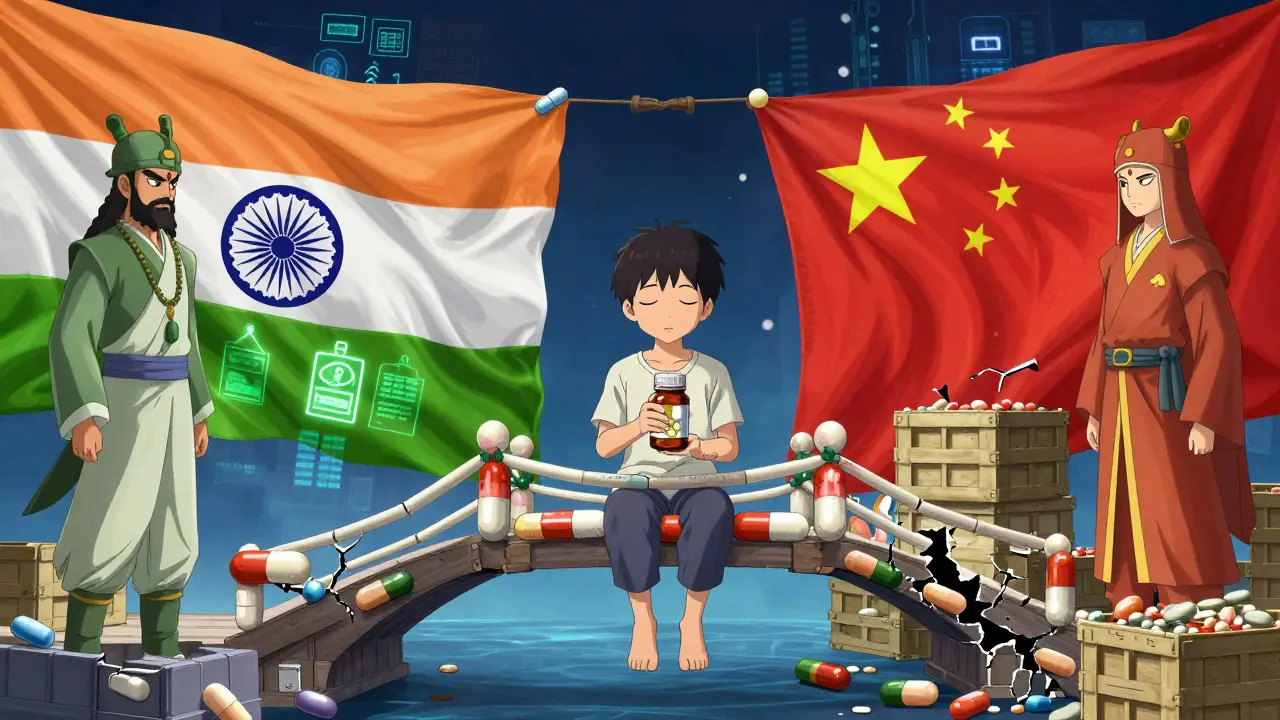
What This Means for Patients and Providers
You might not care where your medicine is made - but you should. A drug made in a facility with poor quality controls can have impurities, inconsistent dosages, or even contaminants. In 2022, the FDA recalled over 200 drug products linked to manufacturing issues in China. Some contained cancer-causing substances like NDMA. For healthcare providers, this means knowing your supply chain. Are you prescribing a generic drug made in an FDA-approved Indian facility? Or one made in a Chinese plant with a history of violations? The difference isn’t theoretical - it’s measurable. For patients, it means asking questions. If you’re on a long-term medication, ask your pharmacist: "Where is this made?" If the answer is "I don’t know," that’s a red flag. Transparency is the first step toward safety.The Future: Who Wins?
By 2047, India’s pharmaceutical exports could hit $350 billion, according to Bain & Company. That’s not a guess - it’s a projection based on current trends. China’s share of the global outsourced market is expected to drop from 25% to around 15% by 2047. Why? Because compliance matters more than cost when lives are on the line. India’s path forward depends on two things: reducing its dependence on Chinese APIs and moving up the value chain into biologics and cell therapies. Right now, China still leads in biopharmaceutical innovation. But if India can use its compliance advantage to attract investment in those higher-value areas, it won’t just be a manufacturer - it could become a global health leader. China’s future is more uncertain. It can’t compete on compliance. It can’t compete on cost anymore - labor costs are rising. Its only hope is to become a true innovation hub, not just a factory. But that requires cultural and regulatory shifts that haven’t happened yet.Bottom Line
China and India aren’t just competitors - they’re two different models of pharmaceutical manufacturing. China is the factory. India is the quality partner. The FDA sees this clearly. So do global pharma companies. And if you’re someone who depends on safe, reliable medicine, you should too.India’s strength isn’t its price - it’s its predictability. China’s strength isn’t its scale - it’s its capacity. But when it comes to your health, predictability wins every time.
Why does the FDA inspect drug factories in China and India?
The FDA inspects foreign drug factories because over 80% of the active ingredients in U.S. medicines are made overseas. The agency ensures these facilities follow U.S. safety rules (21 CFR Part 211) so the drugs imported into America are safe, effective, and free from contamination. A failed inspection can block entire shipments of medicine.
Which country has more FDA-approved drug plants - China or India?
India has more than 100 FDA-approved manufacturing plants, while China has only 28. That means India’s approved capacity is over 250% higher. This reflects India’s long-standing focus on meeting Western regulatory standards to export generic drugs.
Why is India’s dependence on Chinese APIs a problem?
India makes most of the world’s generic pills, but 72% of its raw ingredients (APIs) come from China. If China restricts exports - due to trade tensions, natural disasters, or policy changes - India’s ability to produce medicine could collapse. This creates a single point of failure in a global supply chain that millions rely on.
Are drugs made in China less safe than those made in India?
Not all Chinese-made drugs are unsafe, but the risk is higher. FDA inspection data shows Chinese facilities receive 30% more violations than Indian ones. Many recalls of contaminated or mislabeled drugs in recent years have traced back to Chinese plants. India’s stricter compliance culture reduces these risks significantly.
What is the "China+1" strategy in pharma manufacturing?
The "China+1" strategy means companies no longer rely solely on China for manufacturing. Instead, they diversify by adding a second, more reliable partner - usually India - to reduce supply chain risk. India is favored because of its strong FDA compliance record, skilled workforce, and English-speaking regulatory teams.


