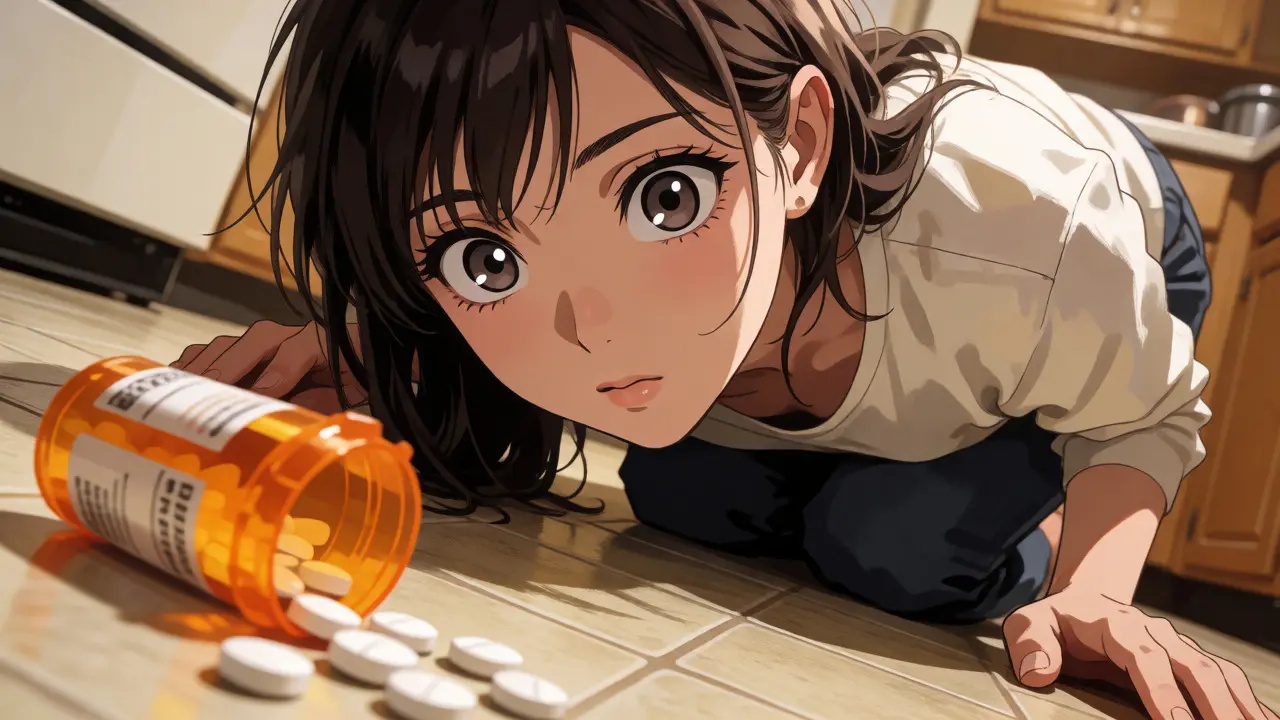
You’re in the kitchen, maybe distracted by a crying toddler or a ringing phone. You turn around, and there it is: an empty bottle of your blood pressure meds on the floor, and your two-year-old has a look on their face that says "oops." Panic hits instantly. Did they swallow one pill? The whole bottle? Is this dangerous or just annoying?
Here’s the reality: medication poisoning is the second-highest cause of poisoning incidents among children under six in the US. It accounts for roughly 60,000 emergency room visits every year for kids under five. But here’s the good news: most cases are manageable if you react quickly and correctly. You don’t need a medical degree to handle the first few minutes. You just need to know what to do-and, more importantly, what not to do.
Stop and Assess: The First 60 Seconds
Your instinct might be to shake the child or stick a finger down their throat. Stop. Do not induce vomiting unless a medical professional tells you to. Why? Because some medications can burn coming back up, or the child might inhale vomit into their lungs (aspiration), which is far worse than the medication itself.
Instead, follow these steps immediately:
- Remove remaining pills: Gently open the child’s mouth and sweep out any leftover tablets with your finger. Check under the tongue and inside the cheeks.
- Secure the evidence: Grab the bottle. Note the name, strength (mg), and how many pills were originally in the container versus how many are left now. This info is gold for the doctor.
- Check for patches: If the medication was a patch (like nicotine or pain relief), check the skin, including behind the ears and on the roof of the mouth if they sucked on it.
The Golden Rule: Call Poison Control Before Driving
This is the single most important step. In the US, call 1-800-222-1222. This connects you to the Poison Control Center, staffed by nurses and pharmacists who specialize in toxicology. They are available 24/7.
Why call them instead of just driving to the ER? Two reasons:
- They tell you if you even need to go. Many exposures are harmless or require only home monitoring. Calling reduces unnecessary hospital trips by nearly half.
- They guide you while you wait. If you do need to go, they’ll alert the hospital so the team is ready when you arrive.
Keep the number saved in your phone right now. Seriously. Do it before you finish reading this article.
When to Call 911 Instead
Poison Control handles most situations. But you need Emergency Medical Services (EMS) immediately if your child shows any of these severe signs:
- Difficulty breathing or stopped breathing.
- Loss of consciousness or unresponsiveness.
- Seizures (convulsions).
- Blue lips or fingernails.
- Severe chest pain.
If your child is unconscious but breathing, place them in the recovery position (on their side) and wait for paramedics. Do not try to wake them by shaking violently.

What Happens at the Hospital?
If Poison Control advises a trip to the ER, or if symptoms develop, the medical team will follow specific protocols based on the drug ingested. Here’s what you can expect:
| Medication Type | Potential Risk | Typical Treatment |
|---|---|---|
| Acetaminophen (Tylenol) | Liver damage (delayed onset) | N-acetylcysteine (antidote); blood tests every 4 hours |
| Ibuprofen (Advil/Motrin) | Stomach irritation; rare kidney issues | Supportive care; activated charcoal if caught early |
| Iron Supplements | Severe GI bleeding; shock | Deferoxamine (IV antidote); strict observation |
| Blood Pressure Meds | Dangerous drop in BP/heart rate | Fluids; glucagon or vasopressors; cardiac monitoring |
| Opioids (Codeine/Oxycodone) | Respiratory depression; sedation | Naloxone (reversal agent); respiratory support |
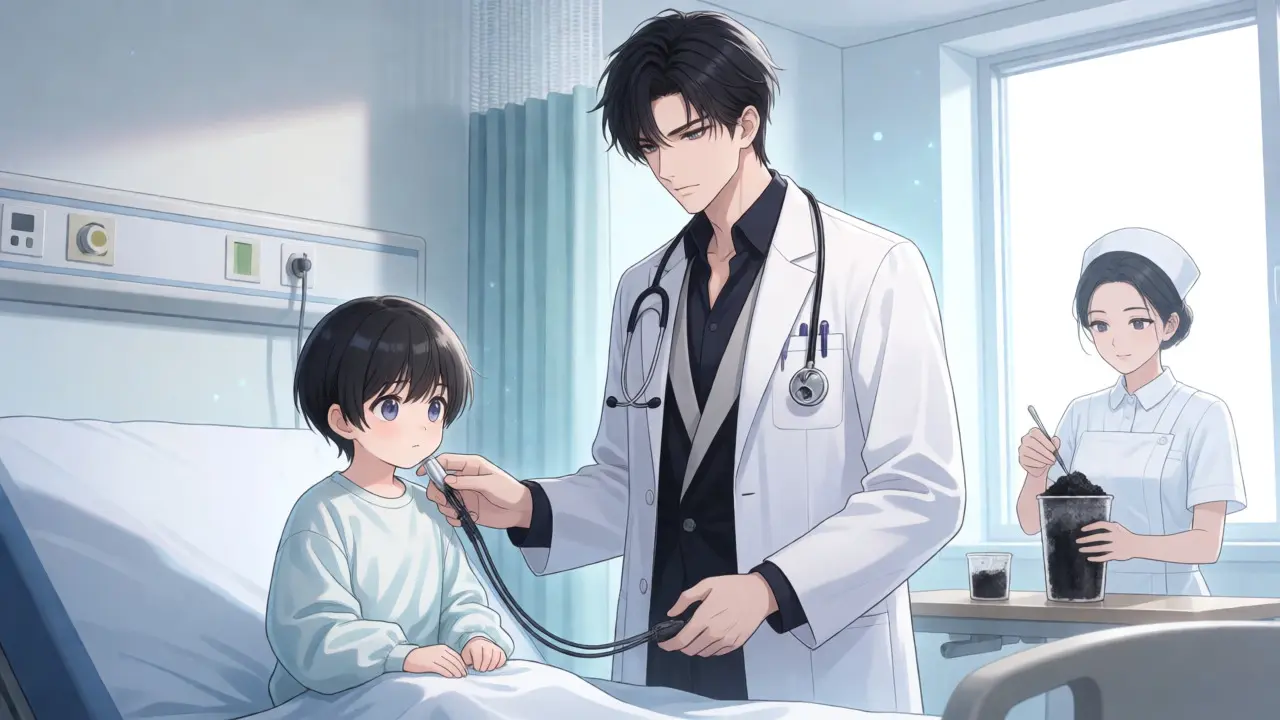
For unknown ingestions, hospitals often use activated charcoal. This black, gritty substance binds to medication in the stomach so it isn’t absorbed into the bloodstream. It works best if given within one hour of swallowing. Don’t worry-it tastes like dirt, but it saves lives.
Myths That Can Hurt Your Child
Old advice dies hard. Here are three myths you need to forget:
- "Give milk to dilute it." False. Milk can actually speed up absorption of certain drugs (like aspirin) because fats help dissolve them. Water is usually fine, but only if the child is awake and able to swallow safely.
- "Syrup of Ipecac makes them throw up." Obsolete. The American Academy of Pediatrics stopped recommending ipecac in 2004. It rarely worked well and caused aspiration risks.
- "If they seem fine, they’re safe." Dangerous assumption. Acetaminophen overdose causes no symptoms for 24-48 hours, yet liver damage is already happening during that quiet period. Always follow Poison Control’s advice on monitoring time.
Prevention: Lock It Up
Once the panic subsides, take steps to prevent round two. Children are curious climbers. They aren’t trying to get high; they’re exploring.
- Elevate and isolate: Keep meds in a cabinet above shoulder height or locked away. High counters are not enough-toddlers climb chairs.
- Use flow restrictors: For liquid meds, ensure bottles have child-resistant caps and internal flow limiters to prevent chugging.
- Never call medicine "candy": Even saying "this tastes like grape juice" can make a kid want to sneak a sip later.
Frequently Asked Questions
Should I give my child water if they swallowed a pill?
Only if the child is fully awake and able to swallow without choking. Small sips of water can help wash down the pill, but do not force large amounts of fluid, as this may trigger vomiting. Always consult Poison Control first for specific instructions based on the medication type.
What if I don't know what the child swallowed?
Bring all potential containers to the hospital or describe them to Poison Control. Look for blister packs, loose pills on the floor, or chewed wrappers. If you truly cannot identify the substance, the child will likely undergo a standard observation protocol (usually 4-6 hours) to monitor vital signs for any delayed reactions.
How long should I watch my child after a minor ingestion?
This depends entirely on the medication. For benign substances like vitamins, 1-2 hours might suffice. For acetaminophen or iron, you may need to observe for 24 hours or longer. Always follow the specific timeframe provided by the Poison Control specialist, as symptoms can be delayed.
Can a child overdose on vitamins?
Yes. While Vitamin C is generally safe, fat-soluble vitamins (A, D, E, K) and Iron can be toxic in high doses. Iron poisoning is particularly dangerous for young children. Never assume "natural" means "safe" in large quantities.
Is it better to go to Urgent Care or the Emergency Room?
Call Poison Control first. They will direct you. Generally, if the child is symptomatic (vomiting, lethargic, breathing changes), go to the ER. If they are asymptomatic and the medication is low-risk, Poison Control might advise home monitoring or a visit to Urgent Care. The ER has pediatric specialists and labs ready for complex cases.


