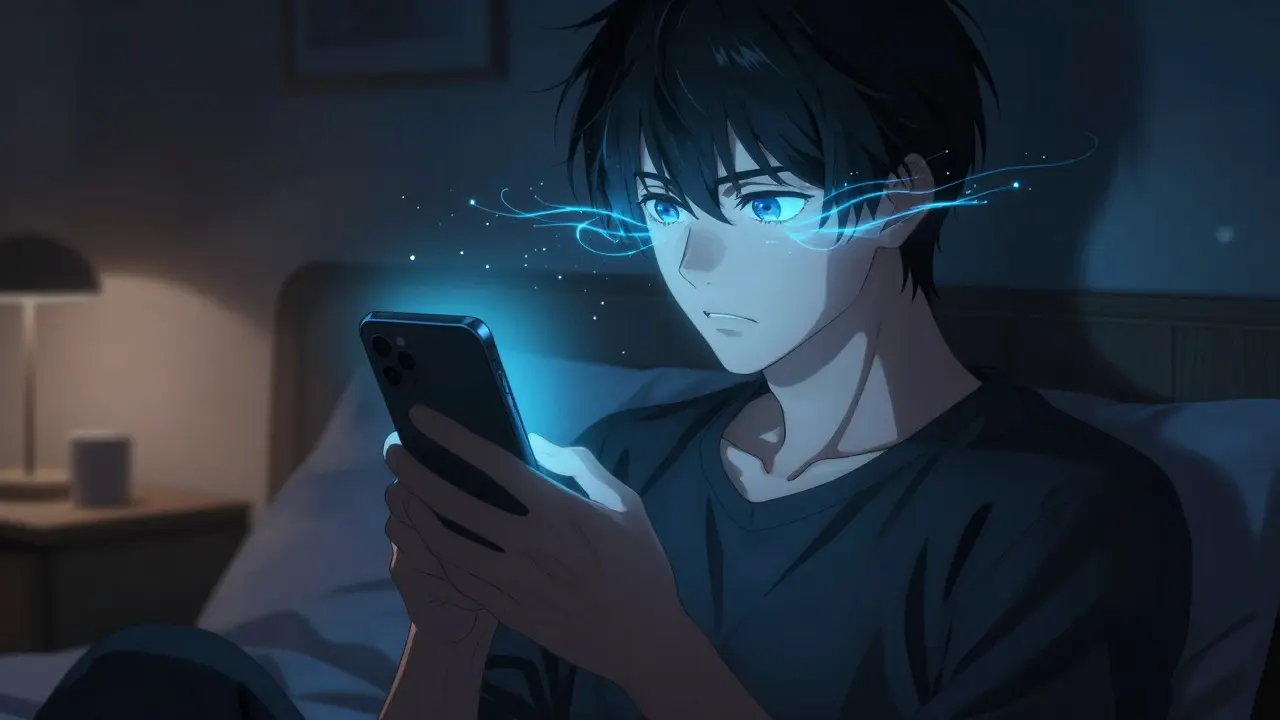
Staring at your phone before bed or glued to a laptop for eight hours straight is part of modern life. But have you ever wondered if that glow is actually hurting your eyes? The internet is flooded with claims that blue light is high-energy visible (HEV) light between 415-455 nanometers that can cause eye damage and disrupt sleep. You’ve probably seen ads for amber-tinted glasses promising to save your retinas. But the truth is far more complicated than a simple yes or no.
The scientific community is currently split on this issue. On one side, researchers warn about photochemical damage from high-energy photons. On the other, major medical organizations say there’s no proof that screens are destroying our vision. So, do you need to buy expensive filters, or is it all just marketing hype? Let’s look at what the data actually says about your eyes, your sleep, and the best habits to protect both.
What Exactly Is Blue Light?
To understand the risk, we first need to define the enemy. Blue light isn’t a new phenomenon; it’s a natural part of the sunlight spectrum. However, the specific range that causes concern is known as High-Energy Visible (HEV) light, specifically wavelengths between 415 and 455 nanometers. This light has short wavelengths and high photon energy-about 2.75 to 3.00 electron volts-which allows it to penetrate deep into the eye, passing through the cornea and lens to reach the retina.
Unlike red or yellow light, which gets absorbed by the outer layers of the eye, blue light travels further. This penetration capability is why scientists worry about its potential for causing oxidative stress in ocular tissues. While natural sunlight contains the highest levels of blue light, our daily exposure has skyrocketed since 2010 due to LED screens, smartphones, and energy-efficient lighting. The question isn't whether blue light exists, but whether the artificial doses we receive from devices cross the threshold from harmless to harmful.
The Great Debate: Damage vs. Safety
If you ask an ophthalmologist, you might get one answer. If you ask a cell biologist, you might get another. This contradiction is the core of the current confusion.
On the cautious side, Dr. Martin Rosenberg, lead author of a pivotal 2018 National Institutes of Health review, states clearly that short-wave blue light is closely related to eye damage. His research highlights mechanisms like dry eye syndrome, cataracts, and age-related macular degeneration (AMD). Laboratory studies support this view: exposure to 450 nm blue light has been shown to decrease human corneal epithelial cell viability by over 37% in controlled settings. Furthermore, research published in *Photochemistry and Photobiology* found that blue light increases reactive oxygen species (ROS) production in corneal cells by nearly 218% within 30 minutes, triggering inflammatory pathways.
However, the American Academy of Ophthalmology (AAO) takes a firmer stance against fear-mongering. As of their December 2022 update, they declare there is "no scientific evidence that blue light is harmful to your eyes" from digital devices. They explicitly do not recommend blue light-blocking glasses for general use. Dr. Stephen Lockley from Harvard Medical School adds nuance here: while he confirms that blue light suppresses melatonin more powerfully than any other wavelength, he cautions that evidence for permanent retinal damage from screen use remains inconclusive. Essentially, the lab shows potential for damage, but real-world clinical trials haven't yet proven that normal screen use causes blindness or degeneration.
Sleep Disruption: The Proven Risk
While the debate rages on regarding permanent eye damage, there is one area where the science is settled: sleep. Blue light is the primary regulator of your circadian rhythm-the internal clock that tells your body when to wake up and when to sleep.
Your brain uses light cues to control the release of melatonin, the hormone that induces sleepiness. Studies from Harvard Medical School demonstrated that exposure to bright blue light (6500K color temperature) for just 6.5 hours suppressed melatonin secretion for 105 minutes, compared to only 52 minutes for green light. It also shifted circadian rhythms by three hours versus 1.5 hours for green light. When you scroll through your phone at night, you are essentially sending a signal to your brain that it is still daytime. This doesn’t just make it harder to fall asleep; it reduces the quality of deep sleep, leaving you groggy the next day.
This is why managing blue light exposure in the evening is critical, not necessarily to save your retinas, but to save your sleep schedule. The impact on sleep is immediate and measurable, unlike the theoretical long-term risks to eye tissue.
| Method | Effectiveness | Pros | Cons |
|---|---|---|---|
| Amber-Tinted Glasses | Blocks 65-100% of 400-500nm light | Most effective filter; helps sleep significantly | Color distortion (yellow/orange tint); awkward in professional settings |
| Clear Blue-Light Lenses | Blocks 10-25% | Invisible; looks like regular glasses | Minimal reduction in hazard range; limited sleep benefit |
| Software Filters (Night Shift/f.lux) | Reduces exposure by 15-20% | Free; easy to toggle; adjusts entire device | Does not block peak hazard range (415-455nm) completely |
| Hardware OLED Reduction | Reduces 415-455nm by 30-40% | Built-in; no color shift; seamless experience | Only available on newer devices; requires hardware upgrade |
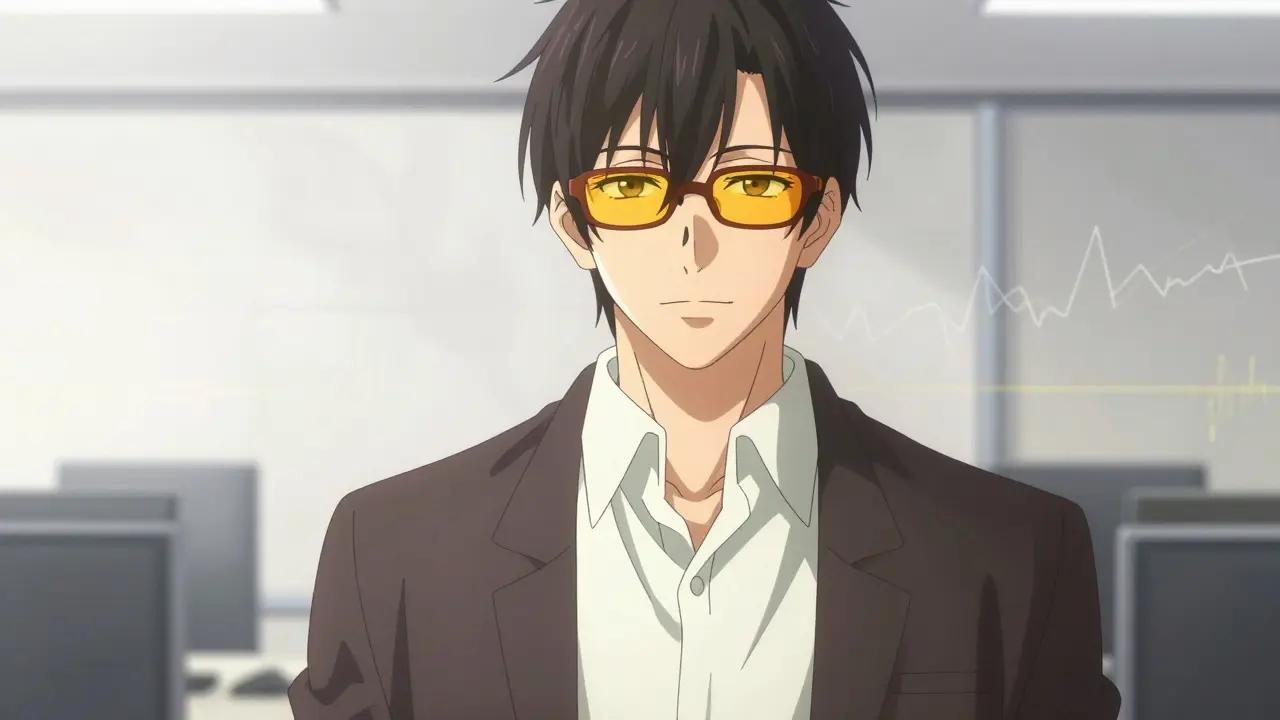
Do Blue Light Glasses Actually Work?
The market for blue light protection hit $3.12 billion in 2022, driven largely by non-prescription glasses. But does wearing them help? It depends on what you expect.
If you are looking for relief from eye strain during work, the results are mixed. A 2022 study from the University of Manchester found that amber-tinted glasses outperform clear lenses in blocking light, but they introduce significant color distortion. For tasks requiring accurate color perception, such as graphic design or photography, these glasses reduce visual acuity by over 8%. Professional photographers often reject them entirely because the color shift ruins their ability to assess skin tones and lighting accurately.
For general computer use, anti-reflective coated lenses with blue light filtering provided 22% less visual fatigue during two-hour tasks compared to standard lenses, according to a study in *Contact Lens and Anterior Eye*. However, the same study showed no significant difference in dry eye symptoms after four weeks. This suggests that while glasses might reduce mental fatigue or perceived strain, they don’t solve the physical problem of reduced blinking.
User reviews tell a similar story. On Reddit, 78% of users reported reduced eye strain after implementing behavioral changes like the 20-20-20 rule, whereas Amazon reviews for blue light glasses show that 42% of negative reviews cite "no noticeable difference." Many users report headaches disappearing, likely due to a placebo effect or reduced glare rather than blue light filtration alone. Meanwhile, 31% complain about the yellowish tint affecting their work. If you buy glasses, ensure they block the specific 415-455 nm range, as many cheap filters only block the safer ends of the spectrum.
Better Habits Than Filters
Rather than relying solely on hardware or software filters, experts agree that behavioral changes offer the most reliable protection for your eyes. These habits address the root causes of digital eye strain: accommodative demand and dryness.
- The 20-20-20 Rule: Every 20 minutes, look at something 20 feet away for 20 seconds. This simple action relaxes the ciliary muscles in your eyes that lock up when focusing on near objects. A 2021 study in *Optometry and Vision Science* found this reduced reported eye strain by over 53%.
- Adjust Brightness and Contrast: Your screen brightness should match your ambient lighting. If your room is dim, lower your screen brightness. Ideally, workspace lighting should be between 300-500 lux. A screen that is too bright creates glare, leading to squinting and fatigue.
- Maintain Proper Distance: Keep your screen 20-30 inches from your face. Viewing distance reduces accommodative demand by 3.7 diopters compared to holding a phone at 12 inches. This small change significantly reduces muscle tension.
- Use Night Mode Before Bed: Enable "Night Shift" or "f.lux" two hours before bedtime. Research from the University of Toronto showed this increases melatonin production by 58% compared to standard settings. Apple’s recent "adaptive color temperature" feature automates this based on ambient light, reducing melatonin suppression by 37%.
These habits require no cost and have immediate benefits. The learning curve for establishing these routines is about 14-21 days. Most people fail not because the methods don’t work, but because they inconsistently apply night mode across multiple devices, negating the circadian benefits.

Natural Protection and Future Tech
Your eyes have some natural defenses. The macula contains pigments called lutein and zeaxanthin, which act as internal sunglasses. A 2024 study in *Nature Communications* demonstrated that supplementing with 10mg of lutein and 2mg of zeaxanthin daily increased macular pigment optical density by 0.12, providing natural filtration equivalent to 25% blue light blocking lenses. Foods rich in these carotenoids include spinach, kale, and egg yolks.
Looking ahead, technology is shifting from aftermarket solutions to integrated hardware. Display manufacturers are moving toward hardware-level blue light reduction. New OLED displays can reduce emissions in the 415-455 nm range by 30-40% without needing software filters or causing color shifts. Samsung’s 2025 roadmap targets a 50% reduction in this hazardous range with less than 2% color shift. Additionally, quantum dot-enhanced lenses are in prototype stages, promising selective filtration without the ugly amber tint. As these technologies become standard, the need for standalone blue light glasses may decline, with analysts predicting an 18% annual drop in sales from 2025 to 2028.
Summary of Key Takeaways
- Eye Damage is Unproven: Major ophthalmological associations state there is no conclusive evidence that screen blue light causes permanent eye damage like AMD or cataracts.
- Sleep is the Real Victim: Blue light significantly suppresses melatonin and disrupts circadian rhythms, making it harder to fall asleep and reducing sleep quality.
- Glasses Have Limits: Amber-tinted glasses are effective for sleep but distort color. Clear lenses offer minimal protection. Neither solves dry eye caused by reduced blinking.
- Habits Beat Hardware: The 20-20-20 rule, proper screen distance, and matching brightness to ambient light are more effective for reducing strain than filters.
- Natural Defense: Consuming lutein and zeaxanthin boosts your eyes' natural ability to filter blue light.
Does blue light really cause blindness?
Current scientific consensus, including statements from the American Academy of Ophthalmology, indicates there is no conclusive evidence that blue light from digital screens causes blindness or permanent retinal damage. While laboratory studies show potential for cellular stress, real-world clinical data does not support claims that normal screen use leads to conditions like macular degeneration.
Are blue light glasses worth buying?
It depends on your goal. If you struggle with insomnia or sleep disruption, amber-tinted glasses worn in the evening can be very effective by blocking melatonin-suppressing wavelengths. However, for general eye strain during the day, they offer limited benefit compared to free habits like the 20-20-20 rule. Clear lenses provide minimal protection and are often considered a poor value unless prescribed for specific ergonomic needs.
How does blue light affect sleep?
Blue light, particularly in the 415-455 nm range, signals to your brain that it is daytime. Exposure to this light suppresses the production of melatonin, the hormone responsible for inducing sleep. Studies show that blue light exposure can delay melatonin onset by over an hour and shift your circadian rhythm by several hours, making it difficult to fall asleep and reducing overall sleep quality.
What is the 20-20-20 rule?
The 20-20-20 rule is a simple habit to prevent digital eye strain. Every 20 minutes of screen use, you should look at an object at least 20 feet away for 20 seconds. This allows the focusing muscles inside your eyes to relax, reducing fatigue and preventing temporary blurred vision associated with prolonged near-work.
Can I protect my eyes naturally?
Yes. Your eyes contain natural pigments called lutein and zeaxanthin that filter blue light. Increasing your intake of foods rich in these carotenoids, such as leafy greens (spinach, kale), corn, and egg yolks, can boost your eyes' natural defense mechanisms. Some studies suggest supplementation can increase this protective density significantly.